
From renewables to regenerative agriculture: Barilla's investments in sustainability
The key points of Barilla's Sustainability Report released on World Environment Day

Key points
From the downsizing of tagliatelle packaging that has led to a saving of 150 tons of cardboard to jars for ready-made sauces that contain about 65% recycled glass, from the use of wheat flour from regenerative agriculture to projects for the employment of people with autism. These are some of the "sustainability stories" that the Barilla Group presents on the occasion of World Environment Day with the publication of the Sustainability Report 2025. "A report - underlined by the company present in 100 countries, for a turnover that has reached Euro 4.837 billion - that comes on the heels of recognition as the first company in the food sector by reputation in the world for the third year running and, for the first time, in the absolute top 10, according to the Global RepTrak 100 2026".
168 million clean energy plan
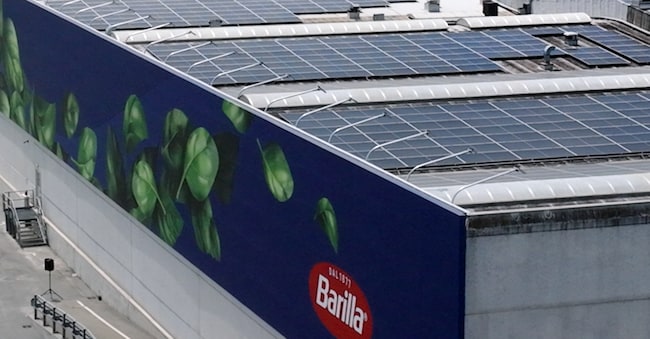
On the energy front, 30 million euros have been invested as part of the 168 million euro five-year plan for Barilla's production plants, including energy efficiency, more careful management of water resources and the development of electrical energy plants from renewable sources. In 2025, 5 new plants activated in Foggia, Melfi, Ascoli Piceno, Cremona and Thiva, Greece, brought the photovoltaic capacity installed in the factories to over 8 MW, more than four times the 2022 figure. And further installations - specifies the Barilla report - are planned between 2026 and 2028 in the bakery plants of Novara and Celle, in Germany. On the water saving front, "in factories in water-stressed areas, recycled and reused water has increased by 196% compared to 2022, aiming for the target of +250% by 2030".
The Innovation Hub for Nutrition
A further investment, also last year, of over 47 million euro went into research, for the development of quality with the Bite (Barilla Innovation & Technology Experience), "the Group's new global innovation hub built in Parma next to the historic pasta factory. Here, ideas become prototypes and an industrial process thanks to the work of over 200 professionals including food technologists, researchers, food designers, chefs and sensory experts, as well as a network of collaborations made up of 84 universities and research centres".
Among other things, this has allowed Barilla to 'improve the nutritional profile of the entire portfolio without sacrificing taste: 89% of the volumes sold have a maximum sugar content of 5 grams of sugar per portion, 90% contain no more than 0.5 grams of salt per portion, 90% contain sources of fibre, and 72% of the bakery single-serving portions stay below 150 calories'.
The role of regenerative agriculture
In 2025 Barilla purchased 4,160 tonnes of soft wheat from regenerative agriculture (250,000 tonnes is the 2030 target), which aims to restore soil health, biodiversity and reduce water use. "It is from here," explains the Parma-based colossus, "that the Mulino Bianco Buongrano biscuit hit the shelves in 2025. Behind it is years of work: crop rotations, minimum tillage, organic fertilisation and 2,000 hectares dedicated to biodiversity areas - which flourish among the wheat fields, with a 40% increase in pollinating insects in the areas monitored together with the University of Bologna". A project born from the Mill Charter programme "which today involves almost 2 thousand farmers of soft wheat and has allowed an annual reduction in CO₂eq emissions of about 9,000 tonnes, the equivalent of more than 2 thousand round-trip flights from Milan to Los Angeles".


