
Italia’s most ‘Western’-style road trip along the Basentana
From the Essenza Lucano Museum to the stunning Grottole

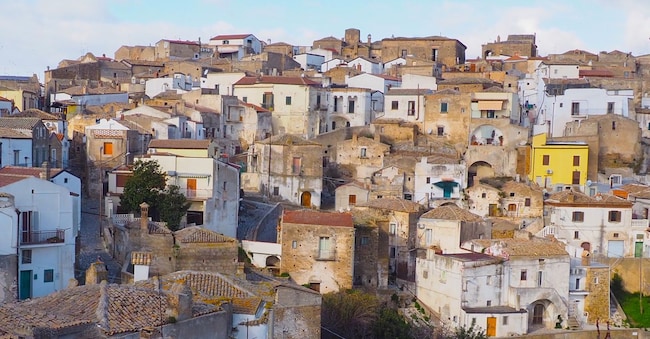
Once you’re back on the Basentana, a stop at the Essenza Lucano experiential museum in Pisticci Scalo is almost a must: because in the original distillery where Amaro Lucano was produced, the elixir of these lands, you’ll enjoy a truly intense sensory experience, following in the footsteps of the founder, the pastry chef Pasquale Vena. In 1894, driven by a passion for herbalism, he selected and combined 30 herbs to create this liqueur. The courtyard’s aromatic garden has been faithfully recreated, where visitors can view and smell the essences themselves. With the spicy flavour still on the palate, the journey takes a surprising and intriguing detour towards Grottole, just above the Basento and Bradano rivers. Also celebrated as a ‘honey town’ thanks to the industriousness of its bees, it stands on a plateau at an altitude of over 480 metres between Lake San Giuliano and the Bosco delle Coste. Well, once you have passed the extraordinary Fontana dei Fichi – an elongated fountain carved from local stone – and discovered the equally vibrant Cupone fountain, you enter the labyrinth of houses in this village, which boasts a Greek past and later served as a Roman municipium, subsequently incorporated into the Duchy of Salerno under Lombard rule. Its architectural emblem is the Sichinulfo Feudal Castle, dating back to the 9th century, which remains strong and imposing; likewise, the rose window of the 15th-century Church of San Rocco, with its gabled façade and pointed arch portal, is a sight to behold. Just as, indeed, the church dedicated to Saints Luke and Julian, which remains standing despite the earthquake having caused the ceiling of the central nave to collapse, leaving a circular opening reminiscent of a sacred halo. And whilst the Forno d’Aria bakes its sweet ‘calzoncelli’ filled with chickpeas, the Lucanian Baroque works in the mother church of Santa Maria Maggiore – attached to the convent and its cloister – bear witness to the artistic richness of this village, which also boasts the former Convent of the Preaching Friars, situated just off the beaten track from the modern part of the village. Before setting off again, be sure to take a closer look at the whimsical terracotta pieces on display at the Ceramics Museum.

