

From the refineries to Haftar’s officer: what do we know about the escalation in Libya?
In recent days, there have been raids on refineries and power stations near Tripoli and a deadly attack on senior officials in Benghazi
from our correspondent Alberto Magnani
 Aggiungi Il Sole 24 Ore
ai preferiti su Google
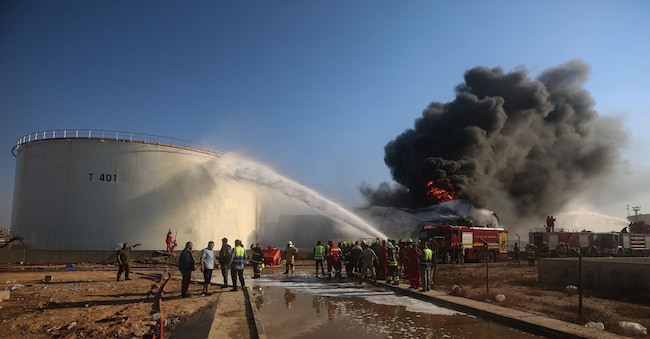
NAIROBI – Tension is mounting in Libya, the North African country that has recently seen an escalation of attacks in both the administrations operating within its territory: the western region under the control of Hamid Dbeibah’s Government of National Unity, and the eastern region, formally led by the Government of National Stability and de facto by General Khalifa Belqasim Haftar.
The first wave of attacks targeted facilities vital to western Libya’s energy supply, such as the drone strikes on the Zawiya refinery on 10 August or the attack on the power station in the same town the following day. The second wave was limited to a more targeted, yet deadly, attack in Benghazi: the car bomb attack that claimed the life of Fawzi Al-Mansouri, head of military intelligence in eastern Libya and a leading figure within the region’s government apparatus.
The division of Libya and US ambitions
Libya, the fourth-largest country in Africa, holds just under 3 per cent of global oil reserves, and hydrocarbons account for 95 per cent of its exports and at least 90 per cent of government revenue. Its energy resources have become increasingly significant on the international stage, particularly following the push for energy diversification triggered by the twin crises of the war in Ukraine in 2022 and the war in Iran four years later.
Less progress has been made on the front of internal stability, in a country that has been split since 2014 between two rival administrations and is rife with a web of tensions, alliances and actors ranging from energy deals secured by European governments to Russian contractors from the (former) Wagner Group or the US Army’s Africom division. Washington itself is working to mend relations between the two factions, a task entrusted to the missions of envoy Massad Boulos and geared towards a goal of stability that also serves US investment strategies. Boulos himself reminded the Financial Times of the country’s ambition to increase its daily oil production from two to three million barrels, thereby placing itself ‘on the map of global producers’.
It is unclear what the prospects are for the US project, but the latest unrest does not bode well. In the west, the attacks on Zawiya have struck and hit sensitive targets such as a 4.5-million-litre petrol tank and the power station itself, dealing a blow to the country’s energy supplies at a time when it is already caught in the paradox of substantial energy exports and an inability to meet its domestic needs. In the east, the fatal attack on Fawzi Al-Mansouri has opened a wound that the leadership in Benghazi must come to terms with.


