Foreign players making their moves in Libya. In eight months’ time, the crossroads: unification or fragmentation?
The process of constitutional reform leading up to next February’s elections is now underway. The outcome is by no means a foregone conclusion. Meanwhile, Washington, Rome and even Ankara are taking steps to promote stability. Beijing and Moscow are moving in the opposite direction. At stake are energy and infrastructure. We are all focused on Ceuta and the Strait of Hormuz, but the situation in Libya is a hot topic and deserves our full attention

Key points
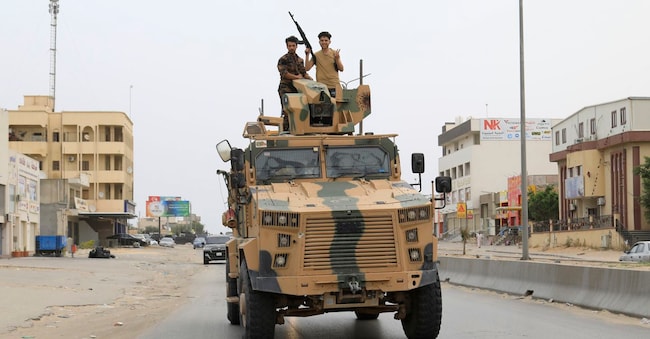
Whilst we are all focused on Ceuta, the Strait of Hormuz and the military rebalancing in the Middle East, Libya is approaching a critical juncture. Next spring could mark a turning point towards significant stabilisation, or – should institutional reunification fail – lead the country into a new phase of polarisation. In June, in fact, an agreement was signed between the main institutions to organise simultaneous presidential and parliamentary elections by February 2027. The supervisory body includes the Governor of the Central Bank, the Chair of the National Electoral Commission, two members of the 5+5 Joint Military Commission and representatives of the security forces from the East and West. A joint constitutional amendment is also planned, a necessary step to define the legal framework for the elections. It has also been decided that the future elected president will convene the Constituent Assembly to launch a national dialogue aimed at adopting a permanent Constitution. This is a key element, given that the absence of a stable constitutional framework has been one of the main causes of previous failures. Meanwhile, the mediation efforts promoted by the United Nations Support Mission in Libya (UNSMIL) appear to be backtracking. The administration of Prime Minister Abdul Hamid Dbeibeh in Tripoli is facing intense pressure from western military commanders — including the mobilisations and ultimatums issued by Salah Badie, leader of the Al-Samoud Brigade — regarding the control and distribution of state revenues managed by the Central Bank of Libya (CBL). Meanwhile, the eastern theatre remains under the firm military control of Marshal Khalifa Haftar and the Libyan National Army (LNA), which continues to consolidate autonomous governing structures in Benghazi. Faced with this discord between the political establishment and the militias, foreign actors are stepping up their presence, sometimes individually and sometimes through multilateral channels.
US manoeuvres between Tripoli and Benghazi
The United States has reopened the case with the clear intention of facilitating some form of unity between the different parts of the country. An event was held in Luanda, organised by AFRICOM, which was attended by the two Chiefs of Staff – one from Cyrenaica and one from Tripolitania. A further meeting in Washington with Haftar’s delegates was also attended by Fabrizio Saggio, diplomatic adviser to Prime Minister Giorgia Meloni. His name appears in the press release issued from Benghazi, indicating Italy’s leading role during these weeks of change. This positive news follows on from the announcement made in June by Palazzo Chigi. Rome, Ankara and Doha have signed a protocol to establish a joint operations centre for the local Coastguard. The main objective: controlling migration flows. This move forms part of the path urged by the US – a path fraught with conditions. The various players are operating on intersecting levels, and Europe is not speaking with one voice. Paris, for example, has independently concluded an agreement with the Tripoli Navy to support its development. But without including the issue of migration flows.
The Awakening of the Dragon in Libya
Alongside internal dynamics and US manoeuvres, Libya remains a key arena for global geostrategic competition. The redeployment of units from the Africa Corps of the Russian Federation to key tactical hubs — including the Al-Jufra airbase, Brak El-Shati and the Sirte corridor — ensures Moscow has a direct military presence close to NATO’s southern border. At the same time, Turkey is maintaining its military presence in western Libya under cooperation agreements signed with Tripoli, whilst Chinese state-owned enterprises are evaluating long-term infrastructure investments. China is, in fact, taking advantage of the chaos in the Middle East to make a massive return to the former Jamahiriya. Last February, Beijing sent its ambassador to Tripoli, after the diplomatic mission had been closed for almost two years for security reasons. Since then, activities have resumed with some intensity. In June, Ma Xiwei Liang, the diplomat stationed in Libya, announced the launch of direct cargo routes, the streamlining of visa issuance, the opening of the Chinese cultural centre and the arrival of companies from Beijing. The following month TEBA Shenyang Transformer Group began negotiations with the Renewable Energy Authority of Libya regarding the installation of solar power plants. Meanwhile, in recent days, the Libyan Foreign Ministry has sent 25 officials to spend the month of August in Beijing on an intensive course in international relations. To be clear, the announcements regarding the new cargo routes have come to nothing. Meanwhile, Cosco has launched no fewer than three routes, a sign that, for Beijing, Libya is not merely a destination but a potential hub for the Maghreb region.
Italian energy policy in Tripolitania
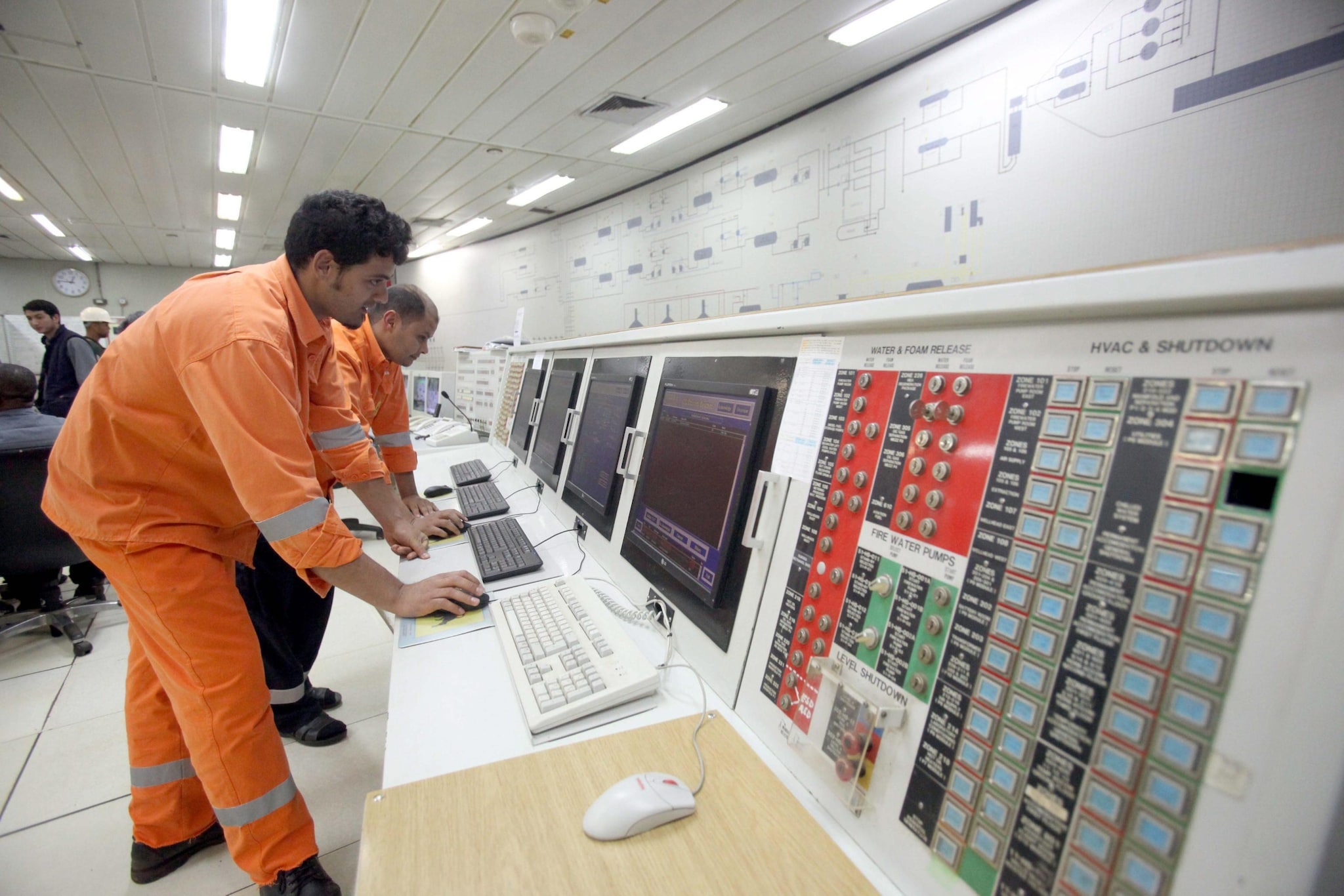
Against this backdrop of tectonic shifts, the Italian government led by Prime Minister Giorgia Meloni – with strong backing from foreign intelligence services – has placed Libya at the heart of the Mattei Plan for Africa. The programme aims to establish equal industrial and energy partnerships in North Africa, establishing an autonomous European presence to counterbalance the influence of the third-party actors mentioned above. Libya holds the largest proven reserves of crude oil on the entire African continent, estimated at around 48.4 billion barrels, alongside natural gas reserves exceeding 1,500 billion cubic metres. Despite a nominal production capacity of over 1.2 million barrels per day (mb/d), actual production remains subject to disruptions caused by tactical blockades imposed by local militias in the Sirte, Murzuq and Ghadames basins. Restoring operational continuity in these production basins is essential to stabilising the light crude oil markets and ensuring a steady flow of natural gas to Europe. The industrial cornerstone of Italian-Libyan energy cooperation is the historic $8 billion agreement signed on 28 January 2023 by Eni’s Chief Executive Officer, Claudio Descalzi, and the then Chairman of the National Oil Corporation (NOC), Farhat Bengdara, in the presence of Prime Minister Giorgia Meloni and Prime Minister Abdul Hamid Dbeibeh. Developed by Mellitah Oil & Gas — a 50-50 joint venture between Eni and NOC — the development of the “Structures A & E” gas fields in Contract Area D constitutes the largest foreign energy investment made in Libya in the last twenty years. The project is set to reach full production capacity by the end of the year, with a target plateau of 750 million standard cubic feet of gas per day (equivalent to approximately 7.7 billion cubic metres per year), supplied by 31 subsea wells and offshore platforms. This production volume will supply Libya’s domestic electricity grid and ensure a steady flow of exports to Italia via the GreenStream gas pipeline.
The infrastructure factor for gas and crude oil
The operational continuity of Libyan energy exports depends on the integrity of an integrated logistics chain linking onshore fields and offshore platforms. Natural gas flows from the Wafa onshore field, situated 520 kilometres south-west of Tripoli, and from the Bahr Essalam offshore field in Block NC41, converge directly at the Mellitah processing complex, located near Zwara. The plant processes the raw material both for local electricity generation and for compression into the GreenStream gas pipeline.