

From the UN to the bilateral ‘mosaic’: the security situation in Somalia remains uncertain
Mogadishu is preparing for a change of approach in managing the terrorist crisis, against the backdrop of the end of the UN mission, Uganda’s withdrawal and the uncertain fate of AUSSOM
from our correspondent Alberto Magnani
 Aggiungi Il Sole 24 Ore
ai preferiti su Google
Key points
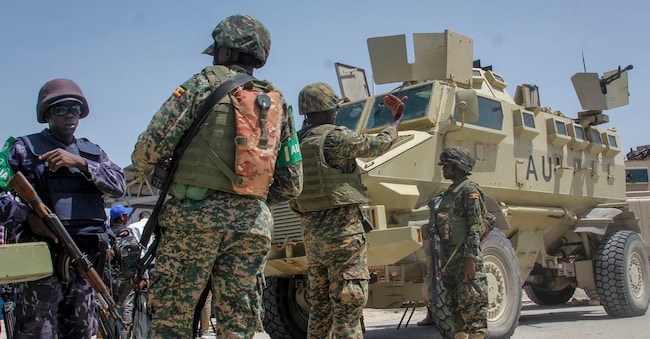
Mogadishu, Belet Uen – At one of the entry points to Mogadishu’s green zone, the fortified perimeter near Aden Adde Airport, two soldiers are wearing a uniform different from that of Somalia. On their sleeves is the flag of Uganda, one of the mainstays of the country’s stabilisation missions. The peacekeepers from Kampala are a familiar sight in the capital and across the Republic, home to 20 million people on the longest coastline in continental Africa. They may soon be a thing of the past, in the wake of the shifting landscape of actors, forces and interests that is reshaping the balance of power in Somalia and the Horn of Africa.
In early November, the Ugandan government announced the withdrawal of its troops from Somalia, bringing to an end two decades of support for Mogadishu in the fight against the al-Shabaab al-Qaeda-linked militants and in the defence of the Somali transitional government. Kampala will withdraw a total of around 6,500 troops deployed in the country by next year, comprising 4,500 soldiers operating under the umbrella of the African Union Support and Stabilisation Mission in Somalia (AUSOM) and at least 2,000 deployed under bilateral agreements. The Ugandan forces first arrived in 2007, at the time of the Ethiopian occupation and the early days of the African Union’s peacekeeping missions. Their withdrawal is, in its own way, timely.
Aussom’s uncertain future
On 31 October, the United Nations announced the end of its political mission UN Transitional Assistance Mission in Somalia (UNTMIS), handing over its responsibilities to agencies on the ground and to the Somali government itself. A few months earlier, the US under Donald Trump had officially confirmed the suspension of UN support for Aussom, whilst granting a one-year ‘grace period’ to find new funders. Today, Aussom relies on the services of the UN Support Office in Somalia (UNSOS), a UN office that provides logistics and training with a budget of close to half a billion dollars. It is unclear what its future holds following the cut imposed by the US.
Hassan Sheikh Mohamud’s government celebrated the conclusion of the UN mission as a ‘day of victory’ for Mogadishu, coinciding with the handover from Kampala to the ‘Somali brothers’. The implication is that Somalia can, or indeed must, move towards independently managing its security vulnerabilities, during a period of transition characterised by attempts at economic recovery and the crucial 2027 elections: the vote, which aims to overcome the clan-based division of the Somali Parliament, was originally scheduled for 2026 but was postponed by Mohamud with an extension that has sparked the opposition’s fury. The impact may be anything but painless, given the dichotomy between perceptions of Mogadishu and the fragility of a country one-third of which is controlled by Islamists. The capital is sealed off but is enjoying a period of – relative – calm compared with the massacres of the early 2000s.
The terrorist (and fiscal) stranglehold of al-Shabaab
The rest of Somalia is bearing the brunt of the uncertainty caused by al-Qaeda affiliates and internal tensions exacerbated by the 2027 elections. According to the ACLED database, al-Shabaab are among the groups implicated in at least 2,948 ‘incidents’ between April 2025 and March 2026, resulting in 6,657 casualties and a situation that plays into the Islamists’ strategy: to exacerbate and manipulate the country’s internal divisions, turning them to their own advantage. “Al-Shabaab is a master at exploiting Somali divisions,” says Omar Mahmood of the International Crisis Group, emphasising that the group is forging ‘pragmatic alliances’ with groups that are disaffected or sidelined by the electoral plans of Mogadishu. Without clear intervention, says Mahmood, al-Qaeda affiliates will ‘inevitably’ end up capitalising on the situation and establishing a foothold, bolstered by the extortion of local taxes and a low-profile presence on the ground.


