

Mali: the symbolic recapture of Kidal and the new alliance with Algeria
The return to the town, which has fallen into the hands of rebels and jihadists, is taking place against a backdrop of new regional alliances
from our correspondent Alberto Magnani
 Aggiungi Il Sole 24 Ore
ai preferiti su Google
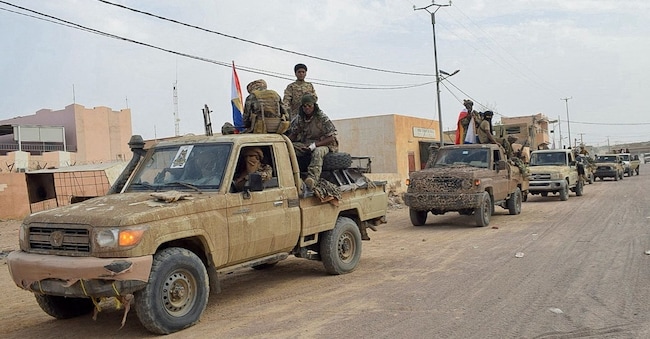
NAIROBI - Kidal is a rural town in north-eastern Mali, over a thousand kilometres as the crow flies from the capital Bamako and just over 300 kilometres from the northern border with Algeria. Last April, it fell into the hands of jihadists from the Group for the Support of Islam and Muslims (Jama’at Nusrat al-Islam wal-Muslimin or JNIM) and the Tuareg rebels of the Azaward Liberation Front (FLA), inflicting one of the key defeats in their joint offensive against Malian security forces and Russian allies of the Africa Corps. For the past few days, however, it has come to symbolise the exact opposite: glimmers of hope for Bamako’s recovery and its role as a partner in the national and regional balance of power, with all the uncertainties and vulnerabilities that this entails.
Malian forces and the contractors from Moscow announced on 6 October that they had regained control of the town, forcing rebels and jihadists to retreat and scoring a public relations victory following the humiliation suffered in the spring. The operation took the form of a ground and air assault by Malian forces, supported by the very same ‘Russian partners’ who had been overwhelmed in April and caught off guard by major incursions, including the raids carried out in Niger.
Fla has downplayed his departure as a ‘strategic retreat’ and ‘temporary’, emphasising the absence of any direct confrontation and the deliberate nature of his departure. However, the advance of government forces and the Africa Corps nonetheless amounts to a victory for Bamako and reinforces certain scenarios that have already emerged at regional level, particularly regarding the intricate web of alliances with major regional players. Starting with one of the most dynamic players in the Sahel crisis, Algeria under Abdelmadjid Tebboune.
The ‘symbolic’ victory and the burden of Algiers
Mali, a country rich in gold in the Western Sahel, is caught in a regional vicious circle of terrorist threats and the rise of military juntas. The regime in power in Bamako came to power following the twin coups of 2020 and 2021, with the explicit aim of eradicating terrorist violence and overcoming the failure attributed to the constitutional government of Ibrahim Boubacar Keïta. The military junta, led by General Assimi Goïta, has signed an agreement with Russian contractors from the former Wagner Group and launched a counter-offensive criticised for its brutality and effectiveness. Last April’s setback had dealt a historic blow to the stability and reputation of the junta and its allies, in a country that still ‘ranks’ fifth in the global Global Terrorism Index. The liberation of Kidal could give a boost to the prospects of both.
In the immediate term, there is talk of ‘a symbolic victory that could serve as a lifeline for the Bamako junta’, explains Beverly Ochieng of Control Risks, whilst noting the fragilities that threaten the sustainability of the latest offensive and the entire government. Looking ahead, says Luca Raineri of the Scuola Superiore Sant’Anna, the operation is taking place against a backdrop of interesting developments “particularly on the diplomatic front”. The first, says Raineri, is the rapprochement between Mali and Algeria at the heart of Abdelmadjid Tebboune’s new Sahel agenda and the support offered to regional juntas from a security perspective. The second, he adds, is the dialogue initiated by the FLA rebels with Libya under Khalifa Haftar during talks earlier this month, a synergy that may have ‘dispelled’ any lingering ‘sympathy’ for Algiers and favoured its alliance with the junta in Bamako.


