
From the 19th, it’s time for the second exam: maths for the science stream, Latin for the classics stream
This examination aims to assess the knowledge, skills and competences expected of students in this specific course of study, in line with their educational, cultural and professional profile.
by Claudio Tucci and Laura Virli
Key points
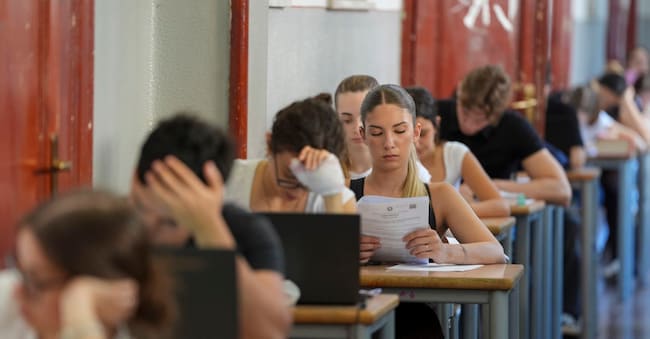
The second written paper of the school-leaving exam is the subject-specific exam, which will take place on 19 June. As with the Italian exam papers, the second paper is also a national exam, meaning it is set by the Ministry of Education and Merit, and focuses on the subject that characterises the student’s chosen course of study. This paper aims to assess the knowledge, skills and competences expected of students in that specific course of study in terms of their educational, cultural and professional profile.
The subjects for the second exam
These subjects are already familiar to final-year students as they were selected by the Ministry at the end of January. For the Classical stream, the subject is Latin; for the Scientific stream, it is Mathematics. Business Studies for technical colleges in the Economic Sector specialising in Administration, Finance and Marketing; Design, Construction and Installations for the Construction, Environment and Territory specialisation – to give just a few examples. For vocational schools reformed under Legislative Decree 61 of 2017, the second written exam will not focus on specific subjects but on the learning outcomes and the core thematic areas of the course of study to which they relate.
The proceedings
Whilst we refer readers to other articles for some practical advice on how to tackle these subjects, it is worth noting here that the second written exam is perhaps the most technical part of the school-leaving exam, and the rules governing it are designed to ensure consistency at national level, whilst respecting the specific characteristics of each course of study. As regards the exam itself, the duration varies depending on the stream (often between six and eight hours), but all candidates are required to remain in the examination hall for at least the first three hours. Supervision is strict: the use of mobile phones or connected devices results in immediate exclusion. However, each stream has its own permitted ‘aids’: from a Latin dictionary for the classics stream, to a calculator (scientific or graphing, provided it does not have symbolic calculation capabilities) for the science stream, right through to the Civil Code for the economics streams.
The assessment is based on a national marking scheme
Marking is carried out with the utmost transparency. Assessment is based on a national marking scheme that ensures consistency across Italia. The results of the written papers are not communicated individually, but are published for all candidates in the class at the same time, at least two days before the start of the interviews.

Brand connect


Newsletter Scuola+
La newsletter premium dedicata al mondo della scuola con approfondimenti normativi, analisi e guide operative
Abbonati