Consumption and imports

From yoghurt to feta: the success (and unexpected consequences) of Greek products around the world

Yoghurt and feta (as well as olives, moussaka and gyros) are becoming increasingly popular, partly due to different ways of eating them, but

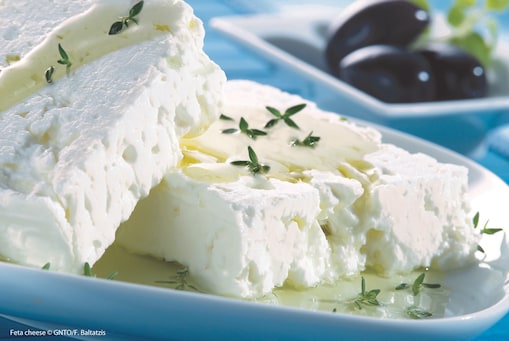
Assieme allo yogurt la feta è il simbolo del boom delle vendite dei prodotti greci in Italia

4' min read

Translated by AI
Versione italiana

4' min read

Translated by AI
Versione italiana

Italians really do love Greece. And not just as a holiday destination, but also when it comes to food. From yoghurt, feta, olives, moussaka, gyros, olive oil and kiwis, Greek food products are enjoying growing success both in modern retail outlets and in the catering sector. Whilst yoghurt, feta, Kalamata olives, baklava, tzatziki and Greek-style desserts are gaining ground on the supermarket shelves, whilst in the catering sector the first chains of Greek tavernas are emerging, such as Milos, which aims to exceed 12 company-owned outlets by 2026, before also opening up to franchising.

Several factors are driving the popularity of Greek products and flavours. First and foremost, the recognition of the Mediterranean diet as a benchmark for healthy eating, but also the perception of these products as natural and authentic, combining taste with health benefits, whilst managing to align with current nutritional trends (such as high-protein diets) whilst ensuring a good dose of enjoyment.

Loading...

Yoghurt continues to be a big hit in the supermarket sector

The frontrunner in this trend is Greek yoghurt, one of the fastest-growing products in the global food sector, which has long been recording double-digit growth rates. Over the past year , sales in large-scale retail rose by 30 per cent by volume and 26 per cent by value , reaching €413 million, according to estimates by Circana.

This trend is reflected in import figures: 42.5 per cent of the 205,000 tonnes of yoghurt imported into Italia in 2025 came from Greece, 11 per cent more than the previous year, according to estimates by Assolatte. In less than a decade, Greek yoghurt has captured almost a quarter of the Italian yoghurt market, as well as a place in the shopping trolleys of 58 per cent of Italian households (15.2 per cent more than in 2022), who buy it on average 27 times a year (source: YouGov).

The fact that Greek yoghurt has become part of Italians’ daily routine is confirmed by the current very positive trend for larger sizes (500 or 1,000 g), which are certainly favoured by their better value for money but are also ideal for supporting consumption that is no longer limited to breakfast but is expanding into snacking and is also growing as an ingredient.

Feta extends the cooking season

The rise in popularity of Feta, the quintessential Greek cheese, which has been protected by the PDO for over 20 years, is also linked to its use in cooking. Italians no longer use it just in salads and cold dishes, but also in recipes where it is cooked, and they prefer it in handy formats (such as cubes) or in a lactose-free version. This range of uses has extended the season in which it is consumed: whilst Feta used to be bought only in summer, today 42 per cent of purchases take place during the other three seasons of the year.

This has boosted market growth, which has doubled over the course of five years and continues to show double-digit increases in volume in 2026, making it the fastest-growing cheese in the large-scale retail sector. This trajectory has enabled Feta to establish itself as a significant segment, surpassing that of some traditional cheeses (such as goat’s cheese or robiola) in the large-scale retail sector. Today, the market is worth 120 million euros and 8.3 million kg, despite the average price being higher than the standard for fresh cheeses.

Export boom for Greece...

The global surge in demand for yoghurt and feta has driven Greek agri-food exports, which have risen over the past decade from 3.3 to 11.5 billion euros (18.6 per cent of total national exports), and have proved so resilient as to withstand the uncertainties and challenges of the international landscape.

In 2025, Greek agri-food exports rose by 7.8 per cent and Italia remained the leading export market, accounting for 20 per cent of the total, ahead of Germany, which accounted for less than 15 per cent. Whilst fruit and vegetables, dairy products, olives and olive oil continue to account for the bulk of exports (65 per cent), other products are growing, such as wines, beers, ouzo and aquaculture products, on which the government is placing great emphasis and to which it has just allocated 131 million euros to support new farms. All this is taking place against a positive backdrop, given that the Greek economy is growing at a rate higher than the European average, with a 2.2 per cent increase expected in 2026 – more than four times that forecast for Italia.

... but supply is not enough and imitations are rife

But the global success of Greek food has a bittersweet taste for the Greeks, because the market’s boom has accentuated the historical imbalance between the potential global market and Athens’ actual capacity to meet that demand. At least with authentically Greek products. A prime example is the so-called ‘Greek-style yoghurt’ (greek style), which borrows the production technique of Greek yoghurt and replicates it everywhere (and particularly in the US, the leading market for this product). This product has now ‘eaten into’ Greek yoghurt as it accounts for the largest share of the booming global market, which is growing by 9 per cent a year and is estimated to reach 30.2 billion dollars by 2031, dominated by international competitors such as Chobani, Danone and Lactalis.

Loading...

Even Feta is facing the strain of its own success. On the one hand, there is rapidly growing international demand, which has boosted Greek exports (+700 per cent in 20 years) and is forecast to reach 19 billion euros by 2030; on the other, there is a supply chain of limited scale (140,000 tonnes of annual production), which is currently weakened by the sheep and goat pox outbreak, which is significantly reducing the availability of milk, with production forecast to fall by around 10 per cent by 2026. This will inevitably have repercussions on prices and exports, which are vital for the country as Athens sells 75 per cent of its production abroad. In this context, the reduced availability of the product and difficulties along the supply chain could affect the supply of authentic Feta on the international market, which is already dominated by non-Greek producers for over two-thirds.

Copyright reserved ©
Loading...

Brand connect

Loading...

Newsletter

Notizie e approfondimenti sugli avvenimenti politici, economici e finanziari.

Iscriviti