
Fuel, diesel excise hypothesis aligned with petrol? The Mef: 'No increase'
The possible implications of the alignment of diesel-petrol excise duties in the forthcoming manoeuvre and the risks of price increases for consumers

3' min read
3' min read
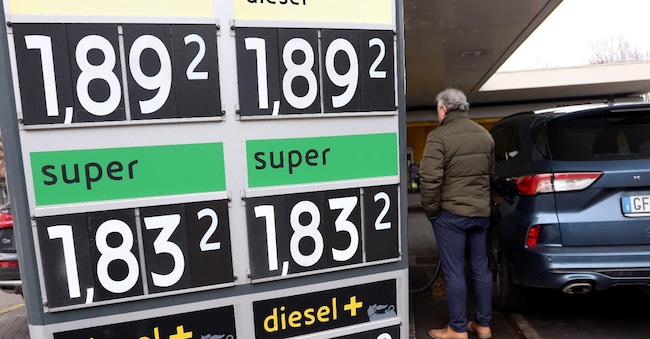
An upward adjustment of the excise duty on diesel, which is currently lower than that on petrol. Reading between the lines the intentions indicated in the psb (structural budget plan) in view of the next manoeuvre, the solution is at least being studied by the government. But what would this mean? According to the initial estimates of some consumer associations, this would lead to a real risk of price increases (Assoutenti has even spoken of a '3.1 billion euro sting on motorists). However, the game is still to be played and the cards on the table will be revealed as the manoeuvre approaches, so at the moment it must be made clear that no increase has been decided and will not be operative. But the Mef says: 'The news that the government intends to increase excise duties on fuels is completely misleading. Based on the PNRR commitments, the specific Recommendations of the European Commission and the Plan for the Ecological Transition approved in 2022, the Government is obliged to take measures to reduce harmful environmental subsidies (Sad). In this context, the lower excise taxes on diesel fuel compared to those on petrol are also included, and therefore a mechanism to align the levels of the respective excise taxes is being studied. In any case, consistent with the approach of this Government, the intervention will not result in the simplistic choice of raising excise duties on diesel to the level of those on petrol, but rather in a reshaping of the two. The medium-term budget structural plan envisaged that this alignment will be defined within the measures implementing the tax delegation'.
Revision of facilities
But let us take a step back. What did the government write in the Psb? "To use the reorganisation of tax expenditures (tax expenditures) in certain areas of taxation, such as the alignment of the rates of the excise taxes for diesel and petrol and/or policies to reorganise the present facilities in the field of energy, as a strategic lever to simultaneously achieve the objectives of increasing the efficiency of the Italian tax system and support the full achievement of the energy and environmental transaction strategy at the European and national levels". In fact, therefore, there are two factors to take into consideration. On the one hand, the reorganisation of tax expenditures, which returns to the fore on the eve of every manoeuvre and which is in any case a declared objective (and still to be implemented) of the tax reform proxy.
The alignment
.On the other hand, the Psb speaks of 'alignment'. Contextualising the reference, it is difficult to say that excise duties on petrol may go down. Rather, the hypothesis is that excise duties on diesel (gasoil) will be aligned upwards. Currently, in fact, excise duties weigh 61.7 cents per litre on diesel compared to 72.8 cents for petrol.
Even in the catalogue of environmentally harmful subsidies of the Ministry of the Environment (the latest available edition is from 2022 for 2021 data) it was stated that 'the excise duty applied on diesel for motor vehicles is lower than that on petrol and this is not justified in environmental terms'. So an underlying tendency to intervene is there.
The effects
.Of course an increase in excise duties for diesel would have a number of direct but also indirect effects. Direct because it would weigh on the refuelling of those who have diesel-powered cars and especially on the poorer or struggling (in many respects) segments of the population, for whom the increases could be heavy in relation to their disposable income. Indirect effects could also be caused by the price increases that could be passed on to the transport of goods and thus also make consumer goods more expensive.

