
G7: Trump triumphs, Macron wins, Meloni mends fences. But the uninvited guest is Xi
Peace with the tycoon and the agreement with Iran mark the summit’s success. Zelensky is hoping for a breakthrough. The G7’s alliance with partner countries, from India to the UAE, from Brazil to Egypt
from our correspondent in Évian-les-Bains Manuela Perrone
 Aggiungi Il Sole 24 Ore
ai preferiti su Google
Key points
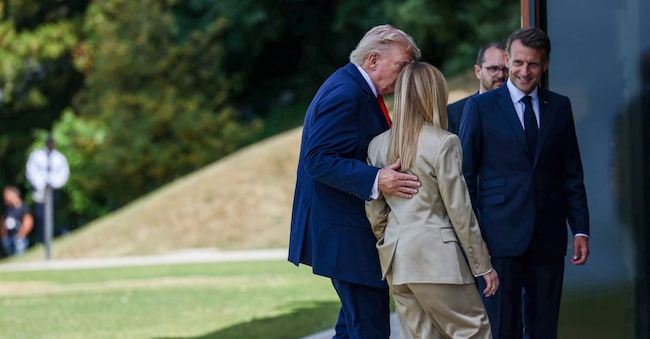
“I am the boss”. On the final day of the G7 summit in Évian-les-Bains, it was Donald Trump who crowned himself the undisputed winner of the summit. He is indeed the victor in practical terms, having been preceded by the announcement of the first agreement between the US and Iran, but he was able to count on the decisive support of Emmanuel Macron, the other winner who courted him by offering the Palace of Versailles to celebrate his 80th birthday inthe pomp and splendour so beloved by the tycoon, whilst absorbing – without rising to the provocation – the blow of the new tariffs on wines and champagne announced by the American president before he even arrived on the shores of Lake Geneva. Grandeur and savoir-faire: the art of diplomacy has struck again. In the midst of it all, Giorgia Meloni is content: the Italian Prime Minister can return to Rome satisfied, celebrating the thaw in relations with both after weeks of misunderstandings.
From the bench in Kananaskis to the sofa at the Hotel Royal
From Italia’s perspective, this is the main outcome. An official bilateral meeting with Trump could have marked a complete thaw following the President’s attacks on Meloni and the Pope and the chill that had settled over relations between Rome and Washington. But there was no shortage of opportunities for a ‘serious’ discussion on the challenges of the coming months – as the Prime Minister put it – alongside the light-hearted banter. This relaxed atmosphere allowed the Prime Minister to speak of an ‘unchanged relationship’. And never mind that the famous conversation on the wooden bench at the Canadian G7 summit in Kananaskis to the conversation captured on a sofa at the Royal Hotel in Évian, the relationship is no longer quite so “special”. It could have been much worse. And having stepped down from her role as a bridge-builder and the tycoon’s privileged interlocutor – a figure who is also unpopular with the Italian public – may even prove useful to Meloni in the run-up to the election.
Macron and the credit for a hard-won medal
Macron’s victory is indisputable: he has succeeded in transforming a potentially explosive G7 summit, plagued by multiple crises, into the first real moment of renewed harmony amongst the leaders of the world’s seven major economies. Bringing them back together on key issues, from Ukraine (against Putin) to the Middle East, from critical minerals to the fight against global macroeconomic imbalances, and from artificial intelligence to migration. This unity allows Meloni (who will meet face-to-face with the French president at Italia-Francia bilateral meeting scheduled for 25 June in Antibes) to once again emphasise the importance of the ‘unity of the West’, the mantra that has underpinned her foreign policy even during the most difficult moments of her row with Trump. He remains, however, the supreme leader, able to do as he pleases. First the chaos – with tariffs, threats against Greenland, the ousting of Maduro in Venezuela and, even more so, the war in Iran launched alongside Israel without even deigning to inform European and NATO allies – and then, once again, a semblance of order.
Zelensky and the risk of a ‘Pyrrhic victory’
The joint statement in support of Kyiv marks a return of US focus on Ukraine. This is a clear victory for President Volodymyr Zelensky, who had criticised US disengagement, particularly following the escalation of the conflict in the Gulf. The leader has secured G7 unity against Vladimir Putin and his refusal to negotiate for peace (thus attempting to shore up the bloc’s position against any potential concessions by Trump towards the Russian president), but he knows that this victory could be a Pyrrhic one. It is no coincidence that he delivered his message via social media: ‘It is essential that everything that has been discussed is put into practice.’ Words must be followed by deeds.
Warnings to Israel
At the opposite end of the spectrum is Israeli Prime Minister Benjamin Netanyahu, who has been repeatedly criticised by Trump over the past week and has been the target of numerous jibes from France: the G7 fear that it is his government that is ‘jeopardising’ (as Meloni put it) the agreement between Washington and Tehran. They condemn the incursions into Lebanon. They regard him as a loose cannon, particularly as, during the election campaign, he could succumb to the most violent wing of his government, led by Ben-Gvir. This would scupper Trump’s efforts and the reopening of the Strait of Hormuz.


