The case

Garibaldi ship to Indonesia free of charge, stalemate in Parliament: vote postponed, here's why

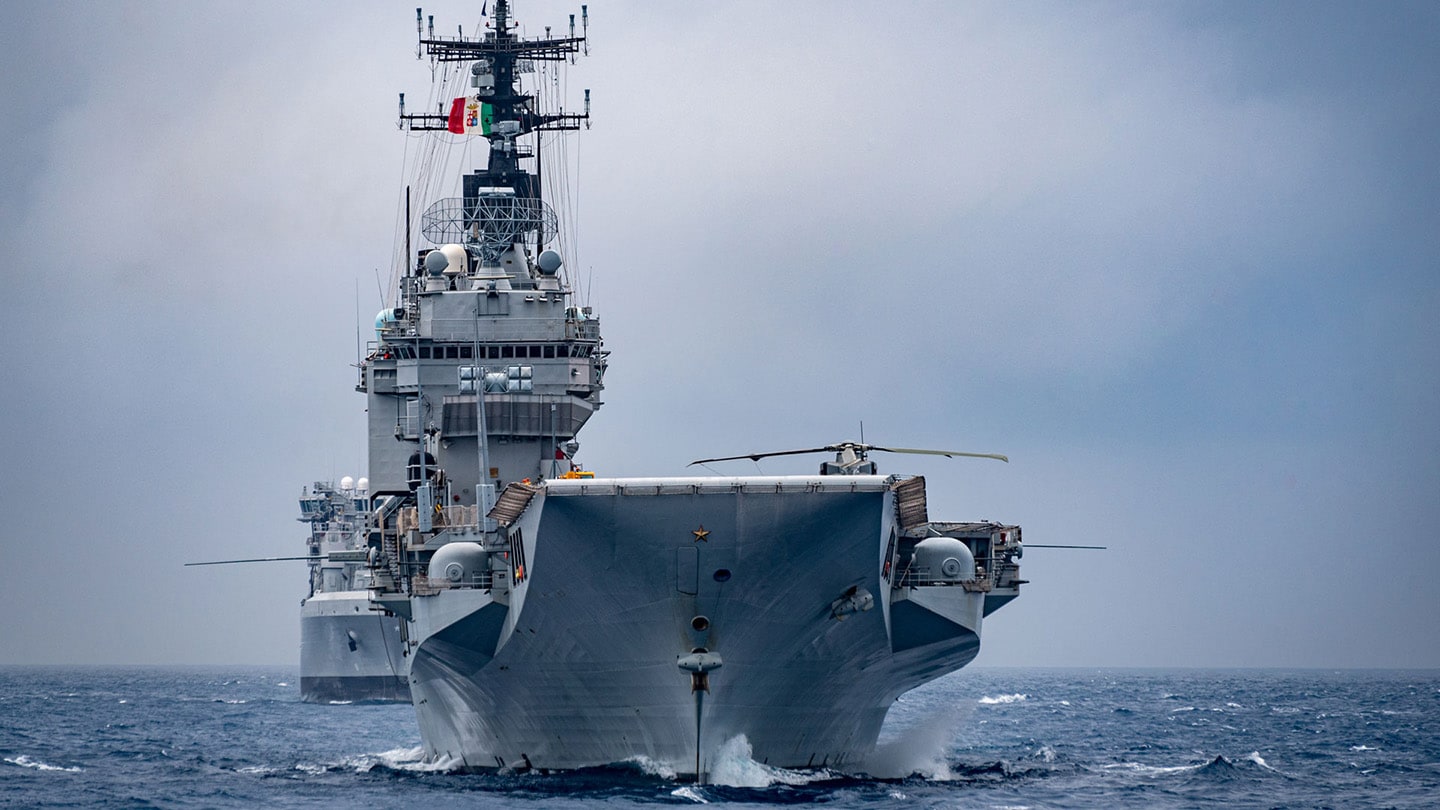
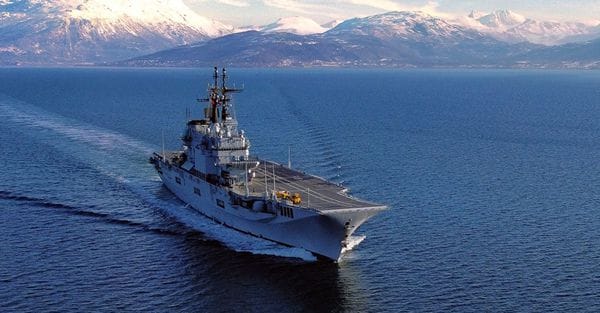
Oppositions are holding back. The aircraft cruiser was launched on 4 June 1983 and entered service in 1985. Over the years, it has played a leading role in all the major international missions involving the Navy

by Andrea Carli

L’incrociatore portaeromobili Giuseppe Garibaldi (Marina Militare - Ministero della Difesa)

8' min read

Translated by AI
Versione italiana

8' min read

Translated by AI
Versione italiana

The opinion of the competent Foreign Affairs and Defence commissions, essentially a go-ahead for the operation, should have arrived by Monday 16 March, but the oppositions, with the PD and Five Star Party in the front row, obtained the delay of the vote. On the table is a delicate issue: the free transfer of the Ship Garibaldi to the Indonesia. The transfer of armament materials declared obsolete for technical reasons is in fact only permitted for defensive materials, subject to the binding opinion of the competent parliamentary commissions.

In a note issued in recent days, the Dem Alessandro Alfieri and Graziano Delrio senators pointed out that the decision to postpone the vote was shared "also by a part of the majority political forces. In fact, some unclear points remain: in particular, the role of the Italian company Drass, which would have been indicated by the Indonesian counterpart as the intermediary of the operation.

Loading...

But Drass itself would already be an indirect beneficiary of the overall deal, which according to information provided by parliamentary offices has a contract for the construction ofsix submarines worth €480 million in the pipeline.

At this point,' the two senators added, 'given the delicate political situation, it is essential that the minister Crosetto come directly to clarify the contours of the operation in order to remove any shadow'.

The Five Star also pressed. "In the Foreign Affairs and Defence Commission of the Senate, we have asked and obtained, together with the other oppositions, the postponement of the vote on the decree on the transfer of the Garibaldi ship to Indonesia, requesting additional information from the government on all the obscure aspects of this affair,' reads a note by the M5S members of the Foreign Affairs and Defence Commission of Palazzo Madama.
We demand first that full light be shed on the intermediary role of the Drass company suggested by the Ministry of Defence in Jakarta and on the relationship between this sale and the rich contract that the same small company won for the supply of submarines, also to Indonesia; we want to know why Defence chose to give away a historical asset of the Marina Militare that is still worth over 50 million euro and could therefore have been sold rather than given as a gift; we demand absolute transparency on the relations between Crosetto and Drass chairman Sergio Cappelletti, on their alleged meeting in Dubai in recent days and on the relationship between the company and Crosetto's party, which the same company has financed in recent years. We expect clear answers'.

Ministry of Defence memo: 'there is no Indonesia deal'

On 7 March, following the publication by Il Fatto Quotidiano of an article entitled 'Crosetto, the man from Dubai and the rich Indonesian affair', a note from the Ministry of Defence clarified that 'there is no 'Indonesia affair' attributable to the Minister of Defence or the Ministry. There are no acts or decisions taken by the Minister that can be interpreted as such. Defence procurement procedures do not involve the Minister in technical and administrative decisions, which are instead the responsibility of the relevant administrative structures'.

The chairman of the Drass company, Sergio Cappelletti, spoke of 'serious insinuations without any foundation'. Nave Garibaldi, he added, 'today represents for the Defence Administration mainly a cost in terms of money and committed personnel. Its possible sale would instead enable the activation of an important modernisation programme that would involve major Italian companies in the defence sector, for the upgrading of the combat system and aeronautical components.

In the context of technical evaluations related to the Ship Garibaldi, Drass works exclusively on behalf of the Indonesian authorities. The activities carried out relate exclusively to technical inspections, engineering consultancy, logistical support, and analysis of technical documentation. These activities are carried out by specialists with direct experience on the Garibaldi and are commissioned solely by the Government of Jakarta.

The decree transmitted by Minister Crosetto to Parliament

So far, this is the ongoing political confrontation. In the background, the parliamentary process which, explains a dossier prepared by the Senate and Chamber offices, started on 19 February, when the Minister of Defence forwarded to the Chambers the outline of an interministerial decree concerning the transfer, free of charge, of the 'Nave Garibaldi' to the Navy of the Republic of Indonesia.

The measure was assigned, in the Chamber of Deputies, to the Joint Foreign Affairs and Defence Committees and, in the Senate, to the Foreign Affairs and Defence Committee. The Commissions should have expressed their opinion by 16 March, but this will not be the case. Attached to the decree is a report prepared by the IV Department - Logistics and Infrastructure of the Defence General Staff (dated February 2026), with detailed information both in relation to the content of the transfer and, more generally, to the internal situation in Indonesia.

In the first aspect, the Government explains in the document that the transfer 'aims to strengthen the collaboration and cooperation between the Italian Armed Forces and the Indonesian Armed Forces, and is part of the support to the institutions of the said country.

The exchange of defence equipment helps to increase interoperability between the respective devices and, moreover, is an indispensable prerequisite for a shared desire to operate jointly and synergistically in various crisis situations (both bilaterally and multilaterally)'.

La prua del Garibaldi

L’incrociatore portaeromobili Giuseppe Garibaldi (Marina Militare - Ministero della Difesa)

The elements that the government believes justify the divestment

In the document, the Government explains that in this case the legal requirements for the formalisation of the transfer are met. It indicates some of them. The first: the Republic of Indonesia is a developing country as determined by the Development Assistance Committee of the Organisation for Economic Co-operation and Development (OECD). The second: the European Union and the Republic of Indonesia have signed a 'Framework Agreement on Comprehensive Partnership and Cooperation', signed in Jakarta on 9 November 2009 and ratified by Italia in 2011.

The Agreement provides for the strengthening of political dialogue and bilateral and multilateral cooperation in a wide range of areas of mutual interest, including security. The executive report further recalls that the parties, starting in 2021, have initiated general interlocutions, within the framework of which the Republic of Indonesia has represented its willingness to receive decommissioned naval units, with the aim of promoting the valorisation of naval assets that are no longer in service, subsequently identified as the Nave Garibaldi.

It is also pointed out that the "Nave Garibaldi" has been placed in the administrative position of Reserve as of 31 December 2024, due to reaching the end of its operational life cycle and technical-operational obsolescence.

Finally, the report states that Nave Garibaldi was designed and built as an aircraft carrier unit with a distinctly defensive connotation, intended for command and control functions, air and naval security and support for multinational crisis management operations.

The value of the transaction and expected savings

The document clarifies that the free transfer of the naval unit, for a total value estimated at over 54 million euro (54,022,426.67), does not entail any additional burden on the state budget, as it does not determine any new expenditure commitments for the Defence. It is also recalled that the transfer avoids the maintenance costs currently incurred by the Navy, which have been quantified at approximately 5 million euro for 2025 (mainly attributable to the consumption of electricity, surveillance services, security and minimum activities necessary to ensure the livability and integrity of the platform).

The report also examines alternative hypotheses: if the unit were not sold, the Navy would have to initiate the alienation procedure aimed at its subsequent demolition. This procedure would take an estimated time of no less than 24 months and would entail total costs of approximately 18.7 million euros.

L’incrociatore portaeromobili Giuseppe Garibaldi (Marina Militare - Ministero della Difesa)

A curriculum with more than 40 years of service

The aircraft cruiser Giuseppe Garibaldi, the first unit of its kind in the Italian Navy, was built at the Monfalcone Naval Shipyard, where it was launched on 4 June 1983 and entered service in 1985. As of 2014, she was placed under the command of the Third Naval Group, stationed at the Brindisi base. Over the years, she has played a leading role in all the major international missions in which the Navy has been involved. The first in which it took part was the 'Restore Hope' operation in Somalia, from 18 February to 5 April 1994, in support of the amphibious operations for the return of the Italia contingent. Also in Somalia, from January to March 1995, the unit was part of the Unosom Task Force in support of the UN contingent. As part of Operation Dinak, when Italy provided operational and logistical support to allied operations to resolve the Yugoslavian crisis, Nave Garibaldi was deployed in the Adriatic from 26 April to 17 June 1999. From November 2001 to March 2002, she participated as aircraft carrier and Command Headquarters in Operation Enduring Freedom, remaining continuously at sea for 87 days without technical stopovers and covering approximately 20000 miles. Throughout the period, it was used as a naval vessel for control, interception and interdiction activities at sea, and as a launching platform for AV8B+ aircraft that, together with other coalition air assets, carried out air support and interdiction missions over Afghan territory.

In the summer of 2006, the Italian Navy intervened in the crisis in Lebanon, first with Operation Mimosa and later with Operation Leonte, for which, from 29 August to 19 October, Nave Garibaldi served as Command Headquarters. During this period, the activity of the embarked air group contributed to the control of merchant traffic in transit to the Lebanese coast, while the naval force's activity was focused on the amphibious landing in southern Lebanon for the deployment of an inter-force contingent of about 1,000 soldiers from the then San Marco Regiment, the Lagunari and the Special Forces. In March 2011, as part of the Libyan crisis, Nave Garibaldi provided support to international activities in Operation Odissey Dawn. Subsequently, from 26 March to 26 July, it took part in Operation Unified Protector, for which it was also the Command Headquarters for about two months. The activity carried out by the coalition's naval and air assets, in compliance with UN Security Council Resolutions 1970 and 1973, was aimed at ensuring compliance with the embargo on arms trafficking by sea and the implementation of the No-Fly Zone against Libya. In the two-year period preceding the work stopover at the Taranto maritime military arsenal, which began in October 2013 and ended in October 2014, it participated in all advanced training activities Open Sea - Amp

hex as Flagship of the High Seas Force Command.

From June 2016 until April 2017, it was the flagship of Operation Sophia (EUNAVFOR Med mission), replacing the Cavour. In addition, on 22 August 2016, off the island of Ventotene, it hosted the summit between the three leaders of the European Union: Matteo Renzi for Italia, François Hollande of France and Angela Merkel of Germany. In 2018 he took part in the Open Sea 2018 exercise. In 2019, he similarly takes part in Open Sea 2019. In March 2022, it was the turn of the Nato exercise "Cold Response 22",organised in Norway: that was the most important exercise conducted in the Arctic since the 1980s. In March 2024, the aircraft carrier Garibaldi and the amphibious assault ship San Giorgio have navigated through the icy waters of the Arctic Circle to participate in the "Nordic Response 24" exercise. The exercise was planned by Norway and led by personnel from the NATO Joint Force Command in Norfolk (USA) and the Norwegian Joint Headquarters. Then the penulast chapter of a long history, always lived on the front line: from 31 December 2024 Nave Garibaldi is placed in the administrative position of Reserve. Now the final chapter opens: the sale to Indonesia. A transaction, the government report explains, that will presumably be finalised by December 2026.

Copyright reserved ©
Loading...

Brand connect

Loading...

Newsletter

Notizie e approfondimenti sugli avvenimenti politici, economici e finanziari.

Iscriviti