

Greece, Egypt and Cyprus join forces to supply the EU
Following the military alliance between Athens and Jerusalem, there is further news from the Aegean theatre. The leaders of the three countries have announced plans for a gas pipeline and new terminals. Mitsotakis and the Egyptian President, Abdel Fattah al-Sisi, intend to link their respective electricity grids and have issued joint statements on bilateral relations and on the Palestinian and Lebanese issues. A framework from which Turkey is excluded

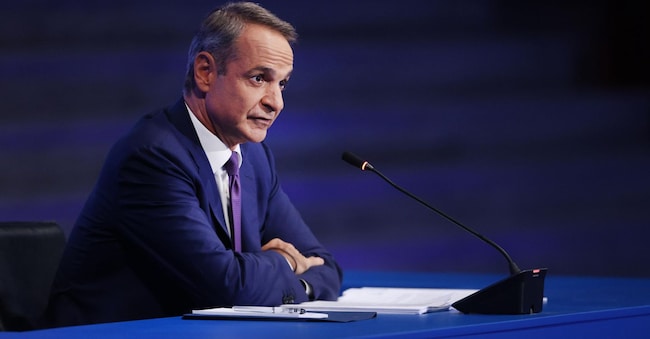
In the latest of a series of strategic moves and counter-moves unfolding on the Aegean chessboard, the leaders of Greece, Egypt and Cyprus met on the Egyptian Mediterranean coast to announce a collaboration aimed at connecting Cyprus’s offshore gas fields to Egyptian infrastructure, thereby paving the way for its export to the European continent. Whilst this agreement is significant in its own right, the news forms part of a broader game of mutual caution between Turkey and Greece.
The agreement, signed by Eni and its Cypriot subsidiary – which has announced a contract worth between 500 and 750 million dollars for work on the Cronos field – provides for an underwater gas pipeline to carry gas to Egyptian processing facilities, from where it will then be transported by ship to south-eastern and central Europe. With an estimated annual production of 2.8 million tonnes of LNG, the agreement would help circumvent the challenges associated with the Strait of Hormuz and the Red Sea and, according to the Greek Prime Minister Kyriakos Mitsotakis, would further strengthen the Vertical Corridor, the route running from Greece up towards Central and Eastern Europe. Announcing the final investment decision at the end of July, Eni’s chief executive, Claudio Descalzi, spoke of a ‘concrete step towards Cyprus becoming a producer and exporter of European gas’, capable of paving the way for a regional hub in the eastern Mediterranean thanks to the existing hydrocarbon infrastructure in Egypt, emphasising its importance for ‘the diversification and security of Europe’s energy supply’. In addition to gas, Mitsotakis and the Egyptian President Abdel Fattah al-Sisi also announced their intention to interconnect their respective electricity grids and issued joint statements on bilateral relations and on the Palestinian and Lebanese issues.
The rapprochement between Athens and Cairo did not come out of the blue. On 7 August, Turkey, Saudi Arabia and Pakistan had formalised the Mecca Defence Alliance , a security pact providing for military interoperability, joint exercises and industrial cooperation in defence, suggesting – as confirmed by the Turkish and Pakistani foreign ministries – that membership remains open to other countries. Although not a signatory, Egypt took part in the preliminary four-way talks and is considered, alongside Bangladesh, the most natural candidate for future membership. Erdogan himself told Al Jazeera, also in August, that Egyptian membership ‘remains possible’ and remains ‘an open option’. However, the Egyptian Foreign Minister Badr Abdelatty has clarified that Cairo is still assessing the legal and constitutional aspects of such a move – a sign of its desire to preserve its multi-vector foreign policy.
Greece has responded, within a matter of weeks, to Turkey’s growing rearmament – which also involves a nuclear power – with a €3 billion defence agreement with Israel, a country whose tensions with Ankara have never been so high. Under the agreement, dubbed Achilles’ Shield, Tel Aviv will supply Athens with a multi-layered air defence system that can be integrated with the various branches of the armed forces, including the Navy. Among the many factors at play, these developments point to a full-scale rearmament in the Aegean theatre. In this context, the Cypriot gas pipeline should be seen not only as a building block of European energy security, but as the latest implicit move in the Greek-Turkish standoff: a way for Athens to cement its relations with Cairo and consolidate its regional influence. It is no coincidence that Mitsotakis himself, on the day of the summit, sought to reiterate precisely this sentiment: ‘Stability does not under any circumstances mean retreat or tolerance of faits accomplis,’ he said. “Greece is not afraid to defend its positions firmly, nor to engage in dialogue,” he concluded.

