Cruise

Hantavirus, possible infection in waste mountains frequented by birdwatchers

The WHO informed 12 countries whose citizens disembarked from the Hondius at St. Helena. The 12 countries are: Canada, Denmark, Germany, the Netherlands, New Zealand, St Kitts and Nevis, Singapore, Sweden, Switzerland, Turkey, the United Kingdom and the United States.

by Enrico Bronzo

aggiornato alle 17

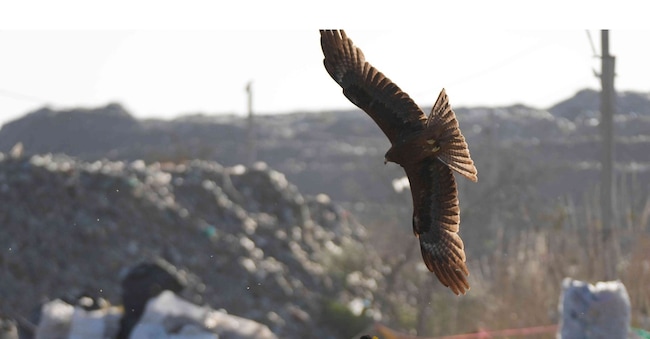
foto simbolica di un rapace in discarica, aprile 2026. (AP Photo/Channi Anand) APN

4' min read

Translated by AI
Versione italiana

4' min read

Translated by AI
Versione italiana

While work continues to manage the hantavirus outbreak on the cruise ship Hondius, and to prevent further spread of the infection, investigations into the causes of the outbreak continue.

Prior to boarding the ship, the first two deceased Dutch husband (70) and wife (69) (he on board the ship and she on arrival in Johannesburg, South Africa) had travelled to Argentina, Chile and Uruguay on a birdwatching trip, which included visits to sites where the species of rat known to carry the Andes strain" of hantavirus is present.

Loading...

This was reported by the Director-General of the World Health Organisation (WHO) Tedros Adhanom Ghebreyesus during a media briefing.

KLM stewardess came into contact with deceased

On 7 May, a KLM flight attendant was tested for hantavirus after she showed mild symptoms and was admitted to Amsterdam. The announcement came from a spokesman for the Dutch Ministry of Health.

 The flight attendant got in touch with the Dutch woman who had been disembarked before take-off from the KLM plane on which she had tried to board on 25 April to leave Johannesburg for Amsterdam. The crew, given her health condition, had refused to transport her. The woman later died (she is the woman of the couple already mentioned, ndr).

The updated hantavirus balance

This is the updated tally; sixof the eight cases of suspected hantavirus reported on the cruise ship Hondius have been confirmed; these are the three deceased, two hospitalised in the Netherlands in Leiden and Nijmegen (among whom should be the ship's doctor) plus a Swiss man in Zurich.

Of the two other suspected cases, one is hospitalised in Düsseldorf, Germany.

Contagio da Hantavirus, Pregliasco: pochissimi casi da umano a umano

The owner: no passengers with symptoms on board. Incubation lasts six weeks

In a statement, the Dutch cruise operator Oceanwide Expeditions announced that 'all passengers showing symptoms of hantavirus have been disembarked from the Hondius'.

But it must also be said that 'given the incubation period of the Andes virus, which can be up to six weeks, it is possible that further cases will be reported,' said Ghebreyesus (WHO).

the first case dates back to a man who developed symptoms on 6 April and deceased on 11 April, without any specific tests for hantavirus being carried out at the time.

The vessel set sail on 1 April 2026 from Ushuaia, Argentina.

Oms: 12 countries informed of passengers disembarked at St Helena

"The World Health Organisation (WHO) has informed 12 countries whose citizens disembarked" from the cruise ship MV Hondius "at St Helena. These 12 countries are: Canada, Denmark, Germany, the Netherlands, New Zealand, St Kitts and Nevis, Singapore, Sweden, Switzerland, Turkey, the United Kingdom and the United States'.

Tensions in Tenerife

Port workers in Tenerife, in the Canary Islands, are planning to go on strike tomorrow to protest the arrival of the cruise ship Hondius scheduled for the night of Saturday to Sunday. This was announced by the union to the French broadcaster Bfmtv. An hour later the Canary Islands president, Fernando Clavijo, announced that the ship will not dock in the port of Granadilla, in Santa Cruz de Tenerife, but will "remain moored offshore, to allow the evacuation of passengers and subsequent transfer to the airport for repatriation. The evacuation of the passengers will take place with spears or a boat, which will pick them up for transfer, safely, to the airport" for repatriations, said Clavijo,

In addition, the government official reiterated that medical checks 'will be carried out on board and passengers will be disembarked for transfers and repatriations, with protective equipment, in a specific medical operation, in compliance with security protocols and without contact with the population'.

Rising cases in Argentina, the country from which the cruise departed

Argentinian officials and experts are scrambling to figure out whether their country was behind the hantavirus outbreak that hit the cruise ship Hondius in the Atlantic Ocean.

The health emergency on board the ship occurs as Argentina experiences a surgence of hantavirus cases that many local public health researchers attribute to the accelerating effects of climate change.

Argentina, from where the cruise departed, is regularly ranked by the World Health Organisation (WHO) as the country with the highest incidence of this rare rat-borne disease in Latin America.

On Tuesday, Argentina's Ministry of Health reported 101 hantavirus infections since June 2025. This is about twice as many cases as were recorded in the same period last year.

The possible reservoir in a mountain of rubbish at the entrance to Ushuaia

The possible reservoir of the Andean strain of the hantavirus first contracted by the two Dutch tourists on board the Hondius is an open-air dump at the entrance to Ushuaia - in Argentina's Tierra del Fuego province - in the vicinity of which birdwatchers are frequent. L

This was confirmed to Ansa by Gastón Bretti, a local photographer and guide, according to whom 'it is usual for enthusiasts to go to the dumps because there are many birds, generally necrophagous birds that feed on carrion'.

Bretti emphasises that it is an 'easily accessible place at the entrance to the cities' and describes it as 'a mountain of rubbish that now far exceeds the limit initially set by the authorities'.

"Sightings," the guide points out, "are in any case made from a parallel path, and that is where we usually go.

It is precisely on this dump that the attention of the Argentine health authorities is now directed, who announced yesterday that they were sending experts from the Malbran Institute to Ushuaia to capture specimens of rats in the area and examine samples of their faeces.

According to official records, Tierra del Fuego is not classified as an endemic area of the Andean hantavirus strain, and therefore changes in the epidemiological situation must be ruled out.

It turns out, on the other hand, that the two Dutch tourists, in the weeks before embarking on the Mv Hondius in Ushuaia on 1 April, visited other areas of Argentina and Chile considered to be endemic to the Andean strain.

Copyright reserved ©
Loading...

Brand connect

Loading...

Newsletter

Notizie e approfondimenti sugli avvenimenti politici, economici e finanziari.

Iscriviti