

Health inequalities in Italy: only 49 hospitals of excellence in the South out of 266 top facilities
Performance improves overall, but the gap between the areas of the country remains significant: among the 15 best facilities there is only the Federico II in Naples, five are in Lombardy. 20% of centres 'postponed', 51 in Campania alone

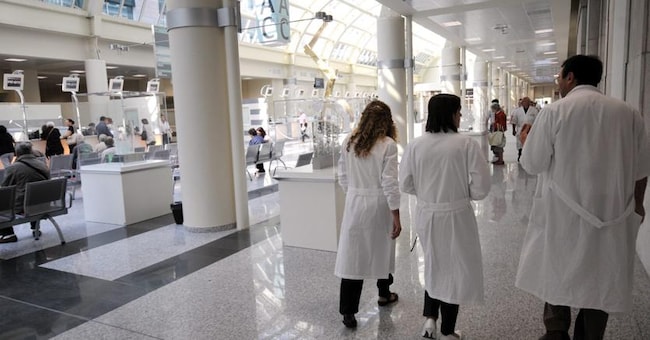
The fault line that divides the North and the South of the Italian health system begins with hospitals and makes the difference in the care guaranteed to Italians: from the volume of cancer surgery - a crucial indicator for measuring quality - to the timeliness of life-saving procedures such as heart attacks or strokes, to the excessive use of scalpels in maternity wards, given that in the South one in four births is still by caesarean section. A fault that also divides the cities from the suburbs where small hospitals resist but with lower quality standards.
This is stated by the latest figures just published by Agenas, the Agency for Regional Health Services, which this year, on the basis of no less than 218 indicators examined in the latest National Outcomes Programme (Pne), chooses not to make rankings as in the past, but to showcase the areas of excellence of our hospitals. With results that account for the entire gap between North and South. Beginning with the first list, the one that lines up the fifteen facilities in Italy with the best performance in at least six of the eight areas examined (cardiovascular, nervous system, general and oncological surgery, pregnancy and childbirth, osteomuscular, and nephrology), and which sees only one hospital from the South emerge, the Federico II Hospital in Naples.
The others are all concentrated in the Centre North with Lombardy standing out with five facilities. Here they are: Bolognini Hospital (Lombardy), Montebelluna Hospital (Veneto), Bentivoglio Hospital (Emilia-Romagna), Città di Castello Hospital (Umbria), Maggiore Hospital in Lodi (Lombardy), Poliambulanza Foundation (Lombardy), Papa Giovanni XXIII Hospital (Lombardy), Humanitas (Lombardy), Cittadella Hospital (Veneto), Fidenza Hospital (Emilia-Romagna), P.O. F. Lotti Stabilimento di Pontedera (Tuscany), Stabilimento Umberto I - G. M. Lancisi (Marche), Hospital of Savigliano (Piedmont) and Hospital of Mestre (Veneto).
A predominance that is also confirmed by looking at the numbers of individual areas that perhaps concern one or more hospital wards: out of 266 facilities that recorded a 'very high' level of care, only 49 are in the South, while in the Centre-North Lombardy, Emilia Romagna, Veneto, Tuscany and Piedmont record more excellence. In particular, in cardiovascular care on the basis of at least four indicators (from the 30-day mortality rate for heart attacks to the volume of admissions for by-passes) out of 25 top hospitals, 5 are in the South. In the "nervous system" on the basis of two indicators (such as the 30-day mortality rate for stroke) only 3 out of 26 hospitals in the South are at a very high level, just as in oncological surgery, where five of the 38 top facilities on the basis of at least 4 indicators (from the volume of operations to the mortality rate) are in the South. Even greater is the gap on pregnancy and childbirth where out of 51 facilities assessed on at least 3 indicators (such as the percentage of caesareans) only 1 is from the South. It is a little better in the osteomuscular area where out of 126 facilities with a very high level on at least 5 indicators (such as operations for femur fracture within 48 hours) 35 are under Rome.
The litmus test of the rift in care between the North and the South of the country - albeit within a framework of improvement - are the voluntary audit procedures on which Agenas is urging critical structures. A total of 198 hospitals have been alerted for a total of 333 audits, 88% of which are linked to a very low quality of results, while the rest stem from coding problems. Among the Regions 'summoned', Sicily (103 audits in 43 facilities), Campania (84 audits in 51 centres), Apulia (33 audits in 19 hospitals), Calabria (20 audits in 12 centres) and Sardinia (16 audits in 10 hospitals) stand out. Further north, Agenas calls for audits in particular Lazio (25 audits in 19 hospitals) and Lombardy (15 audits in 14 centres).


