
Heatwave leads to a surge in water requests from the agricultural sector to the Emilia Centrale Consortium: 200–300 calls a day
The agronomic technical staff in Central Emilia estimate that water requirements for the entire season will be around 20 per cent higher than average

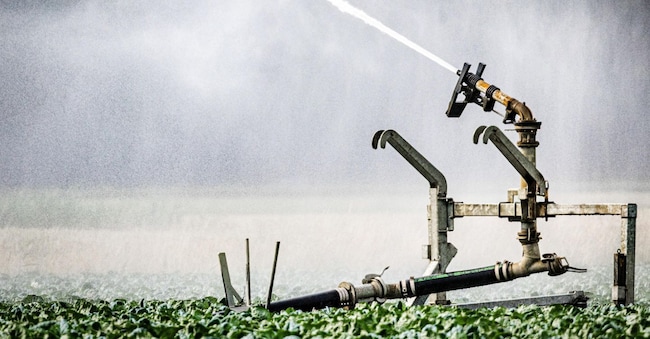
In addition to the health-related issues, the wave of extreme heat that has hit Italia is also causing significant disruption to the agricultural sector: the unusually high temperatures have caused a surge in irrigation consumption, and businesses across the sector require large quantities of water. In the area covered by the Emilia Centrale Land Reclamation Consortium, according to estimates by the technical and agronomic staff, irrigation requirements will be around 20 per cent higher than the average for the entire season. The Consortium, which operates in the middle reaches of the River Po between the provinces of Reggio Emilia and Modena, reports that it is receiving between 200 and 300 calls a day from farms.
Countermeasures
According to the Consortium, however, the situation is currently under control. To cope with the surge in demand for water, the Emilia-based organisation is ensuring supplies to businesses ‘by activating its intake and distribution facilities in rural areas, despite the fact that the network as a whole is under significant operational strain’ and, to ensure continuity of service for the production chain, it has ‘implemented further upgrading works at the Boretto intake on the River Po, so as to be able to manage any reductions in water levels’.
Currently, around 30 cubic metres of water per second are being diverted from the intake, with 13 pumps in operation, whilst on the Secchia system, the flow rate at Castellarano is approximately 1.2 cubic metres per second: ‘In this area, the flow can be supplemented thanks to the side reservoirs built by the Consortium in recent years, which represent a strategic reserve for coping with periods of peak demand’. The situation remains more critical, however, in Cerezzola, a hamlet in the municipality of Canossa, in the province of Reggio Emilia, where the diverted flow does not exceed 200 litres per second.
Water scarcity
According to the Emilia-Romagna Consortium, the root of the problem lies in a drastic reduction in the flow of watercourses: ‘The scorching heat brought by the African high-pressure system currently sweeping across our country, and in particular the Po Valley, effectively bringing forward by a month the now tropical temperatures typical of the summer season in this era of climate change, has rapidly accelerated the melting of the residual and scarce Alpine snow cover (-66% year-on-year).’
Of particular concern is the situation on the River Po, which ‘once again, four years on from the severe drought of 2022, is exhibiting a flow regime that can now be classified as torrential’. The president of the Central Emilia Consortium , Lorenzo Catellani , explains that, although conditions on the Po are not yet comparable to those of the 2022 crisis, ‘we are facing exceptionally high temperatures. This scenario is causing irrigation consumption to soar and, at the same time, drastically reducing the water availability in the Apennine streams. The immediate challenge is to manage the available water resources as efficiently as possible in a rapidly changing climate. For the future, however, it will be essential to equip ourselves with infrastructure reservoirs capable of storing water when it is available, so that it can be released in times of emergency’.

