
Here’s how to map textile products subject to the environmental levy
Thanks to an app from the Ecolight Consortium, you will be able to identify which products in your catalogue are subject to Extended Producer Responsibility (EPR)

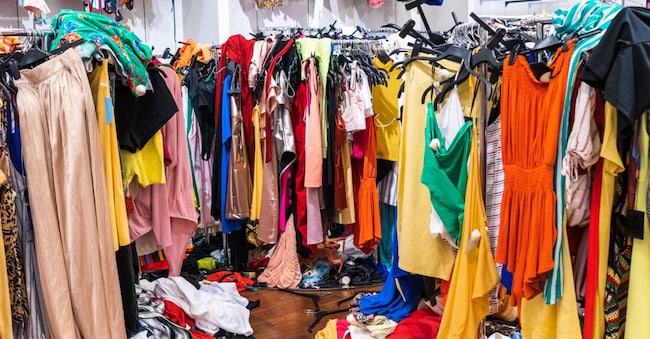
From technical clothing to footwear, right through to accessories and home textiles: an app and a new digital platform to support businesses in mapping their product range ahead of the introduction of Extended Producer Responsibility (EPR) in the textile sector; This legislation requires manufacturers, importers and distributors of clothing, footwear and textiles to take responsibility for the entire life cycle of their products, including waste management once they become waste.
Who is the app aimed at?
It is called “CercaProdotti” and is being developed by the Ecolight System Consortium. Thanks to the AI, it is possible to check – on the basis of the current regulatory framework – whether a product falls within the scope of the EPR and is therefore subject to the environmental levy.
“The introduction of EPR will bring about a significant change for a great many companies. The first step, therefore, is to understand whether and to what extent they will be affected,” says Giancarlo Dezio, general manager of the Ecotessili consortium. “The first step is to understand the scope of the legislation: to identify which products are covered and to assess your company’s position. With CercaProdotti, we aim to provide a simple tool to help companies begin this analysis process straight away.”
This is a wide-ranging application, given that the textile EPR scheme covers not only clothing and home textiles, but also footwear and fashion accessories, including bags, belts and hats. ‘Correctly identifying the relevant products is therefore one of the first steps that businesses must take in preparation for the full implementation of the new regulations,’ the Consortium emphasises. The issue particularly concerns those who are the first to place these products on the Italian market: they are required to check both their status in relation to the definition of ‘manufacturer’ and their product range.”
How it works
As for how it works, it’s easily explained. “CercaProdotti is accessible free of charge upon registration and allows for unlimited searches, thus enabling companies to analyse even complex catalogues comprising numerous product references,” the Consortium explains. By entering the product type, the tool provides immediate feedback on whether it falls within the scope of the textile EPR scheme and, consequently, whether it may be subject to the environmental levy.” The result is generated by AI based on the currently available regulatory framework and is, for the time being, intended as a guide to assist businesses during this preparatory phase for the new regulations.

