
Apple Intelligence: the new frontier of AI pushing Apple's share price to an all-time high
About 24 hours after the Apple Intelligence presentation, the stock flies. Technology on iPhone impresses
by our correspondent Biagio Simonetta
 Aggiungi Il Sole 24 Ore
ai preferiti su Google

3' min read
Key points
3' min read
CUPERTINO (CALIFORNIA) - It's the day after, the magic day, for Apple. Because some 24 hours after the launch of Apple Intelligence, the Cupertino-based company's stock is soaring to all-time highs, posting a tonic +5% at the open, which puts the company well above the 3 trillion capitalisation mark, to challenge Microsoft for the Wall Street lead.
But how does Apple Intelligence work? And why, at the moment, does it appear to be a technology that can make Apple catch up with everything it has been lagging behind in recent months? Let us proceed in order.
In fact, Cupertino has launched five new LLMs (large language models), which will interact with Siri textually and vocally, and are dedicated to translations, images, coding and more. However, they are not considered rivals of ChatGPT. Tim Cook's company will start implementing Apple Intelligence by the end of the year. And the functionality will be available for free on iPhone 15 Pro and later versions, and on all M-series Macs and iPads. Cupertino's AI, we imagine, will arrive in Italy no earlier than 2025 (the autumn launch is planned only in American English), and will move along two parallel lines: an on-device AI, therefore extremely profiled on the user and his needs; and a more generalist AI, for which Apple relies on ChatGPT (but not only). In the first case, the possibility of being able to train an artificial intelligence with data that is very personal (such as health, habits, movements) but also absolutely private, seems to be the most compelling challenge. The one that the market is rewarding, and which, when fully exploited, will transform the smartphone into a new, intelligent and more useful device.
Not only ChatGPT
Speaking of which, in a follow-up interview with Craig Federighi, Apple's VP and head of software, it emerged precisely that the choice of ChatGPT is not binding. Federighi explained that the supporting AI will function more or less as a plugin, which users will be able to choose in the future: 'Certainly,' he said, 'people will have their preferences for certain models: maybe someone will look for a model that is great for creative writing, someone else for programming. And so we want to allow users to ultimately bring a model of their choice. That's why we envision integrations with different templates like Google Gemini in the future. That is our direction'.
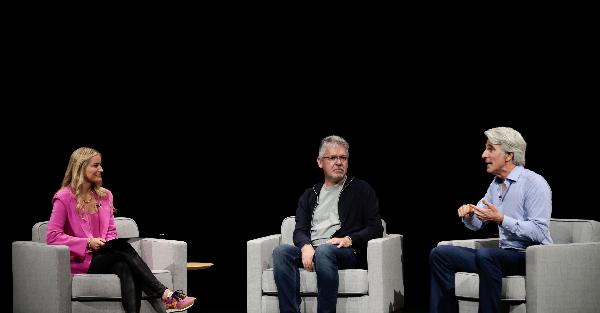
Federighi also explained the decision to initially focus on ChatGPT: 'it was dictated by the fact that Apple wanted to start with the best,' he said.


