
How biotechnology will save us from drought and a shortage of arable land
Europe is a leader in science. In 2024, the agricultural biotech sector had a global turnover of 50 billion dollars: annual growth rates of up to 12 per cent are forecast

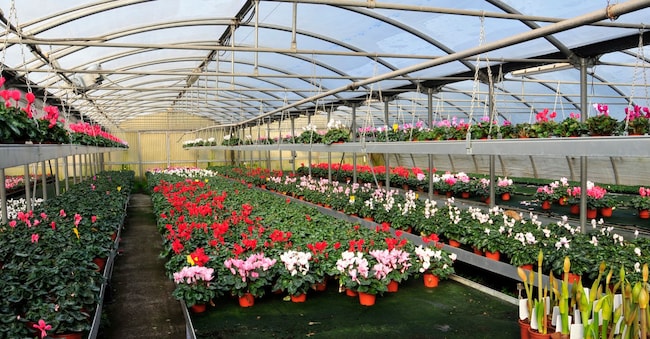
Producing more food with less water, less land and lower emissions is becoming an ever-greater imperative. Population growth, extreme weather events, the reduction in arable land and food supply chains that are increasingly exposed to geopolitical risks are changing the way we view agriculture. It is against this backdrop that biotechnology and new production models are emerging as a concrete solution, whilst also becoming an asset class increasingly favoured by institutional investors. The figures also point to a transformation that is already well under way. According to various research firms, including Grand View Research and Fortune Business Insights, the global agricultural biotechnology market, estimated at between 42 and 50 billion dollars in 2024, could double by the early 2030s, with annual growth rates of between 8 per cent and 12 per cent. Controlled-environment agriculture is already worth over $100 billion and could exceed $400 billion by 2035.
Sustainability becomes an industrial choice
The combination of biotechnology and sustainable agriculture is therefore of strategic importance and is set to drive a major transformation of the market. “We are at a turning point. Ten years on from the Paris Agreement, the debate has shifted from mitigation to adaptation, and agriculture and agri-food systems are at the forefront of this transition,” comments Guillaume Baxter, partner at Sofinnova Partners – Industrial Biotech Strategy. At the same time, the biotechnology and sustainable agriculture market has matured significantly over the last decade. What was once driven primarily by sustainability objectives is now increasingly supported by economic considerations, as well as those relating to resilience and food security. This is why our strategy today is more focused on agriculture and food: we believe that these sectors present both the most pressing challenges and the solutions with the greatest investment potential.”
Europe and skills
From a geographical perspective, according to the expert, Europe possesses exceptionally strong expertise in scientific research and innovation, particularly in areas such as industrial biotechnology, crop resilience, fermentation and sustainable ingredients. This is complemented by growing support from institutions through initiatives such as the Bioeconomy Strategy and the Biotech Act, as well as greater recognition of biotechnology as a strategic industry. “Outside Europe and North America,” adds Baxter, “China is playing an increasingly important role, thanks to a combination of strong public support, manufacturing capabilities and a rapidly expanding biotechnology ecosystem. We are also seeing the emergence of interesting innovation hubs in countries such as Israel and Singapore and in certain parts of Latin America, particularly where agriculture plays a significant economic role.”
Water stress, precision fermentation and green chemistry are just some of the areas on which the company’s investments are focused. Among its portfolio companies, for example, is Elicit Plant, which has developed a plant-derived molecule capable of reducing water stress in crops without requiring changes to machinery or farming practices, thereby facilitating its adoption on a large scale. ““In the coming years, I expect technologies of this kind, aimed at strengthening crop resilience, to evolve from being a specialist product to becoming a standard component of the agronomic tools used for major extensive crops, particularly in southern and central Europe, where irrigation systems are already under severe pressure – explains Baxter. ‘On their own, they will not solve the problem of water scarcity, but they can provide the agricultural system with significant adaptability, whilst we wait for infrastructure and public policies to catch up.’
Another area of focus is precision fermentation. Verley produces milk proteins identical to those found in cows without resorting to animal husbandry. According to an independent life-cycle assessment cited by Sofinnova, the process reduces greenhouse gas emissions by 72 per cent, water consumption by 81 per cent and land use by 99 per cent compared with conventional milk. The company is also the first to have received a ‘No Questions Letter’ from the US Food and Drug Administration for functionalised milk proteins produced via precision fermentation. Green chemistry is also one of the most promising areas. GF Biochemicals converts plant biomass into levulinic acid to produce biosolvents and ingredients for industrial use.

