
How consumer nationalism is changing the Chinese market and challenging Western companies
Why China is no longer consuming as it used to / 2. National pride is transforming ‘Made in China’ into a symbol of quality and innovation, setting new rules of engagement for foreign brands

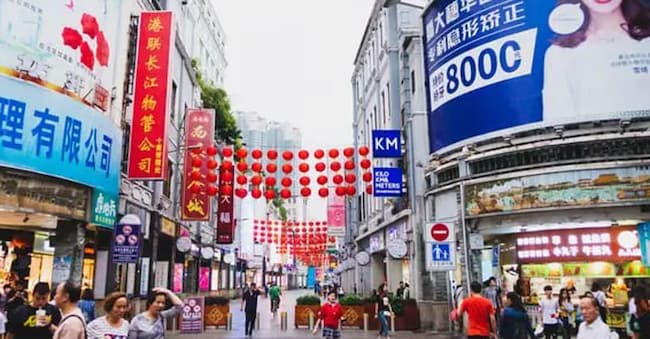
Of the four sociological shifts that are profoundly transforming consumer behaviour in modern China, the one with perhaps the greatest implications for Western companies is the Guochao (国潮 – ‘National Wave’), or consumer nationalism.
The roots of Guochao go back a long way. Indeed, for more than two decades, the Chinese government has been pursuing a millenarian propaganda campaign, which officially culminated in 2008 with the first Olympic Games held on Chinese soil in Beijing. The central message to the Chinese people is that this is the century in which it is finally China’s turn to dominate the global economic stage, redeeming itself from past colonial humiliations.
But the real surge in Guochao only came during the pandemic, as China found itself internationally isolated due to suspicions about the virus’s origin and its delayed reporting to the WHO. Faced with international criticism, the Chinese developed a sort of siege mentality, and public opinion rallied around national pride. It was precisely during the early stages of the pandemic, whilst the West was in dire straits, that China appeared to have resolved the problem swiftly, and the Chinese experienced first-hand, for the very first time, a sense of superiority regarding the ‘Chinese model’.
Subsequently, tensions with the US – which had already begun under the Biden administration – and the recent boycotts by certain international brands (such as H&M) have accelerated the desire to support the national economy by framing consumption as a patriotic act: buying a BYD electric car or a Huawei smartphone has become a way of saying, “I stand with China”.
At the same time, with the borders closed for three years, the Chinese have no longer had the opportunity to travel and engage with the outside world. Amid this isolation, local brands have had free rein to dominate the media narrative, leading to a psychological shift in the perception of ‘Made in China’ quality as a genuine source of cultural and technological pride.


