
Identity? Is a prison
'Dirty Water', by Nadeesha Uyangoda, is the lucid and poignant tale of a Sri Lankan immigrant who, when she has finally achieved economic stability, decides to return home

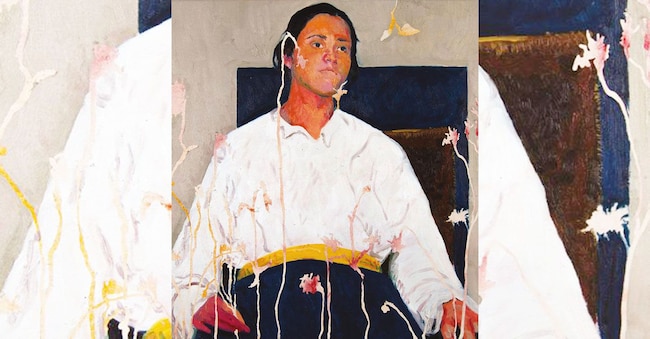
Return is the most difficult journey, the impossible journey. It was for Ulysses, it is for Neela, a Sri Lankan immigrant in Brianza, who one day tells her daughter Ayesha that she is going home. A home where she rarely went and where she no longer had any real ties, metamorphosed as she was into the hybrid creature who becomes the one who leaves. Bewildered, the daughter wonders if her mother, who had finally found economic stability after decades of hard and precarious work, was not experiencing a late-stage mid-life crisis: she had never spoken of leaving Italia, nor had she probably ever thought of doing so.
Ayesha, forty years old and childless, does not want to go back to Sri Lanka, even if it were the only way to see her mother again, and she cannot bring herself to admit it. She has decided to end the paradise of her childhood, where she had spent her early years with Neela and then, when she left, where she had been raised by her grandparents until her mother could take her with her. A place that was "mythical, real and imaginary at the same time". Which was a symbol of the possible lives she would not live, and the one she could not live: 'It always seemed to me that real life was elsewhere, and I was looking at it through a glass. I was periodically evicted from a space-time curve where I continued to exist in a different form. Every time I set foot on the island again, I expected to pick up time and space exactly where I had left them, yet, along with the years, both slipped through my fingers'.
Ayesha is an artist who, in order to survive, has adapted to a market that only wants 'ethnic' works from racialised people, and who tries to disentangle her divided, fragmented existence, growing up as she did between two countries, two cultures, and in the ambiguity of a sort of 'adoptive family' that is, however, the one for which her mother worked hard as a carer ("When I was eight years old, they seemed to me to be just the parents I never had - as an adult I would discover that you can never get out of such an articulated love unscathed"). "The banyan trees," she observes, "are huge, hundred-year-old-looking trees with clear trunks, and from their branches hang like lianas thousands of vertical roots. It is a species defined as a strangler, because it grows from seeds that insinuate themselves into the cracks in the bark of other trees, suffocating the host with their own roots, which over time stretch to reach the ground. My relationship with my life elsewhere was like this: one existence growing on another like a parasite. While one tried to take over, taking its roots with it, exposed like living flesh, the other, the one below, continued to survive on the edge of rot. I felt like a Persephone dividing her time between two worlds. She had sold herself for six pomegranate grains, what had I sold myself for?"
Neela's pre-announced return kicks offDirty Water, the beautiful novel by Nadeesha Uyangoda, which takes off and unfolds, showing the depth and breadth of its thinking after a few dozen pages. It is a choral story, narrated from the point of view of Ayesha, Neela and her sisters, who remained in Sri Lanka and were also stunned to learn of Neela's desire to return to a country devastated by thirty years of civil war and a terrible economic crisis. A place where she no longer belonged.
Yet Neela's choice is 'a laying down of arms in respect to the inhuman expectations she had imposed on herself, to return to live among the creatures of her world'. That universal laying down of arms, in the face of shortening time and the reality of death, which becomes the occasion for a balance sheet. The balance sheet of Neela's life, that of her unfortunate genius, and also that of Ayesha, who would like to work on light, on the very essence of our possibility of seeing, and instead, in order to survive, is forced to "disturb the memory of all [her] ancestors and their lands". To submit to the "commodification of racialisation". To satisfy "the guilt of Europeans for racism, colonialism, exploitation, etc." Europeans for whom, he notes, his art was "urgent and necessary, until one day, suddenly, it would not be. We would never be classical, our relationship with time was not meant to be eternal, we were already born posthuman. Outside of history and outside of cities, we were busy proving ourselves more authentic than others, standing in one place jumping so that they could see us better, but all it took was a gust of another wind to fade into the background - and we were already ghosts'.


