
From Rotterdam to Alicante: exploring Europe through a blend of history and the present day
In Alicante, Spain: the mild Mediterranean climate and the history of the Costa Blanca

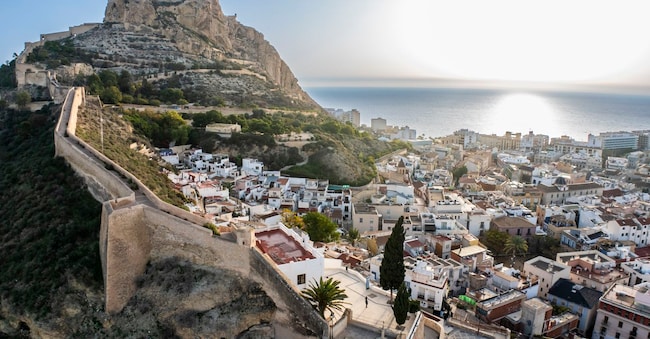
For those looking for a mild autumn, Alicante offers the pleasant climate of the Spanish coast, far from the summer crowds. The city lies at the foot of the Castillo de Santa Bárbara, one of Spain’s largest medieval fortresses, situated on Mount Benacantil, from where you can enjoy a panoramic view of the gulf. The walk downhill takes you through the picturesque Barrio de Santa Cruz, a neighbourhood characterised by narrow cobbled streets, white houses decorated with pots of flowers and small establishments where you can sample local specialities. The walk continues along the famous Explanada de España, a pedestrian promenade paved with over six million marble tiles forming a wavy pattern, lined with palm trees. Art lovers can visit the Maca (Museo de Arte Contemporáneo de Alicante), which houses a collection of 20th-century works by Picasso, Dalí, Miró and Julio González. Autumn is also the ideal time to sample the local cuisine, particularly rice-based dishes (such as arroz a banda) prepared according to traditional recipes in restaurants around the harbour and in the historic centre. Rice features in numerous Mediterranean recipes and is served with fresh fish, local produce, olive oil, saffron and vegetables. For those wishing to combine a visit to the city with a day trip, the nearby island of Tabarca is an unmissable experience: accessible by boat, it offers crystal-clear waters, coves, a small fortified village and the chance to sample the traditional ‘caldero’, the island’s signature dish. An excursion that combines the sea, nature, history and gastronomy, and which, in a single day, captures the most authentic essence of the Alicante Mediterranean.

