
Itinerary from Belo Horizonte in Minas Gerais between nature and colonial cities
In the karstic caves and lagoons of Sumidouro Park

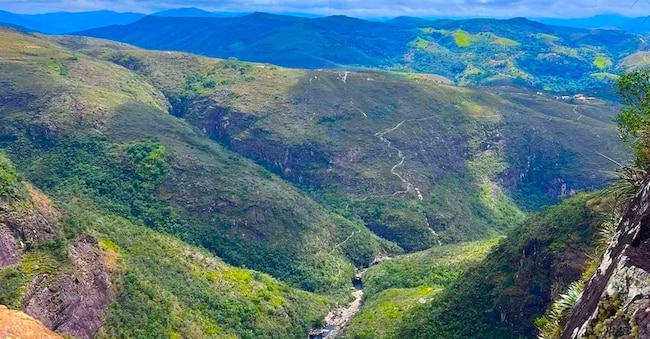
Among the natural parks that make Minas Gerais one of the richest nature destinations in South America, that of Sumidouro, with an area of just over 2.it deserves to be discovered first and foremost for its Lagoa, the calcareous lagoon, a natural opening into which a dense network of tunnels flow, through which a watercourse, called Sumidouro, penetrates the subsoil. This term derives from the indigenous word 'Anhanhonhacanhuva' (meaning stagnant water that disappears into a cavity in the ground). Sensational in 1835 was the discovery by Peter Wilhelm Lund of the Lapinha Cave, dating back some 600 million years, formed from the remains of the seabed that covered the entire region of the Rio das Velhas basin. 511 metres long and 40 metres wide, it consists of a system of chambers created by the dissolution of carbonate rock, where one can admire splendid karstic concretions of various shapes. You can then visit the Castelinho Museum, which tells of all the archaeological riches of this scenario. The Macumba Cave, not far away, is also interesting for its geological variety, while the walking routes that can be taken, from the Lapinha Circuit to the Travessia and Sumidouro Trails, are certainly exciting. They wind right along the karstic relief of the Cerrado and you can even climb the walls of the Lapinha massifs.

