United States

US Congress forces NASA to review International Space Station decommissioning plan

The new law requires an analysis of alternatives to deorbiting the Iss, primarily the 'parking' of the Station on a higher and safer orbit

by Emilio Cozzi
Aggiornato il 10 febbraio 2026, ore 19:15

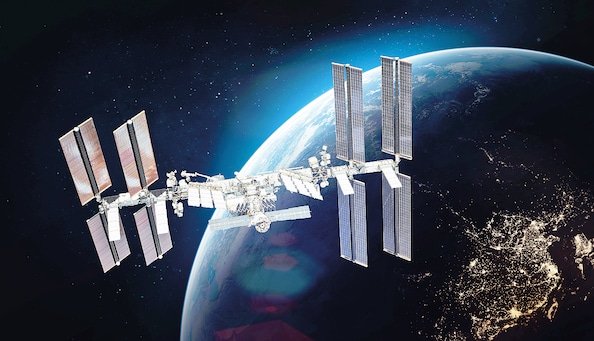
La Stazione spaziale internazionale

4' min read

Translated by AI
Versione italiana

4' min read

Translated by AI
Versione italiana

The fate of the International Space Station (the ISS) could change: on 4 February 2026, the US House of Representatives' Science, Space and Technology Committee unanimously (37-0) approved the 'NASA Reauthorization Act of 2026', a bill that includes an unexpected but crucial amendment for the Station: the space agency will have to formally reconsider its plan to deorbitalise it by 2031.

The outpost, whose first module was launched in 1998 and which has been permanently inhabited by at least two astronauts since November 2000, is scheduled to be decommissioned within five years, in a complex operation that will end with a plunge (of the non-disintegrable parts in the atmosphere) into the Pacific Ocean.

Loading...

Introduced by George Whitesides (Democratic representative from California) and Nick Begich (Republican from Alaska), the amendment does not block the decommissioning of the ISS, but requires NASA to conduct a thorough review of alternatives before proceeding.

As Whitesides explained, it calls for 'an analysis of the costs and risks of keeping the Iss in orbit'. The amendment 'does not mandate relocation, nor does it authorise funding or the execution of any plan'. The aim is for NASA to assess whether it is technically and economically feasible to 'park' the Station on a higher and safer orbit.

The Numbers of the Dilemma

Joint programme of the United States, Russia, Europe, Canada and Japan, powerful symbol of peaceful collaboration and orbiting laboratory for hundreds of experiments, the Iss is the most impressive architecture ever built in space.

It has been called "the most expensive single object ever built", with a total funding estimated at between 100 and 150 billion dollars.

Its operating costs are just as significant: Nasa funds the Station with $3-4 billion a year, a significant slice of the agency's budget, which by 2026 will be around $25 billion (or more than 27 if the Big Beautiful Bill Act appropriations are added, $10 billion spread over the next six years).

It is no coincidence that, in March 2025, a proposal by Donald Trump aimed at large cuts in the programme and a gradual reduction of activities in orbit. A proposal, however, not approved by the House and Senate.

In June 2024, for thecontrolled deorbit, an $843 million contract was awarded to SpaceX to develop the Us Deorbit Vehicle (or Usdv), the means to propel the Station into the Earth's atmosphere for controlled deorbit. The figure only covers the development of the vehicle.

The then NASA Administrator, Bill Nelson, later stated that the total cost of the operation could reach 1.5 billion, including launch and integration.

The commercial stations gap

It cannot be ruled out that the delay in the development of commercial alternatives is also the reason for the amendment. For the construction of the next low earth orbit stations, NASA has financed companies such as Texas-based Axiom Space and invested in the Commercial Low Earth Orbit Destinations (Cld) Program, under which Orbital Reef, the commercial station of the consortium led by Blue Origin and Sierra Space, and Starlab of Voyager Space and Airbus are included.

To date, however, progress is slow and uneven.

Axiom Space, considered to be the most advanced, plans to launch its first module to the Iss in 2026, with the aim of undocking it before 2030 to create an autonomous station.

However, the company experienced repeated delays due to financial problems.

Blue Origin aims to have Orbital Reef operational between 2027 and 2030, but the partnership with Sierra Space may be in the balance, with both companies focusing on other priorities.

Starlab passed the Preliminary Design Review in early 2025 and, as of today, aims to be launched no earlier than 2028. Northrop Grumman, initially the holder of one of the Cld Programme's grants, abandoned its plans in 2023, complaining of a weak business case. A report by Nasa's Office of the Inspector General (the OIG) raised the alarm: 'it is unlikely that a commercial platform will be ready before 2030'.

The options on the table

The congressional amendment requires Nasa to specifically assess the propulsive needs for the orbital boost, the costs for any necessary vehicles or manoeuvres, and any risks - such as orbital drift - that could damage other assets or cause an uncontrolled re-entry.

It should be recalled that NASA had already published a study to justify the decision to intentionally destroy the Iss with a controlled re-entry, ruling out alternatives such as in-orbit disassembly or elevation with vehicles such as SpaceX's Starship. Preliminary conclusions indicated that "all attempts to preserve or reuse the Iss are technically or economically infeasible

Geopolitical and engineering tensions

Meanwhile, the Iss has growing structural problems: cracks in the Russian Zvezda service module, ageing thermal control systems and other maintenance challenges have raised legitimate engineering questions about how long it can operate safely.

While the United States, Japan, Canada and the countries of the ESA, the European Space Agency, have committed to operate until 2030, Russia has only confirmed its support until 2028.

The bipartisan approval of the amendment reflects a cross-party concern: destroying a more than 100 billion architecture before the alternatives are ready risks creating a gap in the US - and Western - presidium in low orbit, just as China consolidates its Tiangong station with regular crew rotations, and Russia and India promise to launch their own infrastructures (Russian Orbital Service Station, from 2027, and Bharatiya Antariksh Station, from 2028, respectively).

The bill now passes to the plenary chamber. Even if passed, it will have to be reconciled with possible Senate measures. The clock is ticking: deorbit is scheduled for January 2031, with launch of the Usdv in 2029.

Copyright reserved ©
Loading...

Brand connect

Loading...

Newsletter

Notizie e approfondimenti sugli avvenimenti politici, economici e finanziari.

Iscriviti