
Live
Iran: Tehran, axis of resistance more united and stronger than ever
The Iranians are preparing for a possible resumption of attacks and have hinted that they will not hesitate to inflict a severe blow on neighbouring countries and the world economy in the event of an attack, writes the New York Times
For feedback, please contact
english@ilsole24ore.com
Summary by points
Nyt, Iran used month of truce to prepare and reposition missile launchers
Iran reportedly used the month-long ceasefire in the war against the US and Israel to prepare for the resumption of fighting by repositioning ballistic missile launchers. This was written by the New York Times, which quoted a US military official. According to the report, since the ceasefire took effect on 8 April, Iran has been working to 'unearth dozens of bombed ballistic missile launch sites, relocate mobile launchers and, despite significant losses, adapt its tactics to a possible resumption of attacks'. According to the official, US attacks against Iranian missile infrastructure targeted the entrances to the sites, but not the launchers themselves, as these were buried in deep underground caves to protect them from attack.
Emirates and Israel fund for joint defence procurement
The United Arab Emirates and Israel have set up a fund for the joint purchase and development of new defence systems. This was reported by the Middle East Eye citing a serving and former American official.
The serving official said that the two countries would make "joint purchases" of weapons as part of the new defence partnership, and the UAE could also finance the technological development of Israeli air defence systems. This understanding was reportedly reached during Israeli Prime Minister Benjamin Netanyahu's visit to the UAE, which took place in the midst of the Israeli-American war against Iran. This visit was reported by the PM's office, which was later denied by the Emirates.
The former US official told Mee that 'a lot of money' has been allocated to the fund and that purchases are likely to go beyond air defence.
Lebanon, 116 health workers killed in Israeli attacks
116 health workers have been killed by Israel in Lebanon since 2 March. This was told by the Lebanese Health Minister, Rakan Nasreddine, to the Director General of the World Health Organisation (WHO), Tedros Adhanom Ghebreyesus, who met in Geneva on the sidelines of the World Health Assembly.
According to Lebanese news agency Nna, the minister then reported 263 workers were injured in the Israeli attacks, which destroyed or damaged numerous ambulances, health centres and hospitals. Nasreddine then invited Tedros to visit Lebanon and thanked the WHO for its continued support to the Ministry of Health and the Lebanese health system since 2019.
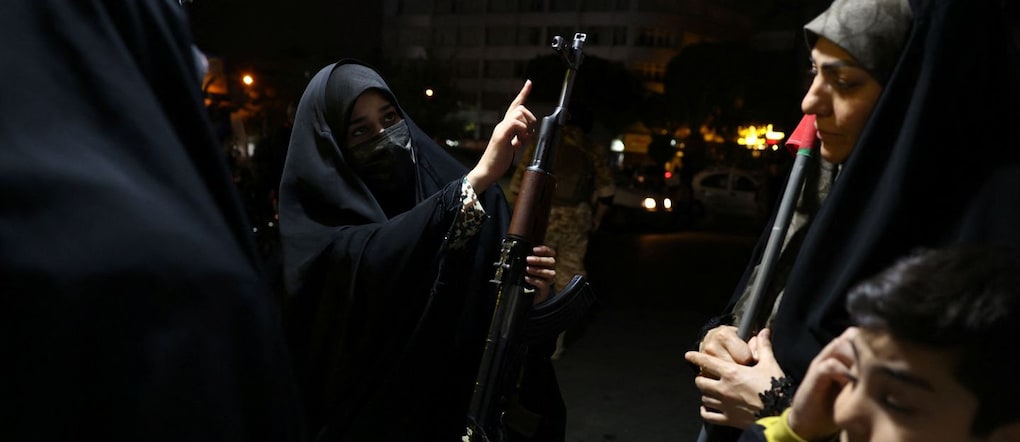
Donne iraniane si esercitano a usare fucili a Teheran via REUTERS
Ask the editorial team
Have questions or feedback about this article? Contact our editorial team.
19 May 2026
Iran: Nyt, 'Tehran rearranged ballistic missile launch sites during truce'
Iran has reportedly used the month-plus of ceasefire in the war against the US and Israel to prepare for the resumption of fighting by repositioning ballistic missile launchers. According to an article in the New York Times, quoting a US military official, since the ceasefire went into effect on 8 April, Iran has worked to 'reposition dozens of ballistic missile launch sites hit by shelling, move mobile missile launchers and, despite significant losses, adapt its tactics to a possible resumption of attacks'. The official explained that the US strikes against Iranian missile capabilities hit the access gates to the sites, but not the launchers, as these were buried in deep underground caves to protect them from the raids.
Most popular stories

19 May 2026
White House reiterates: Iran must renounce nuclear ambitions
Iran must give up its nuclear ambitions. This was said by White House spokeswoman Anna Kelly after Donald Trump's decision to suspend the attack on Tehran. Iran - she explained - cannot have enriched uranium, and this represents a red line in the negotiations along with a complete halt to Iran's nuclear programme.
19 May 2026
Iran, armed forces: US and allies not to repeat 'strategic mistake'
The commander of the Central Command of the Iranian Armed Forces, General Ali Abdollahi, warned "the United States and its allies not to repeat their strategic and evaluative mistakes", stressing that Iranian forces "are more prepared and powerful than before and are ready to respond decisively to any new act of aggression".
"They must know that any new aggression or invasion by the enemies of our land and our proud nation will be met with a swift, decisive, powerful and widespread response," he added in the statement reported by local media.
19 May 2026
Iran: Tehran, 'ready to cut off the hand of the US and Israel in the event of an attack'
"If our enemies make another mistake, we will respond with far greater strength and capability than ever before. The US and its allies must not make another strategic mistake or miscalculation'. This was stated by Ali Abdollahi, chief of the army general staff, warning the US against an attack on Tehran. "The enemies must know that Iran and its forces are better prepared and stronger than ever," he added, "Our forces are ready and will respond quickly, decisively, forcefully and on a large scale to any aggression by the enemies. We will defend ourselves with all our strength and cut off the hand of any aggressor'.
19 May 2026
Iran: Indian Adani group to pay 275 mln dlr for buying Iranian oil under sanction
The Indian Adani Group has agreed to pay USD 275 million to close a US investigation into its alleged imports of Iranian hydrocarbons. This was reported by the US government. The company was suspected of violating US sanctions by purchasing hydrocarbons of Iranian origin 32 times between November 2023 and June 2025, according to the Treasury Department's Office of Foreign Assets Control (Ofac). The LPG was allegedly purchased "from a Dubai-based middleman who claimed to be supplying Omani and Iraqi gas. There were important signals that should have alerted the company to the fact that the LPG actually came from Iran,' Ofac states. Adani allegedly used US financial institutions to pay a total bill in excess of USD 192 million. The group confirmed the agreement with the US authorities in a statement. The agreement points out that 'on at least four occasions between March 2023 and February 2024', the group 'was informed by third parties that shipments supplied by the Dubai seller may have originated from Iran'. It is also pointed out that the sale price, 'below market price', should have aroused suspicion, as Iran is 'almost the only' country in the Middle East to sell LPG 'at a significant discount'. The Indian group had stated in February that it was cooperating with the US authorities in the investigation and had contacted Ofac after the US Wall Street Journal newspaper revealed in June 2025 that its LPG purchases were under scrutiny by the US judiciary. The group is led by billionaire Gautam Adani, considered close to Hindu nationalist Prime Minister Narendra Modi.
19 May 2026
Iran: Tehran, axis of resistance more united and stronger than ever
Iran's Defence Ministry spokesman dismissed Donald Trump's recent claims about the destruction of Iran's defence capabilities, stressing that a significant part of the country's military power has yet to be deployed and that "the axis of resistance is now more united and stronger than ever". Speaking to Yemeni broadcaster Al Masirah, Brigadier General Reza Talaei-Nik dismissed Trump's statements as "falsehoods" and "nonsense", stating, "Trump continues to spread baseless claims and lies about the destruction of our defence capabilities."
"America's aura of power has collapsed at the hands of our forces," pointing out that "a considerable part of Iran's defensive capabilities has not yet been deployed," he stressed.
19 May 2026
Nyt, 'attacks on oil and Bab el-Mandeb blockade possible Iran strategies'
The Iranians are preparing for a possible resumption of attacks and have hinted that they will not hesitate to inflict a severe blow on neighbouring countries and the world economy in the event of an attack. This is how Iran might react, writes the New York Times in an analysis. In the first conflict this year, the Iranians were preparing for a protracted war of about three months. Consequently, Iran limited the use of missiles to sustain weeks of attacks against Israel and regional targets, it added. In contrast, should war break out again, Iranian leaders anticipate 'short but high-intensity' fighting, including heavy, coordinated attacks against their energy infrastructure. How might Iran react this time? In a new round of fighting, Iran could launch dozens or hundreds of missiles a day to "effectively confront the enemy and also turn the tables". This would force the Gulf Arab nations to prepare for an intensification of attacks against their energy infrastructure. Should the damage be large enough, it could drag countries like the UAE, Kuwait, and Saudi Arabia even deeper into a war that many Gulf leaders have tried to avoid. Iran could also try to exert control over the Bab el-Mandeb Strait, a narrow arm of sea connecting the Red Sea to the Gulf of Aden, through which one-tenth of world trade passes. The strait lies close to territory controlled by the Houthis, a Yemeni militia backed by Iran. In the latest phase of fighting, the Iranians have used their proximity to the Strait of Hormuz to exert enormous influence on the world economy. If the Iranian government believes its control over that strait is in danger, it may want to 'force the United States to focus on two maritime fronts instead of one'. The Houthi militia promised to defend Iran in the event of a regional war, but reacted cautiously in the latest phase of the fighting.
