Around the Caspian Sea

Iron Gate: Washington tightens its grip on Iran

The new US task force aims to crack down on the land-based trafficking of arms, technology and goods subject to sanctions. However, Iraq, Turkey and Pakistan have energy and trade interests that are difficult to sacrifice. For Europe, the risk is a rise in costs across industrial and agricultural supply chains

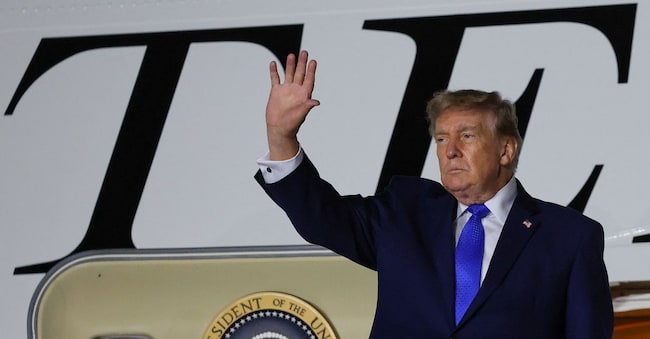
Il presidente degli Stati Uniti Donald Trump  REUTERS/Carlos Barria

6' min read

Translated by AI
Versione italiana

6' min read

Translated by AI
Versione italiana

Washington can make trade with Iran more expensive, complicate payments and discourage intermediaries. However, to achieve a lasting reduction in land-based trade flows, it must convince governments that they would have a great deal to lose from a crackdown on relations with Tehran. This is the main challenge facing the Iron Gate Task Force, the new body announced on 7 November 2026 by the US Central Command. Comprising around twenty military and civilian personnel and based in Tampa, it will be tasked with coordinating federal agencies in combating the movement of arms, dual-use technologies, sanctioned goods and proceeds deemed illicit across Iranian borders and the Caspian Sea.

The initiative extends the pressure exerted by Washington on maritime routes to the mainland, but faces a different obstacle: control of border crossings lies with national authorities. Whilst a bank can block a payment to avoid jeopardising access to the US financial system, stopping a lorry, restricting rail transit or closing a customs post requires a political decision by the country concerned. For Baghdad, Ankara and Islamabad, such a decision would have immediate consequences for energy supplies, exports and business activity.

Loading...

Iraq, Turkey and Pakistan

Iraq is the most striking example of this contradiction. In 2024, it imported around 9 billion cubic metres of gas from Iran, a figure that fell to 6 billion in 2025. The World Bank attributes this decline to supply difficulties for electricity generation. Yet, in that same year, 2025, the country consumed around 24 billion cubic metres of gas: four times the volume purchased from Tehran.

The availability of domestic resources offers Baghdad the prospect of gradual self-sufficiency, but does not address immediate needs. Recovering gas associated with oil extraction requires collection and processing facilities, connections to the network and regular supplies to power stations. The initial processing unit at Ratawi, announced by TotalEnergies, has a design capacity of 50 million cubic feet per day, equivalent to approximately 520 million cubic metres per year at full capacity. Whilst this is a significant contribution, it is still insufficient to replace Iranian supplies.

The diversification of imports also faces a geographical constraint. The agreement to purchase up to 258 billion cubic feet per annum of Turkmen gas provides for transit through Iran. Baghdad may therefore seek new suppliers, but it remains dependent on the infrastructure and transit conditions that pass through its neighbour’s territory.

Turkey has more alternatives, but is not immune to the consequences of a breakdown in relations. In 2025, it purchased 7.7 billion cubic metres of gas from Iran, accounting for 13.2 per cent of total imports, which reached 58.3 billion. Ankara can rely on a diversified portfolio of suppliers, but replacing a share of this magnitude requires the availability of additional volumes, delivery times compatible with domestic demand and sustainable prices. On 2 November, following a meeting with the Iranian Minister of Economy and Finance, the Turkish Minister of Trade Ömer Bolat linked the strengthening of trade relations to regional stability.

For Pakistan, the problem centres primarily on border infrastructure. Two customs posts accounted for approximately 83.6 per cent of the value of imports recorded in the 2024–25 financial year report submitted to the Senate. This percentage relates to the records included in the survey, but it illustrates the extent to which documented trade depends on just a few crossing points. Any suspension of these would have significant consequences for operators. Added to this is the absence of a bilateral banking channel, which the Pakistani Minister for Trade has already identified as an obstacle to trade. The reopening of a border crossing could therefore get lorries moving again without resolving the financial difficulties faced by businesses.

US leverage

The strategy of Washington focuses primarily on the area where the United States has the most effective tools at its disposal: the financial sector. On 15 October 2026, even before the announcement of Iron Gate, the US Treasury designated the Iraqi bank, the International Development Bank for Investment and Finance, pursuant to Executive Order 13902.

At sea, however, Washington was able to take direct action. The US Central Command stated that the naval blockade resumed on 14 July and reported on 5 October that it had diverted 130 commercial vessels. This figure relates to operations carried out by US forces and is therefore not directly comparable with the results expected from Iron Gate .

The issue also concerns the Caspian Sea basin, where trade relations follow patterns that do not necessarily coincide with those of the rivalry between Washington and Tehran. In 2025, Kazakhstan exported approximately 900,000 tonnes of grain to Iran. In the same year, the specialised Ak Bidai terminal in Aktau handled 316,500 tonnes of grain bound for all the destinations it serves. The two figures relate to different scales: the first concerns bilateral trade, whilst the second relates to the activity of a single piece of infrastructure.

Loading...

Railway projects also contribute to making the picture more complex. On 27 October, the Russian Ministry of Transport was still referring to the Rasht–Astara line as the missing link in the western branch of the North–South International Transport Corridor. On 7 November, Armenia, Azerbaijan and the United States set up technical working groups for the Trump Route for International Peace and Prosperity. The framework agreement recognises Armenian jurisdiction over border controls and customs.

Italy’s role in energy and production chains

For Italia, the crisis in Hormuz is affecting the availability of energy supplies and the price of alternative sources. According to Arera, Italian imports of liquefied natural gas rose from 14.7 billion cubic metres in 2024 to 21.2 billion in 2025. Algeria accounted for 36.1 per cent of total gas imports in 2025, Azerbaijan for 16.2 per cent, the United States 15.9 per cent and Qatar 11 per cent.

The growing reliance on LNG exposes the Italian system to international competition for supplies. For energy-intensive businesses, maintaining production volumes may therefore mean accepting higher costs, which will affect their profit margins and investment capacity.

The issue also concerns petroleum products. As part of the coordinated response led by the International Energy Agency in March 2026, Italia initially committed 10 million barrels of refined products from the industry’s compulsory stocks. This decision reflects the need to ensure the availability of fuels and other derivatives, which are essential for transport and numerous manufacturing activities. The price of crude oil alone therefore does not fully reflect the scale of the difficulties that hauliers, distributors and manufacturing companies may face.

Another vulnerability relates to agriculture and the supply of fertilisers. On 24 September 2026, Italy and Croatia convened the Rome Coalition for Access to Fertilisers and Food Security in New York, with the participation of the FAO and representatives from the European Union, the Gulf States and other regional partners. The aim is to keep supply channels open in a market exposed to geopolitical tensions and logistical disruptions.

For farmers, in fact, the availability of fertiliser must coincide with the timing of sowing and cultivation. A delivery that arrives out of season can jeopardise production even when the total quantities imported over the course of the year remain unchanged. Delays and price rises are also passed on to transport costs, firms’ working capital and, ultimately, prices throughout the food supply chain.

The European cost of the crisis

The indirect extent of Europe’s exposure becomes apparent when trade data are compared with energy data. The European Commission estimates that the trade in goods between the European Union and Iran will amount to 3.7 billion euros in 2025. The European Agency for the Cooperation of Energy Regulators, on the other hand, estimates that the wider Middle East conflict added between 18 and 33 billion euros to Europe’s gas import bill in the summer of 2026, assuming the same volumes.

Brussels has also sought to take action at a regulatory level. On 22 May, the Council of the European Union broadened the scope of sanctions to include conduct that threatens freedom of navigation. On 8 June, two individuals and one entity were added to the sanctions lists. The International Energy Agency, meanwhile, has tackled the supply crisis by drawing on oil reserves. Italia, France, Germany and the United Kingdom had initially jointly committed 58.1 million barrels to be released in March 2026. The effectiveness of the measure depends on the quantity of products actually released onto the market and the timing of deliveries.

Over the next 12–24 months, one of the main risks will be confusing a potential recovery in crude oil prices with a return to normality in the fuel markets. In November 2026, the International Energy Agency still estimated that Gulf exports of refined products and LPG were at around half their pre-war levels. Even if oil prices fall, shortages of these products may keep costs high for hauliers, industries and distributors.

A second issue concerns the management of permitted commercial transactions. If uncertainty over sanctions leads banks and intermediaries to block even legitimate transactions, importers face delays and higher financing costs. For businesses, it is therefore essential to distinguish between a targeted restriction and an actual disruption to supplies.

Copyright reserved ©

Brand connect

Loading...

Newsletter

Notizie e approfondimenti sugli avvenimenti politici, economici e finanziari.

Iscriviti