

06 November 2025
Manoeuvre, Upb: with Irpef cut 408 euro to managers and 23 to workers. Giorgetti: let's protect average incomes
For the mothers' bonus, increased to EUR 60 per month, Istat estimates an audience of about 865,000 working women, a quarter of those with children
For feedback, please contact
english@ilsole24ore.com
 Aggiungi Il Sole 24 Ore
ai preferiti su Google
6 November 2025
Giorgetti: fiscal drag amply covered up to 35,000 euro
On the fiscal drag 'it is not just the tax measures that should be considered, but all of them, including the cut in the contribution wedge. With what we have done from 2022 to today for the lowest incomes the fiscal drag has been more than covered up to 35,000 euro. For those above it has had some problems and that is why we have intervened selectively with interventions on the middle class because in previous years we preferred to give priority to the lower classes'. This was said by the Minister of the Economy Giancarlo Giorgetti during a hearing on the manoeuvre before the budget committees of the House and Senate.
6 November 2025
Giorgetti: problems on dividends, let's work on solutions
The rule on dividends in the manoeuvre 'stems from the application of a directive resulting from an EU ruling. We realise that it has problems and we are working to try to find solutions'. This was said by Economy Minister Giancarlo Giorgetti during a hearing on the manoeuvre at the budget committees of the House and Senate.
6 November 2025
Giorgetti: huge effort on health care also for past mistakes
"Frankly, I do not go into the merits of health policy, but I reject the idea that adequate allocations have not been made in the past years and this year. That the cost of healthcare is rising is not denied, but that we have also done exceptional things to remedy past disasters such as the payback is undeniable'. So said the Minister of the Economy Giancarlo Giorgetti at the hearing in Parliament on the manoeuvre
Il ministro dell’Economia Giancarlo Giorgetti. ANSA/MASSIMO PERCOSSI
Ask the editorial team
Have questions or feedback about this article? Contact our editorial team.
6 November 2025
Giorgetti: problems on dividends, let's work on solutions
The rule on dividends in the manoeuvre 'stems from the application of a directive resulting from an EU ruling. We realise that it has problems and we are working to try to find solutions'. This was said by Economy Minister Giancarlo Giorgetti during a hearing on the manoeuvre at the budget committees of the House and Senate.
6 November 2025
Giorgetti: on short rentals we have not harmed anyone
"Taxes on housing, we have intervened on the flat rate, which Airbnb manages, and we do not believe that we have harmed anyone who has to live in their own home. There is simply reflection to be done and as a government we are totally open to the decisions that Parliament will take: the system has produced an advantage in renting to tourists for a short time compared to less well-off families; it is a fact. Are there other solutions? Yes? Well, available to evaluate them,' said Economy Minister Giancarlo Giorgetti at a hearing on the manoeuvre.
6 November 2025
Giorgetti: OK amendments but effects on expenditure must be assessed
"Parliament will be able, within the scope of its prerogatives, to modify" the manoeuvre "if it deems it necessary, but I think it is appropriate to remember that the new European parameters impose a careful assessment of the financial effects of the amendment proposals in the light of respect not only for the public finance balances but also for the expenditure trajectory", in order to avoid the formation of "residuals". This was said by Economy Minister Giancarlo Giorgetti in a hearing on the manoeuvre. "On the part of the MEF, I assure, as usual, the maximum cooperation of the technical structures in providing useful support for the evaluation of the amendment proposals that will be presented in a timely manner," he added.
6 November 2025
Giorgetti: early 2026 briefing to parliament on defence expenditure
"In reaffirming the growth path of spending" in the defence sector "affirmed in the Public Finance Planning Document and in the resolutions", it is clarified that "the government at the beginning of the next financial year will inform Parliament regarding the military spending over the next three years and, should the need arise, Italy - always with the full involvement of the parliamentary assemblies - could consider activating the national safeguard clause envisaged for these types of spending". This was said by Economy Minister Giancarlo Giorgetti in a hearing on the manoeuvre.
6 November 2025
Giorgetti: Irpef cut protects middle incomes
"The pursuit of a careful budgetary policy" does not mean that with the manoeuvre the government has not aimed at providing "answers to the country's deep-seated needs". This was said by Economy Minister Giancarlo Giorgetti at a hearing on the budget manoeuvre, claiming what had been done with the budget law and citing among the measures the one on the Irpef, which with the reduction of the rate from 35% to 33% "protects taxpayers with average incomes, and extending the number of those who had benefited from the tax wedge involves 32% of the total number of taxpayers" for an expected average benefit of €218 per year, which for the highest bracket involved reaches "€440". The holder of the Treasury recalls the presence of the various 'fiscal interventions for families, large families, support for parenthood, healthcare, and businesses'.
6 November 2025
6 November 2025
Upb: with Irpef cut 408 euro to managers, 23 to workers
The reduction of two points in the Irpef rate 'will affect just over 30% of taxpayers (about 13 million, who are over EUR 28,000 in income), leading to a reduction in Irpef revenue of about EUR 2.7 billion when fully implemented, a figure slightly lower than that reported in the technical report'. This was noted by Upb president Lilia Cavallari at a hearing on the manoeuvre in Parliament. "About 50 per cent of the tax savings go to taxpayers with incomes above 48,000 euro, who account for 8 per cent of the total," she adds, pointing out that "the average benefit is 408 euro for executives, 123 for office workers and 23 euro for blue-collar workers; for the self-employed it is 124 euro and for pensioners 55 euro." As for the compensation of the benefits on high incomes (above 200,000 euro), "it will affect about a third" of the audience, 58,000 taxpayers, he explained, since "the audience is already affected by previous provisions: on average, the deduction cut for this bracket is 188 euro, below the 440 that is the maximum benefit of the measure".
6 November 2025
Upb: about 50 per cent saving Irpef cut to incomes above 48,000 euro
"According to the Upb's estimates, the two-point rate reduction will affect slightly more than 30 per cent of taxpayers (about 13 million, those over the 28-thousand euro income threshold), leading to a reduction in Irpef revenue of about 2.7 billion, a figure slightly lower than the one reported in the Technical Report. Approximately 50 per cent of the tax saving goes to taxpayers with incomes over EUR 48,000, who account for 8 per cent of the total'. This was noted by the president of the Upb, Lilia Cavallari, at the hearing before the Budget Committees of the Senate and House of Representatives on the Budget Bill. "The effects of the reform vary considerably among taxpayers depending on their prevailing income. For employees, the average benefit is 408 euro for executives, 123 for office workers, and 23 euro for blue-collar workers; for the self-employed it is 124 euro and for pensioners 55 euro. In terms of average tax rate, the reduction is between 0.1 percentage points for blue-collar workers and 0.4 for white-collar workers and the self-employed in ordinary taxation'.
6 November 2025
Upb: 2026 targets linked to Pnrr revision, safeguard clause useful
"In 2026, the achievement of the targets depends to a significant extent on the coverage deriving from the proposal to reshape the NRP submitted to the EU authorities and not yet approved, of which, at present, the projects and the related planned expenditure programmes, the allocation of resources between revenues and expenditure and, within the latter, between current and capital items are not explicit. Given these margins of vagueness, the coverage could have provided for a specific safeguard clause to protect the effects on the balances, as has been done on other occasions in the past'. Thus the president of the Parliamentary Budget Office, Lilia Cavallari, at a hearing before the Senate and House Budget committees on the budget bill. 'For 2027,' adds the UBP, 'the interventions introduced have used all the available budget space in terms of deficit and net expenditure, which exposes the risk of not having additional resources to deal with unforeseen needs or if a possible deterioration of the macroeconomic framework produces effects that cannot be managed with the automatic stabilisers. The effects of any new future fiscal policy proposals will have to be covered through revenue increases or structural expenditure reductions'.
6 November 2025
Court of Auditors; increase in healthcare resources in line with target but partial response
"On the subject of healthcare, the increase in resources, which brings the level of financing of healthcare requirements as a share of GDP to 6.15 per cent in 2026 (a ratio that in 2027 and 2028 would stand at 6.04 and 5.92, respectively), corresponds to the commitment made in the planning documents, but only partially meets the interventions needed to address the critical issues of the sector in which costs for staff contracts appear to be on the rise, for drugs, for the purchase of healthcare services from private individuals and for medical devices and, in general, to meet the needs of an increasingly elderly population with multiple chronic conditions that require increasingly complex and costly responses'. This was said by the Court of Auditors at the hearing before the Budget Committees of the Senate and the Chamber of Deputies on the Budget Bill, considering 'significant' the provisions aimed at 'enhancing the value of health service personnel' and 'positive' the measures aimed at 'strengthening health prevention policies' and the provisions aimed at 'integrating service pharmacies as territorial centres for the provision of
health and social care services'.
Further reading

6 November 2025
Court of Auditors: risk of less revenue from interventions on banks since 2029
With reference to the interventions in the financial sector and, in particular, to banking institutions and, to some extent, to companies operating in the insurance sector, 'these are, on the whole, interventions of a temporary and non-structural nature that appear to be aimed, solely, at increasing revenue in the years 2026-2028 in order to cover part of the expenditure included in the budget manoeuvre. The modalities of the intervention, which consists, to a large extent, in the anticipation of taxes that the financial operators concerned would have to pay in future years, implies not only that the revenue will be lost from 2029 onwards, but also that part of the taxes that will accrue in those years will have already been paid and, therefore, there will be a shortfall in revenue'. Thus the Corte dei Conti at a hearing before the Budget Committees of the Senate and the Chamber of Deputies on the Budget Bill.
6 November 2025
Court of Auditors, with scrapping there is a risk that the Treasury will 'finance' arrears
"Even if the perimeter is limited, excluding cases of non-submission of tax returns and sums due as a result of an assessment, the measure nevertheless suffers from the critical aspects, repeatedly stressed by the Court, and, in particular, the possibility that the measure may reduce tax compliance, the risk that the Treasury may become a 'financer' of delinquent taxpayers, encouraging non-payment as a form of liquidity, the uncertainty about the effects on public finance balances, potentially negative, especially if adhesions were to exceed initial estimates'. This was noted by the Corte dei Conti during the hearing before the Budget Committees of the Senate and the Chamber of Deputies on the Budget Bill, regarding the measures on scrapping included in the manoeuvre.
Further reading
6 November 2025
Bankitalia: incentives to companies average 2.3 billion per year
"The manoeuvre provides for business investment incentive measures amounting to 2.3 billion per year on average over the three-year period. These are largely interventions that replace or extend similar measures that are due to expire'. This was said by the deputy head of the Economy and Statistics Department of the Bank of Italy, Fabrizio Balassone, at a hearing before the Budget Committees of the House and Senate. Bankitalia cites hyper-amortisation, pointing out, among other things, that 'for companies with fiscal capacity, at the same investment value, the new measure should in most cases guarantee higher savings than those obtainable with expiring incentive schemes'. "However," it concludes, "the benefits would be more uncertain for loss-making companies or companies with insufficiently large profits, such as young or high-growth companies. In general, the effectiveness of incentive measures is affected by the uncertainty arising from the frequency of changes in the regulatory framework'.
6 November 2025
Bankitalia: recurring scraps, problems on collection
"In the management of tax credits of the PA, 'scrapping' has taken on a recurring character. Since 2016, there have been five editions, always relating to loads registered since 2000 and characterised by a bumpy regulatory path with frequent reopenings of terms, subsequent extensions, readmission of accessions that had already lapsed due to non-payment, and changes in the conditions of adhesion and deferment". This was noted by the Bank of Italy in the hearing of the deputy head of the Department of the Economy and Statistics, Fabrizio Balassone, on the Manovra, pointing out that according to data from the Agenzia delle Entrate, in March the payments made were in the order of half of what would have been due for the various editions of the facilitated definitions: 'Similar collection problems could also occur with the procedure envisaged by the new facilitated definition. The facilitated definition of residual loads concerns a negligible part of the total amount of tax debts entrusted to the collection agent,' he concludes.
6 November 2025
Bankitalia: avoid repeated and unexpected changes in bank taxation
The repercussions on the assets of banks and insurance companies of the tax measures contained in the manoeuvre "appear contained" but "in general, it would be advisable to avoid the frequent recurrence of unexpected changes in taxation". This was said by the Bank of Italy's deputy head of the Economy and Statistics Department, Fabrizio Balassone, during the hearing before the Budget Committees of the House and Senate on the manoeuvre.
'The repercussions of the interventions on the capital position of the intermediaries as a whole appear limited,' he said. 'The Italian banking system is on the whole solid, well capitalised, and today among the most profitable in Europe. Credit risks remain limited, thanks also to the good financial conditions of companies'.
Further reading
6 November 2025
Bankitalia, income support measures have little impact on inequality
"It can be estimated that overall the measures" to support income included in the Manovra "do not entail significant changes in inequality in the distribution of equivalent disposable income among households". This was noted by the Bank of Italy at a hearing in Parliament on the budget bill, explaining that "the reduction in the Irpef rate favours households in the top two-fifths of the distribution, with a modest percentage change in disposable income. The effects of the main interventions on social assistance are concentrated on the first two-fifths of households and are also modest. The changes to the Isee calculation, if also applied in the case of benefits subject to rationing, such as attendance at crèches and school canteens, would change the order of households potentially interested in benefiting from these services, favouring the larger ones and those who own their homes. According to our estimates, potentially disadvantaged families would include younger ones and those with foreign citizenship'.
6 November 2025
Brunetta (Cnel), Italy will have around 12 billion for defence
"The early exit from the infringement procedure opens the way for more flexibility in the future. In particular, the closure of the procedure will make it possible to activate the 'national escape clause' (Nec), a tool provided by the new European rules that allows additional resources to be allocated to investments of a strategic nature. For Italy, this means being able to count on around €12 billion to be allocated to defence and security, strengthening the national industrial base in dual sectors with high technological content and strategic importance'. This was said by the president of the CNEL, Renato Brunetta, in a hearing before the Senate Budget Committee on the manoeuvre. 'The budget law,' Brunetta stressed, 'is focused on the strategic objective of allowing Italy an early return from the infringement procedure for excessive debt, in the conviction that sound public finances are an essential factor of stability, credibility and international reputation. A budget consistent with European commitments strengthens market confidence, improves financing conditions, and consolidates Italy's position within the new European economic governance framework'.
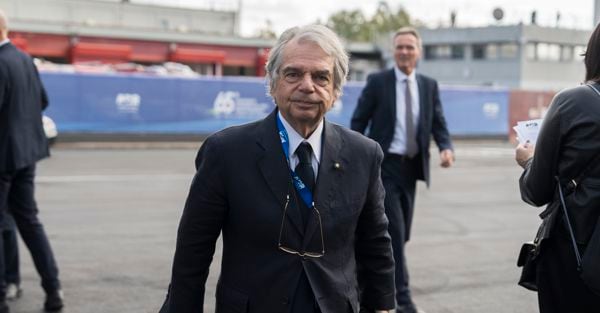
RENATO BRUNETTA, PRESIDENTE CNEL 65° ANNIVERSARIO FONDAZIONE AEROPORTO LEONARDO DA VINCI
6 November 2025
Cnel: a good balance between rigour and growth
"The budget for 2026 pursues a twofold objective: on the one hand, to consolidate macroeconomic and financial stability; on the other, to strengthen the country's competitiveness and industrial autonomy, in line with the European priorities of economic security, technological innovation and common defence". This was said by the president of the Cnel, Renato Brunetta, at a hearing before the joint Budget committees of the House and Senate on the manoeuvre. "This balance between rigour and growth," he added, "reflects a vision that interprets the soundness of public accounts not as a constraint, but as an enabling condition for development, for attracting investment and for Italy's full participation in major European programmes.
6 November 2025
Istat: hyper-amortisation for 3.8% of companies, 45% benefit lost due to incapacity
"Companies benefiting from the increased depreciation for high-tech capital goods account for about 3.8% of the companies considered. A significant share of the facilitation is lost due to inability, about 45%, especially for companies belonging to the manufacturing sector, independent companies, those in the North and financially fragile companies". This was specified in the report illustrated by the president of Istat, Francesco Maria Chelli, during the hearing before the joint Budget Committees of the House and Senate on the manoeuvre.
6 November 2025
Istat: from Isee changes 145 euro average for 2.3 mln households
"Overall, the changes to the calculation of the Isee result in an average annual benefit of 145 euro for about 2.3 million households (8.6% of resident households)". This was reported by the president of Istat, Francesco Maria Chelli, during the hearing before the Budget commissions of the House and Senate on the manoeuvre. "From the distributional point of view, the average benefit is higher for the poorest families (263 euro, determining an average change in family income of 2.2%)," he continued, explaining, however, that these families represent "a very small share of the families benefiting from the rule since they generally already met the access requirements and received relatively higher transfer amounts for the five measures considered". In fact, 'almost 70 per cent of the households benefiting from the changes are in the middle fifths (third and fourth) of the distribution of equivalised household income'.
Further reading
6 November 2025
Istat: mothers' bonus for 865,000, on average 660 euro in a year
For the mothers' bonus, which the manoeuvre increases to EUR 60 per month, it is estimated that an audience of about 865,000 female workers, a quarter of all female workers with children (3.5 million). Assuming an adhesion rate of 100 per cent, the average annual individual benefit will be almost EUR 660 (EUR 60 per month multiplied by the number of months worked), for a total cost of about EUR 570 million. Thus the president of Istat, Francesco Maria Chelli, at a hearing before the Budget Committees of the Chamber of Deputies and the Senate in reference to the bonus mamme in favour of employed and self-employed women who are mothers of two children, the youngest of whom is under the age of 10, and self-employed and employed women with fixed-term contracts who are mothers of three or more children, the youngest of whom is under the age of 18. Beneficiary households would be 3.2 per cent of the total number of resident households and the benefit will result in a change in household income of 2.7 per cent on average. Three-quarters of the total benefit will go to households in the middle fifths of the income distribution. The benefit increases as the equivalent household income rises (from 581 on average for households in the top fifth to 700 for those in the richest fifth), as female workers in households with the lowest incomes work fewer months in the year on average. Compared to the benefit received in 2025 under Decree-Law 95/2025, the measure would result in a gain at household level of about EUR 220 on an annual basis in 2026.
Further reading
6 November 2025
Istat: da taglio Irpef beneficio medio di 230 euro per 14 milioni di contribuenti
Il taglio di due punti percentuali della seconda aliquota Irpef previsto in manovra “coinvolgerebbe poco più di 14 milioni di contribuenti, con un beneficio annuo pari in media a circa 230 euro”. È quanto evidenzia l’Istat nel corso dell’audizione alle commissioni Bilancio di Camera e Senato sulla legge di Bilancio. “Le famiglie beneficiarie sarebbero circa 11 milioni (44% delle famiglie residenti) e il beneficio medio di circa 276 euro (in ogni famiglia ci può essere più di un contribuente)”, ha aggiunto il presidente Francesco Maria Chelli.

