
Interview with the host of the podcast *The Beirut Banyan*

‘The reconstruction in Syria presents an opportunity for the Gulf states and Turkey. I fear not so much for Lebanon’

We met Ronnie Chatah, a political analyst and university lecturer, in Beirut; he helps us understand the dynamics and economic implications that Syria’s reconstruction may have for Beirut and the Middle East. ‘The money that was coming in was mainly from the Gulf, and today it is being channelled towards Damascus. It is a form of punishment by the GCC nations against my country for having placed itself within Iran’s sphere of influence.’

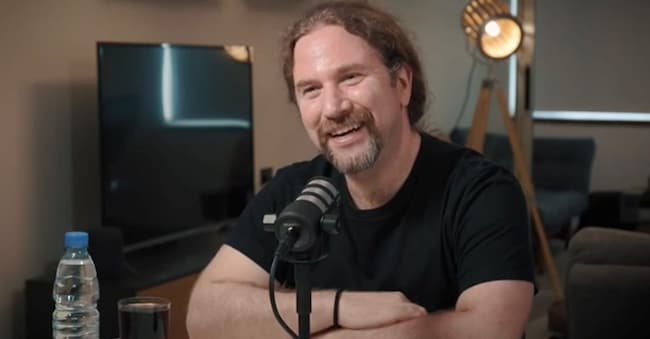
Ronnie Chatah, analista politico, docente universitario e conduttore del podcast The Beirut Banyan

7' min read

Translated by AI
Versione italiana

7' min read

Translated by AI
Versione italiana

‘Historically, Lebanon has been far more important to Syria than Syria has been to Lebanon. Syria has played a significant role in Lebanese politics: the Assad regime effectively ran the country. At one point, around 20 per cent of the Lebanese population were Syrians. Many of them have not returned, not only for security reasons, but also for financial ones,” explains Ronnie Chatah, a political analyst, university lecturer and host of the podcast The Beirut Banyan. Speaking to us in Beirut, he helps us understand the dynamics and economic implications that the reconstruction of Syria may have for Lebanon – and for the Middle East.

Is the Lebanese government now in a position to take the necessary steps to benefit from the reconstruction of Syria and derive economic advantage from it?

Loading...

‘Last November, at the Beirut One investment conference – organised by the Lebanese Ministry of Economy and Trade in conjunction with the Economic and Social Council (CESE), and attended by over 150 investors, major international companies and the Governor of the Central Bank of Lebanon – a fundamental prerequisite emerged: the need for security to be sufficiently stable to allow for economic recovery. This was before the war that began in March 2026. I am speaking at a macroeconomic level: everyone identified security as the main issue. Today, the security situation in Lebanon has changed radically – for the better – and the same applies, in the long term, to Syria. It is therefore likely that a more favourable environment will emerge. However, Lebanon will never become an economic power or a regional hub. It will never achieve economic development on a very large scale. It will be impossible to persuade businesses not to invest in Dubai: it is the UAE that has taken on that role. I would say that Dubai is also a direct consequence of Lebanon’s loss of the role it once played in the region. Take, for example, the Lebanese company Anghami, a music streaming platform often described as the regional equivalent or competitor to Spotify: it has left Lebanon for the Emirates. But the most important factor for the stabilisation of Syria, and indeed Lebanon, is one whose influence is waning: primarily Iran. With the war having begun in March, it is clear that no one will invest in Lebanon – not even the Lebanese diaspora – until this issue is resolved. The end of the Assad regime in Syria and the political changes in Lebanon – in particular the significant curtailment of Hezbollah’s influence, including the killing of its former leader Hassan Nasrallah, which occurred within a few weeks of one another – have paved the way for positive stabilisation, albeit at an extremely slow pace.”

What is the main risk factor preventing Lebanese entrepreneurs living abroad from returning to invest in their own country?

‘Trust is the most important issue for the Lebanese diaspora, more so than any other factor. Trust has been destroyed: the perception that assets and investments are safe in Lebanon has been lost. It took decades to build that trust, and, following the 2019 financial crisis, I do not believe that those who managed to save at least part of their assets are now willing to bring them back to Lebanon. This isn’t just about billionaires: middle-income families think the same way too. It is not just a question of war; the Lebanese banking sector, too, is now in a near-zombie state. It is operating at the bare minimum of what it should be doing, especially when compared with the situation not so long ago. As for the billionaires, many are still in Lebanon. We have, for example, a former Nissan tycoon. But I do not believe a country can revive itself through this sort of person. Moreover, it was not just the 2019 crisis: there have been several successive waves of inflation, making it increasingly difficult to bring Lebanese investors back to the country. The confidence built up in the years following the civil war has now been eroded. The lira, the Lebanese currency, had stabilised and had even gained in value. There was confidence even during the Syrian occupation, despite the violence and clashes between Hezbollah and Israel in the south. There was a sense of reconstruction and regional peace; Lebanon took part in the Madrid Conference; it was believed that the Syrian occupation would not last forever; and there was a government that encouraged investment. All of that has now vanished.”
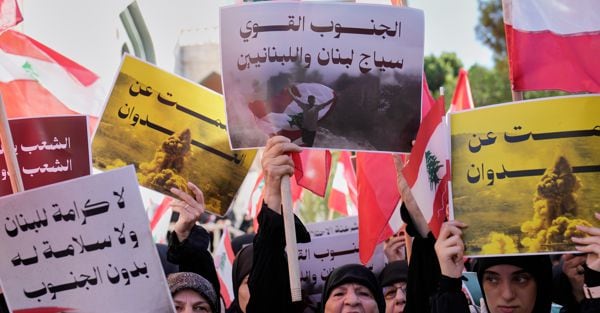
Proteste pro Hezbollah

Recenti proteste contro il governo di Beirut e a favore di Hezbollah

What competitive advantage might Lebanese businesses have in Syria?

‘When it comes to post-war reconstruction, I am thinking of the companies that lived through the aftermath of the Lebanese civil war and have shown a genuine interest in Syria’s reconstruction. But it is not just about that. Lebanese media companies, too, now see opportunities that were previously impossible. The same applies to regional tourism, at all levels. The idea is to promote tourism that is not exclusively local. I do not believe that Lebanon is currently the main driving force behind Syria’s reconstruction. I cannot think of any major opportunities that Lebanese companies have missed so far. In fact, I am surprised by the number of businesses that have expressed an interest in Syria. We must remember that, historically, relations with Syria have been long-standing and difficult. The region as a whole, however, sees an opportunity in Syria. Take the banking sector, for example. A few weeks ago, the Syrian president, Ahmed al-Sharaa, was in a restaurant in Damascus and paid with a Visa card. It may seem trivial, but it’s a novelty in the country. I imagine that the Lebanese banking sector – or what remains of it – is investing in Syria in this area, but it is doing so mainly behind the scenes. In the foreground, however, are countries such as Turkey and Saudi Arabia. Lebanon is not a particularly significant player in Syria. The fact is that, for the Lebanese, Syria has never been regarded as an economic driver. If anything, the opposite was true: it was Syrian labourers who came to Lebanon to work. And Lebanon was also a place where former members of the Syrian regime sought refuge. For better or worse, it was the place to go to hide. For the Lebanese, the Gulf was a far more lucrative destination for economic opportunities. At a macroeconomic level, the money flowing into Lebanon was mainly from the Gulf; today, however, it is being channelled towards Syria instead. It was a form of punishment meted out by the GCC countries against Lebanon for aligning itself with the Iranian sphere of influence.”

If Lebanon were to invest in Syria in its own economic interests, how could it avoid entering into a relationship that would place it in a sort of vassalage?

‘This has far more to do with security than with economic investment. It means, for example, that the Syrian army does not have to pursue Hezbollah in Lebanon. Curiously, it was President Donald Trump who first mooted this possibility, but the proposal did not find support from Syria. From one perspective, we are fortunate that Syria does not regard its own survival as tied to the decisions taken here. But even if all the conflicts were to end, if the Iranian regime were not to collapse but were to change the way it operates, and if the region were to manage to live without constant wars, I cannot imagine this area thriving any time soon. Too much damage has been done. Even the Syrians who once brought their money here – those who were able to do so – have left. Today in Lebanon, it is perhaps mainly dubious businesses and individuals subject to sanctions who have an interest in staying in Lebanon. And this is certainly not a factor that makes the country any more attractive. It is a form of crony capitalism. One of the fundamental differences between the Lebanese and Syrian markets was that Lebanon had an open market, whilst Syria had a closed economy: they were two systems that bore no resemblance to one another. Tourism once dominated the Lebanese economy; today, remittances are its lifeblood. I do not see either Syria or Lebanon making rapid progress. What is happening today is that Turkey is pushing Lebanon to join forces with Syria in a joint venture, but it is not a process driven exclusively by Syria”,

What political reforms are needed in Lebanon today to kick-start economic recovery?

Loading...

‘The figure most committed to reform is the current Prime Minister, who wants the country to function in accordance with the original institutional framework but who, instead, finds himself running it as if he were a crisis manager. The Ministers for the Economy and Finance cannot do much more than has already been done: guaranteeing support measures, offering some form of subsidy and enabling the Lebanese people to make ends meet. For reforms to really take off, a level of long-term security is needed that will allow the agreement with the International Monetary Fund to be carried forward. Seven years ago, this opportunity was already taken away from us. Today, most politicians are focused on funding the Lebanese army, but, in my view, no reforms can be implemented under the current conditions. Even in the 1990s, reforms failed to take hold because of the ongoing war. Lebanon can be compared to Somalia: it is close to being a failed state. Success cannot be measured by the number of yachts or by a few areas where the economy continues to function. There are aspirations within the government, but from a public policy perspective it is impossible to realise them. If there had been a way to do so, it would have been done already, because ordinary people want it. We are still a war zone. Half of Lebanon is in dire straits, with people who have lost everything and are trying to figure out how to get by. This is not how you rebuild a country. It is a massive drain on resources for the economy and the government. And it leaves no room for serious reforms.”

Copyright reserved ©
Loading...

Brand connect

Loading...

Newsletter

Notizie e approfondimenti sugli avvenimenti politici, economici e finanziari.

Iscriviti