
The Lancia Gamma, produced at Melfi alongside the Jeep Compass and the DS N.7 and N.8.
The Stellantis plant in Melfi is entering the most critical phase of its industrial transformation. Will Lancia Gamma help to revitalise the plant in Basilicata?

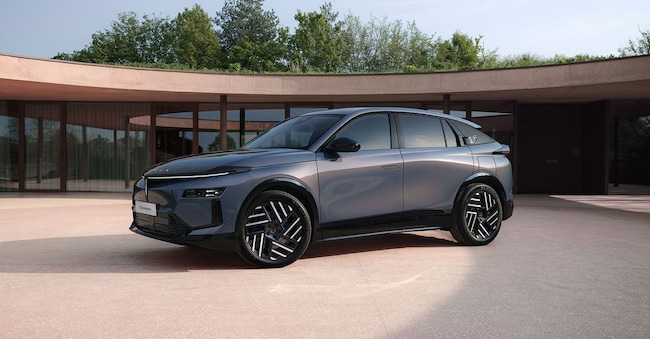
The future of the Melfi plant hinges on the success of the new models launched by Stellantis, including the recent Lancia Gamma. Following the phasing out of the Fiat 500X and Jeep Renegade – which had been the mainstays of the Melfi plant for over a decade – production now centres on the new STLA Medium platform, which made its debut three years ago on the 3008 (albeit produced at Sochaux), and on four models. The Jeep Compass has already entered the ramp-up phase, the DS No. 8 has been in production since 2025, the DS No. 7 is set to roll off the production lines in the coming weeks, and pre-series production of the Lancia Gamma began at the end of August. On paper, this is a broader range positioned higher up the market than in the past, but in terms of figures, the balance is very different. To date, only the Jeep Compass is a genuine high-volume model, with production figures sufficient to support a plant such as Melfi.
Production at Melfi: from 390,000 cars to just over 30,000
To understand the scale of the change, we need to look at the figures. In 2015, the Melfi plant produced 390,000 cars – a peak reached during the full-scale ramp-up of production for the Jeep Renegade and Fiat 500X, to which the Punto was still being added. In 2016, the figure was 364,700; in 2017, 330,536; and in 2018, 339,865. Even in 2019, when the models’ life cycles were beginning to advance, 248,100 cars rolled off the production lines. At that time, the plant employed around 7,300 direct staff, and the 500X and Renegade were exported to over one hundred markets.
Since then, production figures have fallen rapidly: in 2021, Melfi produced 163,646 cars; in 2024, 62,080; and in 2025, just 32,760. This latest figure represents just over 8 per cent of the 2015 record. In 2024, production was still split between the previous-generation Compass, the 500X and the Renegade, accounting for approximately 40 per cent, 30 per cent and 30 per cent of the total respectively. A year later, the three outgoing models totalled 28,125 units, whilst the DS No. 8 and the new Compass together accounted for 4,635 cars. The DS No. 8 alone ended 2025 with 1,706 units produced.
In the first half of 2026, however, Melfi produced 35,920 cars, compared with 19,070 in the same period the previous year, representing an increase of 88.4 per cent. By way of comparison with the past, in the first six months of 2019 the plant had produced over 152,700 cars, more than four times the current level. According to Fim-Cisl figures, around 33,300 units from the new production cycle are attributable to the Compass, whilst production of the DS No. 8 stood at 1,944 units. The workforce has fallen to around 4,440 employees, following some 2,800 voluntary redundancies since 2021, and over 300 workers were still on secondment to other group sites at the halfway point of the year. In September, the factory is operating on a single alternating shift with production set at 295 cars per day, whilst the ramp-up of DS No. 7 production is being finalised. These figures are a far cry from the annual capacity of around 400,000 cars across twenty shifts specified for Melfi following the 2021 reorganisation.
The Jeep Compass is currently the best-selling model
The new Jeep Compass starts from a completely different position compared with the other models produced at Melfi. Not only because it belongs to the C-SUV segment, being over 10 cm shorter than the other models, but also because it is now in its third generation, having sold over 2.5 million units worldwide. The name is well known outside Europe, and Jeep possesses a commercial strength and brand identity that are hardly comparable to those of Lancia and DS in the current configuration of the two brands.

