

Layered defence is achieved through a widespread industrial base
The logic of deploying the most sophisticated weapon for every threat is giving way to deterrence, which is also economically sustainable. The major players lead the way and integrate the systems. Smaller companies play a strategic role in an integrated defence model. What is needed today

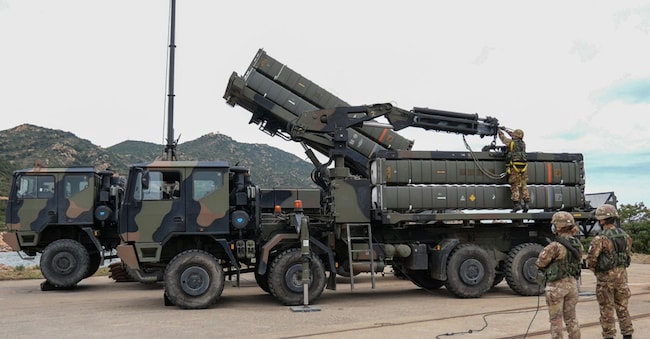
Defence is a public good – essential and indivisible. Our security and our ability to safeguard our interests and well-being depend on it. But the cost war that is taking hold — where a drone costing just a few thousand euros can force the adversary to respond with an interceptor costing millions — is won through the ability to rapidly mobilise technologies and supply chains, which must be placed at the heart of the strategic debate. The logic of ‘the most sophisticated weapon for every threat’ is unsustainable in the long term: effective on a case-by-case basis, but costly in industrial and economic terms. The most widely discussed response is layered defence: complex systems reserved for large-scale threats, more economical solutions to saturate low-cost defences, electronic warfare, lasers and artificial intelligence. But layered defence also means connecting the various actors: having access to different technologies – often more agile ones – capable of being rapidly adapted without going through the long and costly development cycles typical of large-scale programmes. This is where the value of a widespread industrial base comes into play: small and medium-sized enterprises, university spin-offs, and companies established in sectors adjacent to defence that possess transferable expertise. They do not replace large corporations, whose role is essential in terms of expertise, scale and investment capacity, but they can accelerate their progress by offering targeted solutions that large-scale programmes do not have the time or incentive to develop on their own.
The major landmarks
Italia has a wealth of such technologies and is already a major competitive force in this field. Take the space sector, for example, which is increasingly sharing technologies and challenges with the defence sector. If properly integrated into the wider supply chain — through partnerships with major groups, funding programmes such as the EIC STEP Scale Up Defence, or European initiatives such as SAFE — these technologies can provide major players with faster and less costly access to critical components, and offer institutions a broader range of defence options. The point is not to determine whether a small company can compete on its own against the defence giants: that is not the playing field. Value arises from synergy, from the ability to bring niche expertise into dialogue with the system integration that only large conglomerates can guarantee. Leonardo in radar and command and control, MBDA Italia in missile defence, ELT Group in electronic warfare, Avio for launchers and propulsion systems, Fincantieri on naval integration – are true champions whom the global market looks up to with admiration and on whom governments, not just the Italia one, rely.
The role of small businesses
This list can be supplemented, on a case-by-case basis, by technologies developed by smaller organisations, which are capable of delivering innovative solutions within timeframes and at costs that large-scale programmes would find difficult to replicate on their own. These technologies can be integrated into the major programmes of national champions, address specific aspects of integrated defence, or bring together entirely new technological elements and areas. This lays the foundations for a genuine industrial policy, capable of supporting and developing an integrated network of research and high technology – a prerequisite for the necessary, greater strategic autonomy. The key lies entirely in the coordination, which only public decision-makers can adequately manage.
Deterrence is also economic sustainability
In a context where deterrence is measured not only in terms of capability, but also in terms of economic sustainability and speed of adaptation, making the most of this broader ecosystem — major players, SMEs, research centres and industrial spin-offs — is not merely a rhetorical exercise in inclusion, but a strategic choice. It is the combination of diverse expertise, rather than the isolated excellence of a single actor, that can guarantee Europe and Italia a real advantage in the new economy of deterrence.
Daniele Pavarin is co-founder and CEO of T4i

