

Libya is pumping oil, but remains in crisis and is looking towards a ‘Lebanese-style’ scenario
Elections to renew the Parliament and elect a new president are scheduled for next spring, but the road ahead is an uphill struggle, partly due to the domestic political climate. Washington does not wish to go along with the logic of power-sharing which, at this stage, is strongly favouring Russia, Turkey and China. Italia is working to safeguard its assets and relationships

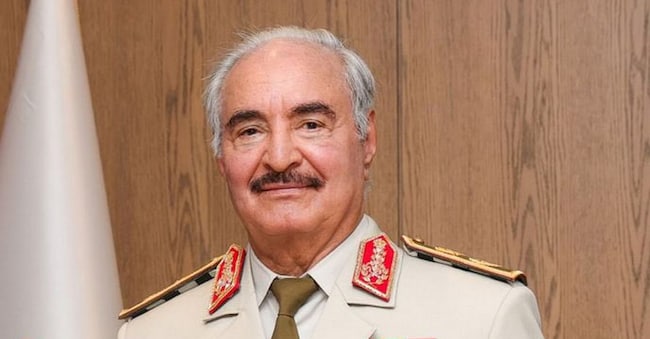
Despite the proclamations and the tight schedule of deadlines, the road to elections in Libya remains a steep uphill struggle. There are two key events in the coming months: the parliamentary elections, scheduled for the end of February 2027, and the election of a new president – an issue on which the Electoral Commission, supported by the UN, is reported to have recently reached an agreement on rules and timelines, which must be completed within two years from now. All this, however, comes just a few hours after the funeral of Fawzi al-Mansour, the powerful head of Libyan intelligence and a close ally of General Haftar, who was killed in an attack on 12 August. The funeral served as a gathering and meeting point for the military leaders of some of the country’s most important tribes, but it was also a source of anger and a pretext for new divisions. Of particular note was the presence of Khaled and Saddam Haftar, the two eldest sons of the leader of Cyrenaica and head of the Libyan National Army (LNA), Khalifa Haftar. In particular, Saddam Haftar appears set to play an increasingly significant role in dialogue with the tribes and with international foreign ministries. Having already been appointed Deputy Chief of Staff of the army last year, Saddam is reportedly, as of a few days ago, in charge of the armed forces in eastern and southern Libya. The Haftar family has, in fact, been preparing for succession for some time, with the aim of ensuring continuity and a privileged role within the complex web of interests and power balances in Libya. However, his advanced age and very close ties with Moscow have made the Field Marshal – the undisputed leading figure of the last decade – too divisive for the ambitions of many actors with an interest in the country’s future, starting with the United States.
The Return of the US
Washington’s return to that region signifies, first and foremost, significant pressure for a unified approach. Washington does not wish to go along with a partitionist agenda which, at this stage, is greatly benefiting Russia, Turkey and China. Donald Trump’s special envoy for Libya, Massad Boulos, has presented an eight-point plan designed to facilitate the creation of unified institutions in the country, based on a balanced distribution of roles and responsibilities, leading up to the crucial date of the election of a new president. A ‘Lebanese-style’ approach, which is also very much welcomed by Italia, which continues to work to safeguard strategic interests linked to energy and the control of migration routes. Saddam Haftar is, from this perspective, a highly welcome interlocutor in Rome as well, with whom he has maintained relations for some time.
‘Divide and rule’
However, the forces united in support of Libya remain in the minority. Indeed, it is in the interests of a great many to follow the age-old principle of ‘divide and rule’. This is particularly true of Moscow, which has already transformed Cyrenaica into its main military base in the central Mediterranean following the scaling back of its presence in Latakia, Syria, as reported and documented by 24OreNextMed on 18 August. More or less the same thing has happened in Tripoli, with Turkish ships now a permanent presence in that stretch of sea, seeking to make western Libya their main outpost towards the Maghreb. Ankara is careful, however, not to upset anyone, particularly Moscow, by keeping diplomatic channels open with the Haftar family and banking on a mediating role which, however, at present, does not seem to be welcome, especially among Libyans, with the partial exception of the Government of National Unity led by Prime Minister Abdulhamid Dbeibah. Neighbouring Egypt, which has now lost its historic role as a geopolitical pivot in the Mediterranean–Middle East–Persian Gulf region, is also keeping a close eye on Libya, as are the United Arab Emirates, which have been very active since the start of the uprising against Gaddafi in order to curb the ambitions of Cairo and neighbouring Qatar.
The domestic economic situation
Weighing heavily on all these scenarios is a dire domestic economic situation. Libya is producing oil at its highest rate in the last decade, yet the revenues are not reaching households and their purchasing power continues to decline steadily. The central bank has devalued the dinar twice in less than a year, and the WFP (World Food Programme) basket of goods has risen by almost 20 per cent over the past twelve months. In February, protesters in several western cities called for the removal of the entire political class, whom they hold responsible for the cost-of-living crisis. Wealth exists, but it is simply intercepted before it reaches the population. The crisis in Libya is therefore increasingly becoming a global and globalised crisis. And this should serve as an important wake-up call for Europe. If the fate of us Europeans is being decided in the East today, in a few years’ time it will inevitably be decided in the South. At that point, all the issues will have come to a head and the winners and losers will be counted, unequivocally.

