
Mediterranean Risiko

Libya: the US advance lays bare European divisions

Energy, security and institutional frameworks: Washington is strengthening its dialogue with Tripoli and Benghazi, whilst European capitals are struggling to translate their interests into a common strategy

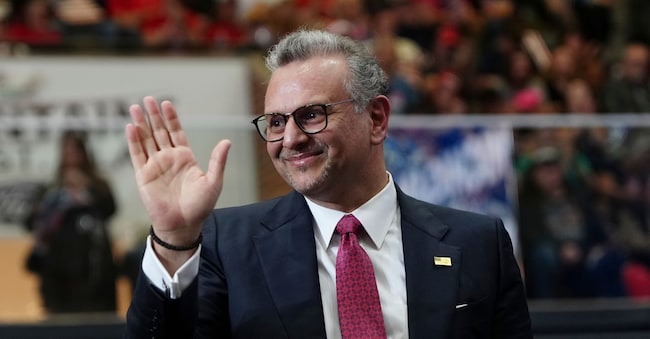
Massad Boulos, senior advisor degli Stati Uniti per gli Affari arabi e africani Foto AP/Julia Demaree Nikhinson

4' min read

Translated by AI
Versione italiana

4' min read

Translated by AI
Versione italiana

Since the fall of the regime of Muammar Gaddafi in 2011, Europe has remained at the centre of the Libyan crisis. Its involvement has been driven by geographical proximity, intertwined economic and security interests, and the consequences of instability on migration flows and energy supplies.

More than fifteen years on, however, the balance of power appears to be shifting. The United States is moving away from supporting United Nations mediation towards a more direct – and at times independent – approach to shaping political, economic and security agreements. This development highlights Europe’s difficulties and gives Washington greater scope to influence the country’s future.

Loading...

Common interests, divergent strategies

European involvement has been crucial ever since the international intervention in 2011. In the years that followed, major capitals promoted initiatives and conferences to contain the crisis: from the meetings in Paris to the Palermo conference, right through to the Berlin process, which has become one of the main international diplomatic frameworks supporting UN mediation.

However, this activism has not translated into a shared vision. For Italia, Libya is an issue directly linked to national security, energy supplies and the management of immigration. France has viewed the country partly through the prism of its own ambitions for influence in North Africa and the Sahel, combining economic interests with the priorities of the fight against terrorism. Germany, on the other hand, has relied on its diplomatic clout to facilitate dialogue between the international actors involved.

Rather than converging towards a common strategy, these interests have often fuelled competition between the capitals. This has weakened both their ability to influence the Libyan parties and their capacity to implement negotiating initiatives.

The European limitation, therefore, does not lie in a lack of interest or of tools. The Union has significant economic and diplomatic resources at its disposal, but the fragmentation of national priorities has reduced its ability to contribute to a solution that can actually be implemented.

The limits of UN mediation

The difficulties in Europe have been compounded by the UN process’s inability to overcome the country’s division. Among others, the following have successively led the mission or acted as mediators: Bernardino León, Martin Kobler, Ghassan Salamé, Ján Kubiš, Abdoulaye Bathily and Hanna Tetteh.

Regardless of the different experiences and approaches, the mediation efforts have all had to contend with one constant: the intervention of external powers in internal power dynamics and negotiations.

The selection of envoys also encountered obstacles. In December 2020, the Bulgarian diplomat Nickolay Mladenov withdrew from the post before formally taking it up, citing personal and family reasons for his decision. This episode forms part of the complex story of the diplomatic handling of the dossier, though it does not fully account for the political causes behind it.

US strategy: between diplomacy and business

It is against this backdrop that Washington has gradually adjusted its approach. The United States was already involved through counter-terrorism activities, security coordination and support for the United Nations process. The change mainly concerns the nature of its involvement: no longer merely support for international mediation, but direct engagement on power structures, institutions and the economy.

Loading...

This trend has gained momentum with the return of Donald Trump to the White House and the efforts of his adviser on Arab and African affairs, Massad Boulos, who has stepped up contacts with representatives from both eastern and western Libya. This initiative has been developed in parallel with the efforts of the US Embassy and the US military command for Africa, Africom.

This commitment extends to the economic, energy and military sectors. In the hydrocarbons sector, US companies are seeking to strengthen their presence, complementing diplomatic efforts with agreements and investment projects in the oil and gas sectors.

A difference in approach thus becomes apparent. European initiatives and those of the United Nations have prioritised political negotiation and dialogue between institutions, viewing elections as the path towards a lasting solution. Washington, on the other hand, tends to complement the political process with economic, military and security agreements. The aim is to build a network of relationships capable of influencing several decision-making centres simultaneously.

A Europe that no longer sets the agenda

The comparison is not limited to the relationship between the United States and the European Union. Moscow continues to use Libya as a platform to strengthen its presence in North Africa and to project itself into the spaces left by France’s military drawdown in the region.

The United Kingdom, following Brexit, continues to pursue its own course of action and maintain close ties with Washington. This is another reason why it is necessary to distinguish between the role of the institutions of the Union and that of the European countries, which is broader but less uniform.

The main change does not necessarily amount to exclusive American control over the issue. Rather, it lies in the growing ability of the United States to take the initiative on matters that go beyond diplomatic mediation, whilst the Europeans remain torn between national priorities and participation in multilateral mechanisms.

For Europe, what is at stake is the opportunity to transform its economic and strategic exposure into political influence. Energy, migration and security continue to tie it to Libya. But these interests, on their own, no longer guarantee the ability to shape developments there.

Reda Shaaban, a writer specialising in Libyan affairs

Copyright reserved ©
Loading...

Brand connect

Loading...

Newsletter

Notizie e approfondimenti sugli avvenimenti politici, economici e finanziari.

Iscriviti