
Little snow, 'retreating' glaciers and avalanche accidents in the Italian Alps
This is the picture that emerges from the latest balance sheet for the winter 2024-2025 of the National System for Environmental Protection, the body of which both Ispra and the Arpa of the various regions are members

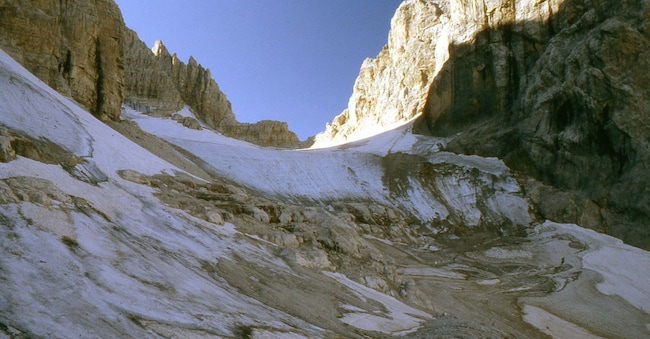
Less snow and steadily receding glaciers. For the Italian Alps, the winter of 2024-2025 has not been generous. Not only has it been poor in snow, but during the same period, there have been a number of avalanche accidents. This is confirmed by the picture that emerges from the latest balance sheet of the National System for Environmental Protection (the body to which both Ispra and the Arpa of the various regions belong), engaged in monitoring and research activities to study climate dynamics and better understand the phenomena affecting our mountains.
Deficit between 20 and 40% in Piedmont
"In Piedmont, the snowfall deficit," writes Snpa, "reached 20-40%, placing it among the least snowy in the last 60 years, especially at low altitudes and in the southern sectors.
The number of days with snow on the ground reflects this trend, with a significant shortfall especially in the southern sectors, between -20 and -50%: especially at the beginning of the year, the snow cover was short and subject to complete melting due to mild temperatures and rain-on-snow events.
The Aosta Valley case
Snowfall in the Aosta Valley was also lower than in the previous year, 'with large differences between the eastern and western sectors'. After the 20223-2024 snow season, in which snowfall was, on average, more abundant, 2024-2025 'recorded a decrease in precipitation, with between 20 % and 40 % on a regional basis'. The deficit was not uniform: the eastern sectors suffered the most, while in the western and northwestern areas, snowfall was relatively abundant, although still below the previous year's values. The spring snowfall in 2025 only partly compensated for the lack of snow accumulated during the winter. Not only that, "on the Timorion and Rutor glaciers, seasonal snow accumulation was slightly above the average of the last twenty years, but still below the exceptional values observed in 2023-2024, when the Timorion reached the highest in the historical series since 2000 and the Rutor the second highest value in the last twenty years".
Snow reduced and delayed in Lombardy
In Lombardy, the report records a late start and reduced snowfall "both in terms of snow accumulation and the volume of slow-release melt water in the late spring and summer period". "The central months of winter, December and part of January," the report continues, "were characterised by milder conditions and a rise in snow depth that limited the persistence of the snowpack, especially below 1800-2000 metres. And, despite the new spring snowfall, 'the volume of fresh snow accumulated is below historical averages'.

