Healthcare

The problem of malnutrition in hospitals lengthens hospital stays by 30-40%.

Hospital malnutrition prolongs hospital stays by 30-40%: comparison with European realities

by Natascia Ronchetti

(AdobeStock)

6' min read

6' min read

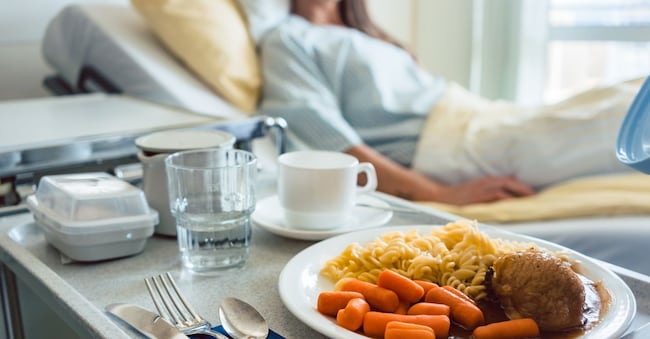
Every year Italian hospitals provide an average of 240 million meals, including breakfast, lunch and dinner. But three times out of ten they arrive cold, in 30% of cases hot trolleys are missing, and in the vast majority there is only a choice of two menus. An issue of quality that can also affect the malnutrition that develops in the hospital environment and affects the elderly in particular. A problem that leads to an extension of hospital stays by 30-40%.

The control is entrusted to the Sian - the food and nutrition hygiene services that must be present in all health authorities - and to the health directorate, which has the task of supervising the quality and safety of services, including catering. There are still many critical issues. The healthcare system still does not seem to take into account the malnutrition of acute and chronic patients in a homogeneous manner throughout the country.

Loading...

This was revealed two years ago (last available data) by the mapping carried out by the Society of Clinical Nutrition and Metabolism (SINuC) with a census of 94 organisational structures. If Piedmont shines with 14 clinical nutrition operating units (followed by Latium and Campania), five regions - Abruzzo, Basilicata, Molise, Sardinia and Valle d'Aosta - have only one structure. Territorial differences also noted by the Ministry of Health.

'Clinical nutrition is based on simple acts, but difficult to bring into daily practice, despite the fact that the fight against malnutrition is fundamental to combating chronic and degenerative diseases,' says Andrea Pezzana, a nutritionist physician, consultant to the ministry for the drafting of national guidelines on hospital catering. This is why the regions can have a different dietary implementation.

'The situation is still patchy,' Pezzana continues. 'We have moved forward on many therapeutic strategies, but nutrition in various areas continues to be the Cinderella of medicine. The national guidelines indicate as a reference framework for meal preparation the Mediterranean diet, the dietary regime that is considered the most adequate to contribute effectively to maintaining a good state of health. They also indicate how the meal should be composed, which for adult in-patients should ensure approximately 1,800-2,000 calories per day, in the form of lipids (30%), proteins (18%) and carbohydrates (52%) distributed throughout the day. On paper this might all work but it does not. This was also demonstrated two years ago by the operation in which the Nas inspected 992 hospitals in Italy, finding irregularities in about a third, with the closure of seven kitchen outlets. Alongside a problem of training, which is not always adequate, as the experts point out, there is also the tendency to outsource the catering service.

'This,' Pezzana explains, 'has led to a certain loss of control on the part of the health authorities, whereas proper nutrition is a cornerstone of therapy. The costs for the health of the population and for the state coffers are very high. Prolonged hospital stays due to malnutrition have direct effects, with an increase in disease-related costs and an increase in vulnerability that often requires repeated hospitalisation. The result? The problem of malnutrition in hospitals has an estimated morbidity and mortality cost of two billion per year. Yet all it would take is better food quality control and organisation to reduce hospitalisation time (by 40%) and complications by 50%.

France, a problem of quality and widespread malnutrition

In France, the topic of hospital food is the subject of strong public debate. A survey conducted in 2024 showed that two thirds of patients are dissatisfied: meals are too bland, lack variety, in small portions and with poor presentation. Added to this is a worrying fact: between 20% and 40% of hospitalised patients suffer from malnutrition, resulting in longer recovery times. It is not only the quality of meals that is to blame, but also environmental factors that reduce appetite, such as the smell of disinfectants or the side effects of drugs.

On the regulatory side, standards were first addressed in 2017 by the National Nutrition Council, which suggested offering more choice and relaxing overly restrictive diets. Instead, the 2018 Égalim law requires at least 50 per cent of products to be 'quality and sustainable' and 20 per cent organic, criteria also extended to meat, poultry and fish. However, many hospitals fail to comply with these rules due to chronic shortage of funds. In short, it is not so much the presence of ultra-processed food that is worrying, but the over-rigidity and lack of resources to offer truly nutritious and enjoyable meals.

Austria, rich menus but penalised by logistics

At the Hietzing Hospital in Vienna, the kitchen prepares around 800 meals daily, with menus that may include spinach strudel, roast beef or vegetarian dishes, accompanied by desserts such as banana cake or chocolate pudding. Only a quarter of the patients can choose freely; the others have to follow specific dietary regimes. The perception of food in hospital is influenced by pain, medication, odours and lack of sleep, which alter taste. In addition, for logistical reasons, dishes are often kept hot or reheated, with loss of flavour and appearance.

Romania, 22 lei per day and stricter controls

In Romania, the state allocates 22 lei per day (about EUR 4.5) for the three patients' meals. The menus include soups, cooked dishes, eggs, cheese, vegetables, fruit, but also cold cuts and margarine. From July 2025, it will be possible to report hospitals with bad food online. The Minister of Health has warned that non-compliant facilities may be sanctioned, reminding that respect for the patient also goes through the quality of the meals served.

Lithuania, poor meals and outrage on social media

At only EUR 3 per day, the quality of food in Lithuanian hospitals is often at the centre of controversy. Photos shared on social media have shown unpleasant-looking dishes, sparking outrage with derogatory comments. The Ministry of Health banned fried and unhealthy products in 2019, but recent testimonies still speak of monotonous and nutrient-poor meals: bread, hard-boiled eggs, minimal portions of meat or outdated sweets. Some patients emphasise that it is not a question of bad food, but of a minimalist conception of hospital nutrition, without attention to recovery and well-being.

Bulgaria, autonomy for hospitals but risk of corruption

There is no national standard in Bulgaria: each hospital decides for itself whether to run the kitchen in-house or outsource it. On paper, meals must meet dietary and health criteria, but in reality patients often receive watered-down soups, uninviting stews or bread with salami. Expenditure per patient ranges from 3 to 12 leva per day (1.5 to 6 euro). The lack of dedicated funds and non-transparent tenders have favoured a few large suppliers also linked to politics, resulting in a risk of corruption and widespread poor quality.

Hungary, from bad food to increased funding

In recent years, food in Hungarian hospitals has become a political case. The media have denounced mouldy bread, expired meat and minimal portions, as in the case of the Szent János Hospital in Budapest, which was forced to terminate a contract with the supplier after a scandal. In 2023, an average of only EUR 1.39 per day was spent on ingredients: just 28 cents for breakfast, 70 for lunch and 42 for dinner. With such low figures, it was inevitable to end up with poor and sometimes unhealthy meals.

The issue has become a workhorse of the opposition, so much so that in July 2025 the government announced an increase in funding: from EUR 3.8 to EUR 10 per patient per day, to improve the quality of meals. A necessary measure, considering that hospitals had accumulated more than EUR 60 million in overdue debts during the same period. Hospital nutrition in Hungary thus remains an indicator of the broader underfunding of the healthcare system.

Greece, external procurement and precarious personnel

In Greece, hospital catering is mostly outsourced to private companies, without a national policy establishing uniform standards or nutritional requirements. Testimonies tell of very different experiences: packaged food and hard bread on the one hand, but also generous portions and discrete dishes in some hospitals. Some wards have adapted meals to the religious needs of patients, a positive sign in an overall fragile picture.

The main problem remains the lack of stable and qualified staff: many kitchens depend on precarious workers on short contracts, while the trade unions are calling for permanent recruitment. A new digital evaluation system for hospital services, introduced in July 2025, has already garnered numerous complaints about the quality of meals, confirming that hospital nutrition is an integral part of the crisis in the Greek healthcare system, which is increasingly geared towards privatisation.

Czech Republic, monotonous abundance and waste

In the Czech Republic, hospital food is traditionally considered unappetising, although this is slowly improving. Today, it is often possible to request meatless options, but the menu remains monotonous: white pasta and bread, meat, dairy products and fat predominate. Portions are large and a significant portion is wasted.

The Ministry of Health guidelines, updated in 2020, are binding for public hospitals and only recommended for private ones. Each facility has nutritionists in charge of assessing the dietary value of meals. In general, lunch is cooked fresh, while breakfast and dinner are often based on ultra-processed and semi-processed products.

*This article is part of the European collaborative journalism project "Pulse" and was contributed by Sarah Rost (Voxeurop, France), Christina Schmidt and Heidi Szepannek (Der Standard / Sisters of Mercy Hospital, Austria), Alina Neagu (HotNews, Romania), Eglė Kuktienė / Ieva Kniukštienė (Delphi, Lithuania), Martina Bozukova (Mediapool, Bulgaria), Lena Kyriakidi (Ef.Syn., Greece)

Copyright reserved ©

Brand connect

Loading...

Newsletter

Notizie e approfondimenti sugli avvenimenti politici, economici e finanziari.

Iscriviti