
Manoeuvre, Giorgetti calls for sacrifices: here's what can happen
The Minister for the Economy announces a new squeeze but there are still no details on how the contribution will be made: here is what could happen from the ministries to the banks
by Redazione Roma
 Aggiungi Il Sole 24 Ore
ai preferiti su Google
4' min read
Key points
4' min read
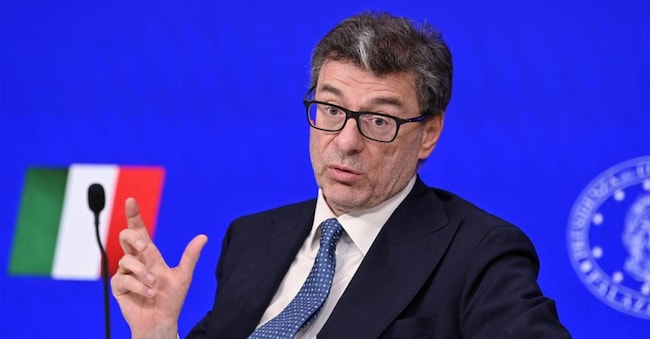
The manoeuvre will require 'sacrifices from everyone' because putting public accounts back in order, as Brussels demands, requires an effort from everyone, from citizens to businesses, large and small. Economy Minister Giancarlo Giorgetti seizes the opportunity offered by an interview with Bloomberg to start lining up the pieces of the next budget. But his words, so far, have had only one concrete result, that of sending the Milan Stock Exchange reeling, which closed at -1.5%, the worst in Europe.
Giorgetti's clarification
.But which sectors will be called upon to sacrifice? Giorgetti does not give precise indications, but he is keen to point out that it will not be 'a repeat of the debate on the banks' extra-profits' that was staged last year. First of all, extra-profits 'is an incorrect term'. We must talk about 'taxing the right profits, the profits', calculated 'correctly'. No voluntary payments ('companies do not do charity', the minister cuts it short), but the 'guiding star' is Article 53 of the Constitution, according to which 'everyone is obliged to contribute to public expenditure according to their ability to contribute'.
The fibrillations within the majority
.From the Mef, then, they explain that an effort will be asked of larger companies operating in certain sectors where profits have benefited from favourable external conditions. A discussion is underway on the modalities of their contribution. "No new taxes,' it is made clear, however, also because some fibrillation is coming from within the majority, from Forza Italia, which has always been against 'raising taxation in Italy', clarifies its spokesman, Raffaele Nevi, to the League, which, through the mouthpiece of Matteo Salvini, reiterates that 'this is not the government of taxes' but hopes for a 'voluntary contribution from the banks, which last year made 40 billion in profits'.
The sectors under scrutiny
.The banks have been in the spotlight for days and, in the last few hours, the hypothesis of an intervention on Dta (deferred tax assets) has come to light, but there are also those who speak of a possible move on stock options, which would, however, also concern insurance companies and other sectors. For now, nothing is certain. Even if the tam tam has also brought up defence and energy, which in fact are suffering at Piazza Affari. For the CEO of Intesa Sanpaolo, Carlo Messina, 'there may be some ways in which to contribute to the public debt situation without impacting on the accounts of companies' such as 'working on deferred tax assets, providing cash flows to the public sector' but also making resources available to the weaker groups or 'increasing the salaries of people working' within companies that are generating 'significant profits'.
The discussion in the Cdm
.Then there is the chapter, always hot, of cuts in ministries, a topic that was allegedly evoked during the last Council of Ministers. According to reports from various participants, Giorgia Meloni and Giancarlo Giorgetti are said to have returned to urging the holders of the ministries to discipline themselves with the spending review. Not least because otherwise, the Minister of the Economy is said to have repeated, everyone will have to make 'linear cuts'. A new round of spending cuts was widely announced - it is the new parameter, moreover, to be respected in order to be in line with the new EU Stability Pact - and now, about ten days from when the government will have to put the manoeuvre numbers on paper, defining this chapter also becomes urgent.

