
Medicines with cannabis extracts only with non-repeatable prescription
The Health Ministerial Decree that included cannabidiol in the tables of drugs containing narcotics is lawful

2' min read
2' min read
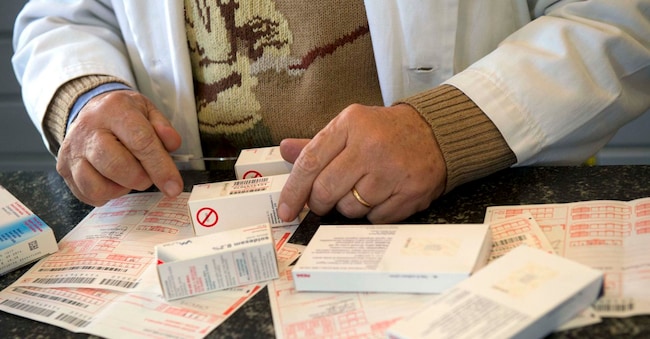
Medicines obtained from cannabis extracts can only be prescribed with a non-repeatable medical prescription. The Tar of Lazio has thus rejected the appeal brought by Canapa Sativa Italia, Giantec Srl, Società Biochimica Galloppa Srl and Orti Castello di Massimiliano Quai. The companies, which operate in the sector of production and/or marketing of products derived from hemp, had turned to the administrative judges to contest the decree of the Ministry of Health of 27 June 2024, with which the tables containing the indication of narcotic and psychotropic substances were updated. This update was the occasion to provide for the obligation of a non-repeatable medical prescription for oral compositions of cannabidiol obtained from cannabis extracts.
The stages of the case before the TAR
.It is the administrative judges themselves who retrace the stages of the long and complex affair concerning the procedure for updating the tables. It began with the evaluation of a new medicinal containing cannabidiol (CBD) for the treatment of epilepsy, whose authorisation process for marketing in Italy was concluded in June 2021. Already in 2020, the Ministry had included in the medicinal list the compositions for the oral administration of cannabidiol (CBD) obtained from cannabis extracts, on the basis of favourable opinions rendered by the Istituto superiore di sanità and the Consiglio superiore di sanità.
However, this decree was never applied because after a very short time the same ministry suspended it to acquire further technical-scientific investigations. In 2023, the suspension decree was revoked, and following an appeal to the Regional Administrative Tribunal (TAR), a new preliminary investigation was launched, the results of which have now been challenged and decided in a ruling. The judges held that 'once the Administration in the exercise of its technical discretion on the basis of scientific literature (which by its very nature does not provide certain and incontrovertible assessments) has identified the risks, even if only in terms of interaction with the THC, the measure adopted is appropriate, on the basis of the precautionary principle aimed at avoidingpotential risks for public health and safety without having to wait until the existence of THC in all preparations and the consequent actual addiction situation is fully demonstrated.
In addition, the contested Ministerial Decree 'also appears to be motivated on the grounds of public health safety where the opinion of the Istituto Superiore di Sanità (which dwells more on these aspects) provides assessments of the toxicity and unsafety of products containing CBD and marketed, albeitnot for food use (which is not permitted to date), but for 'oral' use. Reasons that further support the motivation of the contested measure and that remain consistent with the aims of public health protection and the therapeutic use of substances that may present health risks if taken outside the control network (in production, marketing and administration) ensured for medicinal products". The administrative judges reached the same conclusions for the other appeals brought by Ici-Imprenditori Canapa Italia and Sviluppo Srl.
The inclusion in the narcotics table effectively prohibits the sale in shops, herbal shops and tobacconists of cannabis extract, leaving pharmacies as the only channel.

