

The Mediterranean: between China and Africa. In Sardinia, the maritime economy is worth 2.9 billion
The 13th annual ‘Italian Maritime Economy’ report by SRM was presented in Cagliari. The focus was on geopolitical scenarios, ports and maritime trade. For the island, the maritime sector provides work for 13,500 companies and 56,300 employees.

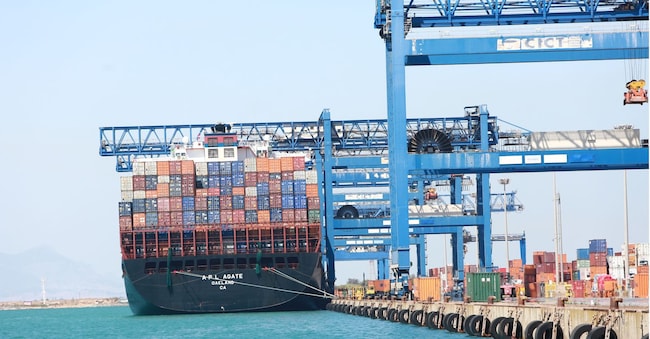
Regional and global. From local trade to exports, via ports and international trade flows that link the Mediterranean, Africa and China. The maritime economy is thriving. In Sardinia alone, the blue economy is worth nearly three billion euros a year, involving 13,500 businesses and 53,600 employees. These figures were highlighted during the conference ‘The Blue Economy: Development Opportunities for the Region’, organised by Intesa Sanpaolo, SRM, the group’s research centre, and the Port System Authority of the Sardinian Sea, in collaboration with The International Propeller Clubs, at the port of Cagliari.
Direct and indirect employment
The port is under scrutiny by investors and observers, given the prospects for the development of regional logistics and the investment opportunities linked to the Single Economic Zone (ZES Unica). This is also “in light of the results achieved through the tax credit and the Single Authorisations”. So, the figures, according to Alessandro Panaro, Head of Maritime & Energy at SRM, for a sector accounting for €2.9 billion in direct added value, equivalent to 7.5 per cent of the regional economy and 53,600 jobs. And then there are the others: those in the maritime trade sector, which is set to see significant growth in 2026: “92 per cent of Sardinian imports and exports travel by sea. In the first half of 2026, trade reached €8.2 billion, representing a 22 per cent increase”. Sardinian ports also saw 3.1 per cent growth, with 42.9 million tonnes of freight and 7.1 million passengers in 2025. Sardinia accounts for 13 per cent of Italy’s liquid bulk cargo. The port of Cagliari recorded 15.7 million tonnes of cargo in the first half of 2026, alongside a 24.6 per cent increase in cruise traffic and growth in container transport.
The Investments Chapter
Equally important is the investment chapter: the Sardinia Single SEZ recorded “over 1 billion euros of investment triggered by the tax credit over a two-year period”. These significant figures form a piece of the mosaic known as the Mediterranean which, according to the presentation of the thirteenth Annual Report on the Italian Maritime Economy, edited by Massimo Deandreis, Director General of SRM, plays a new role as a backdrop to the geopolitical, energy and logistical challenges affecting the Italian port system. Not to mention the crises in Suez and Hormuz, the reorganisation of supply chains, the evolution of shipping companies’ strategies and the growing competition between port systems, all of which are altering the balance of maritime transport. “The Mediterranean continues to play a central role, with ports increasingly taking centre stage in logistics, industrial and energy supply chains.”
A step towards the East
The report analyses global maritime trade balances against a backdrop of geopolitical tensions, changes in supply chains and new energy and environmental challenges, with the Mediterranean increasingly serving as a strategic hub between Europe, Asia and Africa. As also highlighted during the event ‘China, Africa and the Mediterranean. Ports, Infrastructure and Control of Global Routes’, held a few days ago, where attention was drawn to China’s outreach towards the Mediterranean and Africa, both in terms of trade expansion and global relations.
Sign up to the NextMed newsletter so you don’t miss out on previews and in-depth articles

