
Merz: ‘The AfD’s remigration policy is ethnic cleansing’. Tensions with Trump, who is celebrating the rise of the far right
Following the collapse in Saxony-Anhalt, the Chancellor has attacked Alternative for Germany. She has signalled a willingness to engage with the SPD on the unpopular pension reform. A telephone call with the US President, who is celebrating the election results, has been cancelled. In Magdeburg, Sahra Wagenknecht’s Alliance agrees to talks with Siegmund
from our correspondent Gianluca Di Donfrancesco
 Aggiungi Il Sole 24 Ore
ai preferiti su Google
Key points
BERLIN – First came the scathing attack on Alternative für Deutschland, then the overture to the SPD’s coalition partners on pension reform, and finally the slap in the face for Donald Trump. With his back against the wall following the defeat in Saxony-Anhalt and the backlash within his own party, Chancellor Friedrich Merz is displaying the harshness that characterises him and often works against him.
‘Remigration means ethnic cleansing’
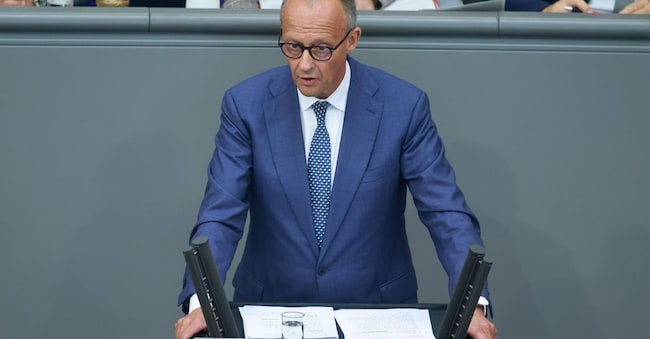
During a chaotic parliamentary session, punctuated by verbal clashes, on Wednesday 9 September, Merz lashed out at Alice Weidel’s party, which has been calling for his resignation and ridiculing him for days. Addressing the political group that wants to drive immigrants out of Germany, Merz said that ‘the term “remigration” is nothing more than a synonym for ethnic cleansing based on origin and skin colour’. He thus emphasised a divide that, in his mind, is now insurmountable and which precludes any collaboration with those who are draining the CDU of its support. A warning to the Christian Democrats elected to the Saxony-Anhalt Parliament – those whom the AfD’s Spitzenkandidat, Ulrich Siegmund, is trying to win over in his hunt for three votes he needs to become Minister-President.
One might well ask: if Merz really believes that the AfD is pursuing a policy of ethnic cleansing (the party has vehemently denied this), why not support the proposal to ban it? During the last parliamentary term, it was in fact a Christian Democrat, Marco Wanderwitz, who tabled a motion in the Bundestag to initiate the procedure, together with the Social Democrat Carmen Wegge. The debate has reignited in recent weeks, but the AfD is now the leading political force in the country, just a hair’s breadth away from 30 per cent of the vote.
Later that evening, at a press conference, Merz confirmed the scepticism “as to whether a ban would be successful and whether it would resolve the issue of the drop in votes”.
Tensions with Trump
A few hours later, the German Government cancelled the scheduled telephone call between Merz and Trump to mark the anniversary of the attack on the Twin Towers. The Chancellor took a dim view of the US President’s repeated jubilation over the AfD’s victory. The fact that the White House sides with the sovereigntists across Europe is certainly nothing new. Nor are the links between Alternative für Deutschland and the MAGA movement.


