
Merz under fire within the CDU, whilst the red-brown coalition gains ground in Saxony-Anhalt
In Magdeburg, the Sahra Wagenknecht Alliance is offering seats to Alternative für Deutschland for the post of president of the regional parliament. This would be a first for the far right, and could be a prelude to a coalition agreement for the state government. The CDU leader in Mecklenburg has come out openly against Merz: ‘He is not suited to uniting the country.’
from our correspondent Gianluca Di Donfrancesco
 Aggiungi Il Sole 24 Ore
ai preferiti su Google
Key points
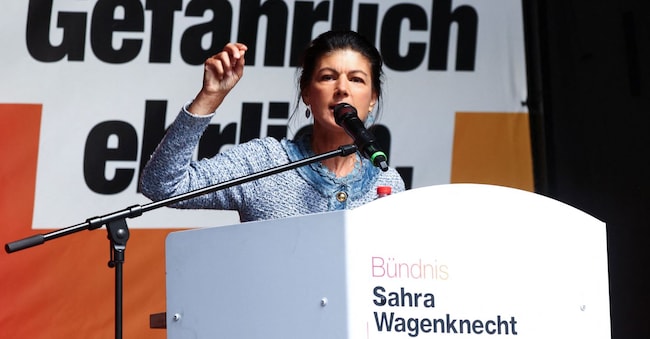
MAGDEBURG – The red-brown alliance has not yet been finalised to hand Saxony-Anhalt over to the Alternative für Deutschland candidate, but we are not far off. Following the overtures made even before Sunday’s vote – which saw the AfD secure 44 per cent of the vote – on Tuesday 8 September, the Sahra Wagenknecht Alliance (BSW) announced that, to begin with, it would back the AfD’s candidate for the presidency of the regional parliament. In Berlin, Chancellor Friedrich Merz is under increasing pressure, the target of now-open criticism pouring in from within his own party.
Green light
In Magdeburg, the newly elected parliamentary secretary of the BSW, John Lucas Dittrich, announced: ‘The AfD will receive our votes for the presidency of the regional parliament.’ This would be a first for a far-right party in Germany. This is a prelude to Ulrich Siegmund’s appointment as governor, a historic turning point that is looking increasingly likely.
In Thuringia, too, the AfD is the largest parliamentary group and, following the 2024 elections, it attempted to secure the presidency of the Landtag there as well, but its bid was rejected. In Thuringia, the BSW had entered into a governing coalition with the CDU and the SPD, but recent overtures towards the AfD have caused the party to disintegrate. Around ten MPs and ministers have left, following Finance Minister Katja Wolf, who remains in the Executive. The CDU’s Minister-President, Mario Voigt, now finds himself in a minority, however.
In Saxony-Anhalt, the Bsw holds five seats. Alternative für Deutschland has 39 and is just three short of an absolute majority. Siegmund has so far fended off their advances. There are many points of common ground: from a pro-Putin stance to a hard line on immigration (although the BSW does not go as far as advocating remigration). Siegmund, however, remains wary and much prefers to poach MPs from the Christian Democrats – with whom there would be a more natural affinity – thereby dealing Merz another heavy blow.
The founder of the BSW, Sahra Wagenknecht, a former member of Die Linke, has therefore decided to make a fresh push, dousing the situation with a tempting offer: “For us, it is beyond question that the AfD is entitled to the presidency of the regional parliament.” The assembly will convene by 6 October and its first order of business will be to elect a president.


