
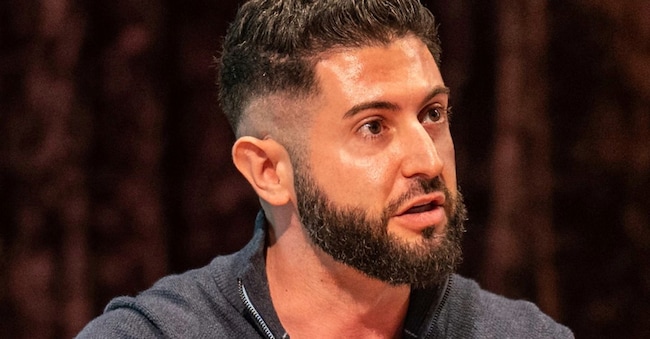
Michele Catasta, the Italian at the top of Ai who makes machines write software
He is at the top of Replit, one of the leading companies in advanced technology of the moment. He has arrived where he imagined he would arrive from the beginning. Although he had not planned to go to America and often thinks of returning to Europe

3' min read
3' min read
Currently, Michele Catasta, chairman of Replit, an example of the AI boom: a company whose turnover has grown from $3 million to $150 million in one year, a 50-fold increase. A couple of weeks ago, it concluded a new $250 million funding round, valuing the company at $3 billion.
It is the result of work conducted over many years of research. It is the reward for his tireless exploration at the most promising frontier of artificial intelligence. Michele Catasta has always worked with a fundamental idea in mind: he wants to find a way for machines to write software, leveraging deep learning.
He started as an open source enthusiast in his homeland, Le Marche. He started university in Italy to finish in Ireland and then did a PhD at the Lausanne Polytechnic and a post-doc at Stanford. Always with that idea in mind: building machines that write software. His papers got noticed and it was thanks to the results of his research that he was discovered by Google. And the Mountain View giant wanted him first in one of the start-ups it incubated and then directly at the parent company. After all, it was Google itself that had created the transformer technology that gave birth to the epic of generative artificial intelligence. And Catasta had put that technology at the service of automated software production. With these premises, it is not surprising that his career at Google was a dazzling one. But just on the eve of ChatGPT's release, when he realised that the time was ripe to get out of the research sphere and create a real product, Catasta decided to reach out to a community of developers then mainly dedicated to education, Replit in fact, to build the product he had always dreamed of. A system that would allow anyone to write software without having studied as a computer engineer, without owning powerful computers, but simply by writing prompts in natural language on the browser and letting artificial intelligence do all the work. The latest version of Replit's agent helps write programmes, can test software and correct errors, and can in turn create additional specialised agents and work plans to automate complex and repetitive tasks.
Catasta is proving that his project can be realised. The results are amazing and are satisfying an increasing number of customers. But he admits, with the objectivity of a true researcher: "We are not there yet. The system makes mistakes, it is not always easy to give orders in the best way, it still works better for those with computer skills, not so much for writing programmes, but for defining requests more effectively. "A billion people use Excel to do maths despite not knowing it fully. But those who are better versed in mathematics know how to use Excel better than the others. And this is also more or less the case in the production of software with artificial intelligence'.
But the potential impact of this development is incredibly important. And Catasta is such an advanced technologist that he realises that the issue of socio-economic impact is strategic. "In the end, nothing replaces critical thinking, goal setting, interface quality, imagining functionality, and the ability to interact with other humans and electronic agents." And his conclusion is as a techno-humanist: 'With the production of software by means of artificial intelligence, there will have to be a leap of abstraction in the design of computer products. Thinking first of all about how people will use the programmes and how societies will change with their introduction. But in the end, it is clear that the prospect of a machine that allows everyone to make software is bound to have a significant impact. And that prospect is getting closer.


