
Michelin Guide: the new wave of Michelin-starred restaurants comes from Rome and its youngest chefs
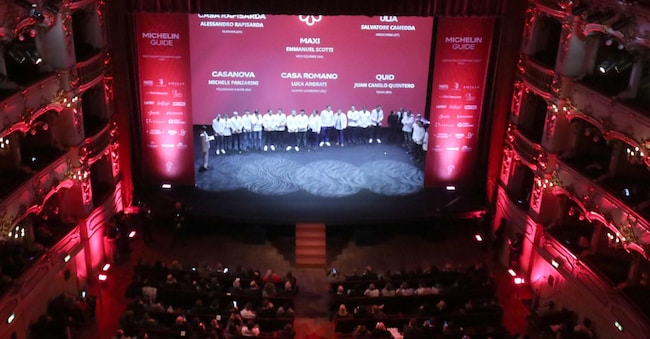
The new generation, open to global influences, has been recognised: two stars for Gianfranco Pascucci and Roy Caceres; a star also for the new openings Quid and Nomos Ante, as well as for Simone Lezzerini, the under-30 chef at N’Uovo, an hour’s drive from the capital, who was also named Chef of the Year

Key points
The luxury food trend is taking Rome by storm, and the Michelin Guide confirms this. The capital’s vibrancy is demonstrated by the major openings in the luxury hospitality sector in 2027 – such as the Four Seasons, The Melià Collection and Brach Roma, designed by Philippe Starck – as well as a flurry of Michelin stars. The themes remain those dear to the Michelin Guide and to those who believe that luxury has now changed its face, becoming synonymous with concepts such as sustainability, anti-waste, a love for the sea and openness to cultures from around the world, so that cuisine can be experienced as a journey.
Rome: the sea, sustainability and cultures from around the world
A two-star rating, then, for Gianfranco Pascucci, the ‘chef of the sea’ who has always celebrated the ‘green fragrance’ of the rocks and the humblest of fish, transforming them into something extraordinary through his creativity.
The theme of travel and culinary influences becomes ever more fascinating thanks to the powerful voice of the other new “two-starred” chef, Roy Caceres, who has journeyed from Colombia to Rome to tell his life story, pouring his whole self into his dishes. A narrative that includes iconic dishes such as ‘Fregula, sea urchins and XOrma sauce’, where Sardinian fregula – a tribute to his wife’s heritage – meets Mexican mole and Hong Kong XO sauce.
Rome also scores with a new entry: Quid, led by chef Juan Camilo Quintero under the supervision of three-Michelin-starred Enrico Bartolini – once again showcasing a successful fusion of cultures. Also from Colombia, originally from Bogotá, and having previously earned a star at Borgo San Felice, he has immersed himself in the Roman dolce vita to absorb its traditions, which he reinterprets through a personal vision, as demonstrated by his already famous “Gricia Quid”, fresh pasta made in-house at Q, reminiscent of Sardinian lorighittas, with two types of pecorino – Roman and from the Lattari Mountains, the latter being more aromatic and hailing from Campania. An original finishing touch with toasted coconut oil.
And then, yet another new entry in the Michelin Guide: Nomos Ante, run by chef Giulio Zoli, where, once again, it is the connection between Italian cuisine and a cosmopolitan vision that wins the day. Rome remains the guiding principle, whilst highlighting his training in some of the most prestigious international kitchens across Europe, South America and Asia. Not to be forgotten, too, are the six years he spent at Anthony Genovese’s Pagliaccio – itself a fine blend of French, Roman and Calabrian influences – including two as sous-chef, which helped shape his culinary style. Among his signature dishes, which encapsulate a long professional journey, are the Spaghetti Citrus, featuring smoked provola, Lapsang tea butter and a symphony of citrus fruits, blending smoky notes, bitter undertones and zesty accents. There’s a whole world within it.
The rivalry with Milan, which is struggling
It is worth noting that Rome now appears to have “overtaken” Milan’s dominance in fine dining: indeed, in the provincial rankings, Rome has retained the top spot it secured last year, rising to 28 starred restaurants (1 three-star, 5 two-star, 22 one-star), whilst Milan ‘stalls’ in fourth place in the rankings with 21 Michelin-starred restaurants (1 three-star, 4 two-star, 16 one-star), preceded by Naples and Bolzano.


