

Morocco’s golden year of foreign diplomacy
Support is growing for Rabat, whose sovereignty is seen as the only solution for revitalising Western Sahara. This is underpinned by strong relations with the US and Israel, as well as close ties with numerous African, European and Latin American countries. Finally, there are investments in defence and ports, which also serve to support NATO

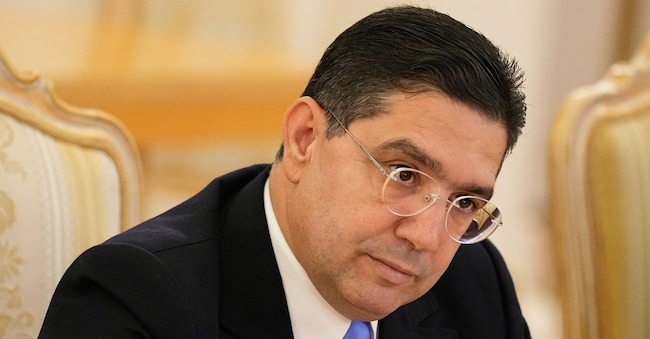
The announcement of the opening of embassies in each other’s countries between Morocco and Israel marks the latest chapter in a year that has seen Rabat emerge as a key player in the Mediterranean geopolitical landscape. On the eve of the UN General Assembly, the Israeli and Moroccan foreign ministers, Gideon Saar and Nasser Bourita, met in New York alongside the US Ambassador to the United Nations, Mike Waltz. On the agenda, in addition to upgrading their respective missions to the status of embassies, was a series of bilateral agreements on the economy, trade and air transport. In the statement issued by the US mission to the UN, Washington and Jerusalem ‘reaffirm their recognition of Moroccan sovereignty over the whole of Western Sahara’ and condemn any other course of action as a prolongation of the ‘status quo’, which they deem ‘unacceptable’. The text then emphasises the value of ‘cooperation in the fields of technology, security and innovation, especially in difficult times’.
Activities at UN headquarters
And it is precisely in difficult times that Morocco gains geopolitical significance. As is often the case, the catalyst for Rabat’s new assertiveness has a name: Donald Trump. The recognition of Moroccan sovereignty over Western Sahara, which came about in 2020 as part of the normalisation of relations with Israel under the Abraham Accords, has legitimised what King Mohammed VI has described as ‘the prism through which Morocco views its international environment’. More than a mere formality, that American shift foreshadowed everything that followed: in October 2025, Security Council Resolution 2797, – tailor-made for the US delegation – was passed by an overwhelming majority and, for the first time, enshrined the autonomy of Western Sahara under Moroccan sovereignty as the only reasonable way forward. This has led to increasingly explicit support for Rabat’s position: the statements issued by Athens and Copenhagen in early September confirm a European consensus built upon what has now become the framework for understanding the issue.
With the cornerstone of its foreign policy endorsed at international level, Morocco has felt strong enough to act in a way it never has before. Its relations with Israel and the United States, particularly in the defence sector, have made it the leading arms importer on the African continent, ahead of neighbouring Algeria, its historic rival and the country least willing of all to recognise Moroccan sovereignty over the Sahara. By 2026, Rabat’s military spending is expected to reach $15.7 billion. The Kingdom has retained its status as a privileged non-NATO ally since 2004 and, since joining the Abraham Accords, has been drawing up annual military action plans with Israel: Jerusalem has thus overtaken Paris as the second-largest arms supplier after Washington. Israeli companies have supplied the country with surveillance drones and reconnaissance satellites; added to this is a €430 million air defence and anti-missile system and two Ofek 13 spy satellites, costing €925 million, intended for the Royal Armed Forces in Rabat. The picture is rounded off by joint military exercises, foremost among which is the African Lion exercise, promoted by the United States, hosted in southern Morocco and conducted with IDF units.
Joint military exercises
However, the United States remains the key ally, both in terms of security and the economy. Around 60 per cent of Morocco’s armaments come from overseas; at the start of the year, a new ten-year defence road map was agreed with Washington, along with some concessions on trade – such as the $450 million deal under which the parastatal fertiliser giant OCP will build a plant in Louisiana – has provided Rabat with valuable room for manoeuvre in an era of Trump-led trade wars. This is merely the most visible aspect of an increasingly robust and far-reaching foreign policy. In addition to its relations with Washington and Jerusalem, Morocco has strengthened its ties with the rest of Africa, starting with its planned return to the African Union in January 2027: this was followed by the opening of around thirty consulates in Laayoune and Dakhla, the main cities of Western Sahara, a sign of a repositioning on the part of many African countries. The reactionary wave sweeping through Latin America is also working in Rabat’s favour: the newly elected Colombian president Abelardo de la Espriella, who emerged victorious from the June election, reversed the policy of the previous left-wing administration just a few hours after being sworn in, also recognising Moroccan sovereignty over the disputed territory.
Brussels contact
All this is taking place in a Mediterranean where Morocco invariably finds itself at the centre of crucial developments. Whether it is the European effort to curb migration flows, whilst right-wing parties gain ground, or initiatives such as the Mattei Plan, Rabat remains an indispensable partner. Its strategy for managing migration flows continues to be funded by Brussels with up to 160 million euros until next year, whilst Giorgia Meloni’s Mattei Plan has highlighted support for the country’s water security and training programmes on energy efficiency. In short, this dialogue is far too important for regional partners to do without. This was also evident during the migration crisis in Ceuta at the end of July, when around 60,000 people crossed the border into Spain: Madrid came under particular scrutiny. The blame was placed almost entirely on the socialist government of Pedro Sánchez, whilst the uproar provided Rabat with another geopolitical platform on the eve of the general election at the end of the month: the revival of claims over Ceuta and Melilla, Spanish exclaves that have almost never been on the negotiating table.

