The report

Natural disasters cause 99 billion a year of damage to agriculture, FAO warning

How to intervene? The FAO report identifies digital transformation as a turning point for agricultural disaster risk reduction and 'resilience building'.
by Silvia Marzialetti

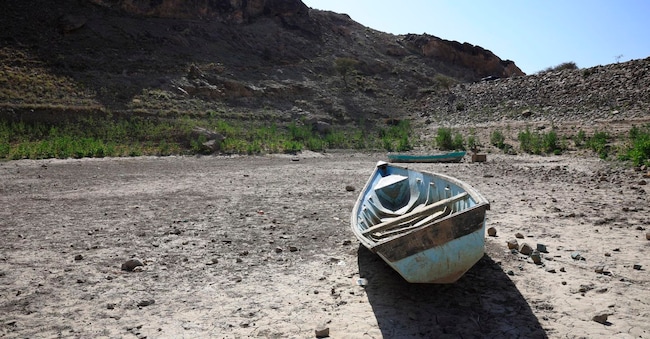
Barche abbandonate giacciono in un bacino idrico prosciugato dalla siccità alla periferia di Sana'a, Yemen, 13 novembre 2025. L'Organizzazione delle Nazioni Unite per l'Alimentazione e l'Agricoltura (FAO) ha avvertito che le precipitazioni in Yemen rimarranno scarse, ostacolando la semina dei cereali invernali, mentre il Paese arabo, caratterizzato da scarsità d'acqua, continua a soffrire di uno stress idrico a lungo termine.  EPA/YAHYA ARHAB

2' min read

Translated by AI
Versione italiana

2' min read

Translated by AI
Versione italiana

Natural disasters - from droughts to floods, from pests to marine heatwaves - are disrupting food production and livelihoods and have caused agricultural losses of about USD 3.26 trillion (an average of USD 99 billion each year) over the past 32 years.

This is stated in the FAO report 'The Impact of Disasters on Agriculture and Food Security 2025', released today.

Loading...

The numbers are impressive: more than 4.6 billion tonnes of cereals, 2.8 billion tonnes of fruit and vegetables and 900 million tonnes of meat and dairy products lost between 1991 and 2023, which equates to 320 kilocalories per person per day burnt, or 13-16% of the daily energy requirement.

Asia accounts for the largest share of global losses, 47%, totalling USD 1.53 trillion, a figure that reflects both the scale of agricultural production and the region's high exposure to floods, storms and droughts.

The Americas account for 22% of global losses, or USD 713 billion, lost due to recurring droughts, hurricanes and extreme events, which have a strong impact on major staple crop systems.

Finally, Africa, with absolute losses of around USD 610 billion, suffers the highest proportional impacts, losing 7.4% of its agricultural GDP to disasters.

Then there are the Small Island Developing States (SIDS), which are extremely vulnerable to cyclones, floods and rising sea levels, with agricultural losses accounting for a high share of agricultural GDP, despite small production volumes.

The report also notes that marine heatwaves caused $6.6 billion in losses between 1985 and 2022, with 15% of global fisheries affected. However, losses in fisheries and aquaculture remain largely invisible in disaster assessments, despite sustaining the livelihoods of 500 million people.

Clearly, in economies where agriculture accounts for a significant share of employment and income, these losses have very serious implications for food security and rural stability.

How to intervene? The FAO report identifies digital transformation as a turning point for agricultural disaster risk reduction and 'resilience building'.

"Digital technologies are already revolutionising the way we monitor risks, provide early warnings and support farmers' decision-making," comments FAO DG Qu Dongyu.

Artificial intelligence, machine learning and satellite monitoring now enable real-time insights that improve early warning, insurance systems and preventive action. Today, however, more than 2.6 billion people remain offline, many of them in rural areas most exposed to disaster risks, and although digital solutions are expanding rapidly, the report warns that their full potential can only be realised through human-centred design approaches.

FAO therefore calls on governments, international partners and the private sector to integrate these digital solutions into national agricultural policies and strategies and calls for more investment to support the transformation of the agri-food system.

Copyright reserved ©
Loading...

Brand connect

Loading...

Newsletter

Notizie e approfondimenti sugli avvenimenti politici, economici e finanziari.

Iscriviti