Nature, made in Italy and safety: the formula for the success, also political, of Borgo Egnazia
Since its opening in 2010, the Melpignano family's resort has been designed as a place of exclusivity and privacy, with a vocation for hosting major events, but with an authentically Mediterranean allure
by Sara Magro
 Aggiungi Il Sole 24 Ore
ai preferiti su Google
3' min read
3' min read
For a moment, all was silent. After three days of the G7 Summit, the square in Borgo Egnazia has returned to its usual silence under the summer sun, and the little houses are once again ready to host holidaymakers in love with Puglia. For a week, however, Italy's hotel-celebrity has been in the limelight, amidst many inferences and few leaks, apart from the menus of Massimo Bottura, chef of the lunches for the bigwigs of the Earth, and a few gags between recalls and grimaces of dislike.
Instead, it seems a mystery how the resort managed to become more of a protagonist of the event than the location where it took place. That of 13-15 June was the G7 of Borgo Egnazia and not of Fasano or the Itria Valley, and as such it will even be remembered on the event's official postage stamp, resulting in the wrath of Fasano mayor Francesco Zaccaria, who wrote to President Mattarella in person to complain about the toponymic confusion. But it was he who gave the most logical explanation of the qui pro quo to the microphones of Radio24: the word 'borgo' in the name evokes a place, rather than a resort.
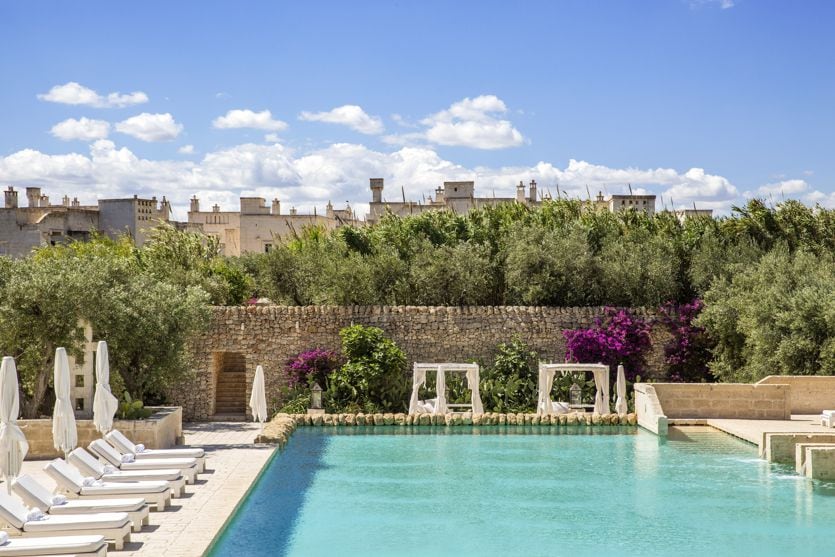
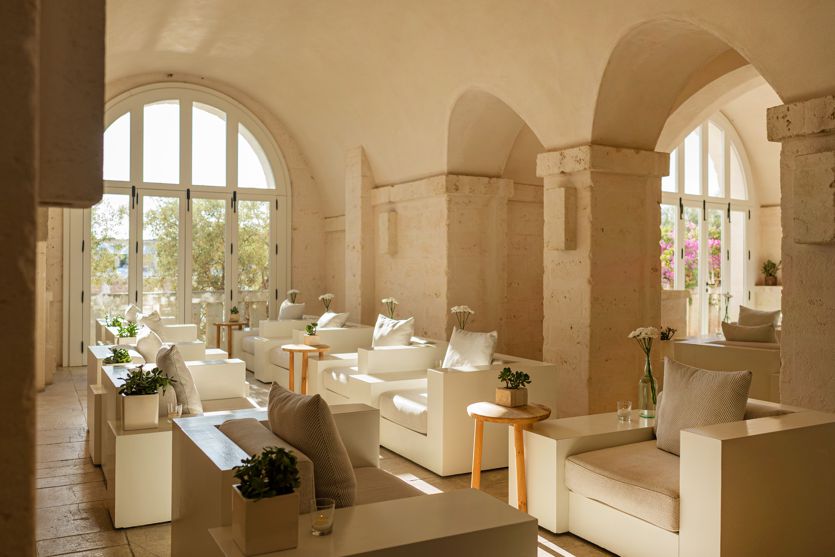
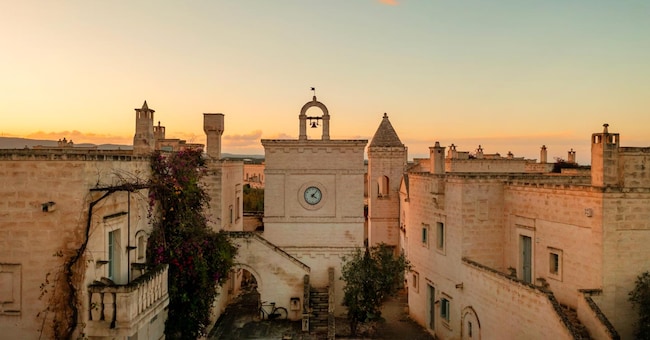
It is spontaneous to think of it as such, and indeed it is in its very DNA, having been designed inspired by Apulian villages and masserie, with an almost maniacal study and research of local architecture: the arrangement of the little houses all close together, the square around which everything takes place and where everything converges, the protection from the outside like the old fortified masserie in the area.
In August 2023, Prime Minister Giorgia Meloni raided the resort for a couple of days on the pretext of a mini-vacation (the news was all over the newspapers), but the purpose was an initial inspection to see where Joe Biden, Emmanuel Macron and the other heads of state would be welcomed the following year. The structure lent itself perfectly, Puglia too, as an emblem of Italian beauty and, metaphorically, of a peaceful meeting between East and West.
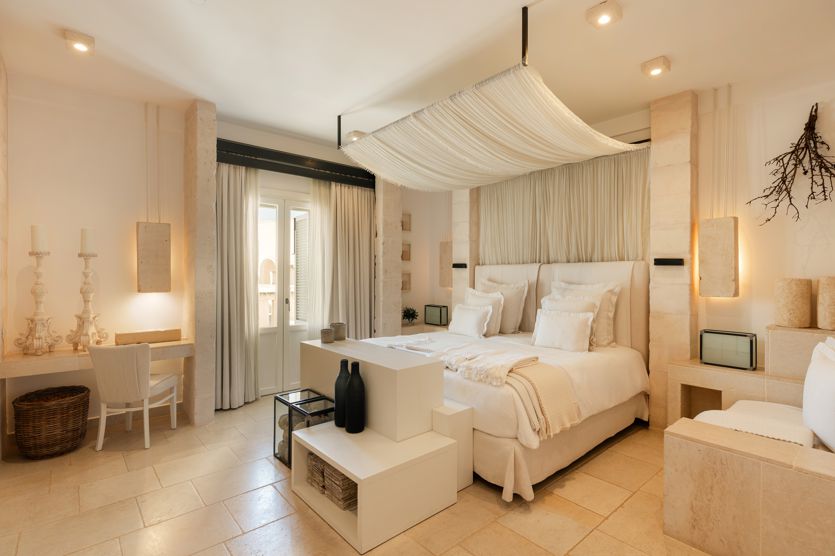
Borgo Egnazia's success can be attributed to painstaking work behind the scenes since its opening in 2010. It was one of the first in Italy born with the vocation of hosting large events, an intuition of owner Aldo Melpignano who began his career working for Ian Schrager, the brilliant hotelier who brought the coolness element to hotels. Melpignano has applied it in an original way to his land, reviving the traditions within and sharing them with the international guests he has attracted by telling the world about a special corner of Italy, lapped by a transparent sea, embraced by millenary olive trees, perfumed by the Mediterranean maquis, full of opportunities to feel good and, above all, have fun. All promises kept to those who wanted to experiment. Morale, it has become one of the most famous and popular hotels in Italy and immediately made the list of the 50 Best Hotels of the World in its first edition. There must be some reason if it is voted, chosen, applauded internationally.