

La figlia del clan racconta la ’ndrangheta a caccia della libertà
di Raffaella Calandra

by Maria Teresa Manuelli
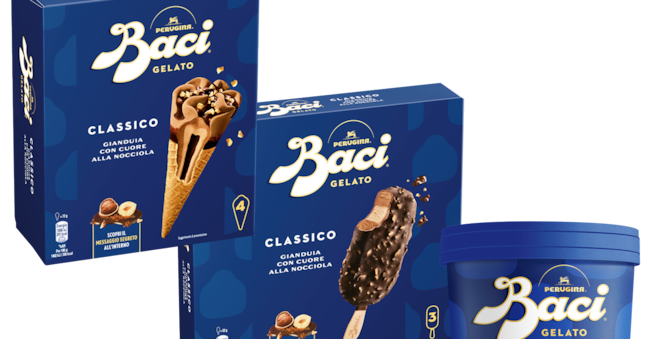
There is a new product on supermarket shelves that mixes nostalgia and innovation: Baci Gelato, the new brand launched by Froneri that brings the identity of the Perugina praline to the world of packaged cold food. It is not the first experiment of this kind - and it will not be the last - in a market where cross branding between different confectionery categories has established itself as a strategic lever for brands in search of new consumers.
Already on the shelves, but presented on 6 May in Ferentino, where Froneri has its main factory in Italia, Baci Gelato comes inthree formats - stick, cone and pot - built around the ingredients that define the original: gianduia, hazelnut and cocoa. The products are Rainforest Alliance certified. The operation aims to intercept those seeking "distinctive, premium and highly emotional taste experiences", as the company puts it, and maintains one of the most recognisable elements of the original brand: the secret message inserted in each pack.
The launch of Baci Gelato is part of an established trend in the industry: that of transforming strong brands in other categories - biscuits, chocolate, pralines - into packaged ice creams, with the aim oftransferring consumer recognition and loyalty. Froneri has over time built a long-standing partnership with Mondelēz, from which Oreo, Milka, Cadbury and Toblerone ice creams were born, and in 2026 will also add Lotus Biscoff to its portfolio, initially in selected European markets.
This is not an isolated phenomenon, as evidenced by the cases of Ferrero, Bauli and other companies that have agreed to rebrand their iconic brands in the sub-zero version. The industrial reasoning behind these operations is straightforward: an established brand brings with it a loyal consumer base, lowers barriers to entry into the category and reduces the cost of building brand awareness. In the case of Baci, which according to Nestlé is recognised for its quality and emotional value, the move into ice cream aims to preside over a segment - the premium segment of individual snacking - that is rapidly expanding.
Behind the launch of Baci Gelato is a group on the move, both in the markets and in the shareholder base. In 2025, Froneri turnover grew by 3.1% at constant exchange rates, compared to EUR 5.531 billion in 2024, driven by the snacks portfolio and increased investments in marketing. Retail markets increased overall by 3.6% year-on-year. The Italian subsidiary - headquartered in Ferentino and with a production plant also in Terni - achieved sales of approximately €350 million in 2025.

