
New biotechnologies: the European Parliament’s vote on TEAs that could revolutionise agriculture
A ‘yes’ vote should be a foregone conclusion given the broad consensus amongst politicians, industry experts and agricultural organisations, but there are still those who argue that the new techniques are not really that different from GMOs (which are banned in Europe)
by Alessio Romeo
 Aggiungi Il Sole 24 Ore
ai preferiti su Google
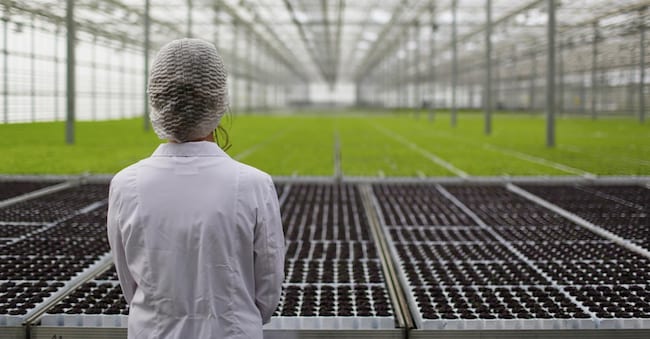
The European Parliament, meeting in plenary session in Strasbourg today, 17 June, is set to give the final go-ahead for the use of new agricultural biotechnologies, thereby filling a regulatory gap that has existed for over twenty years, though not (at least not entirely) the divisions within the agricultural sector. The reform, which updates the bans dating back to 2001 on ‘old-generation’ GMOs, regulates the testing, use and marketing of new assisted evolution techniques (TEA or NGT, the English acronym for new genomic techniques) which differ from GMOs in that they do not involve the insertion of DNA foreign to the modified plant, thanks to a technology that earned the Nobel Prize in Chemistry, awarded in 2020 to Emmanuelle Charpentier and Jennifer Doudna.
Politicians, the research community and, above all, agricultural associations are in favour of innovation which, in Italia – thanks to pioneering legislation – has already seen public research bodies (CREA) and universities working on the first varieties of vines and cereals resistant to climate-related stress. This is seen as a crucial step towards preserving agricultural productivity and adapting crops to the ongoing climate crisis. Among those opposed, however, are not only a certain ‘formal’ Northern European brand of environmentalism but also organic farming associations.
The details of the reform
The reform essentially divides the new techniques into two categories. The first (NGT 1), involving up to 20 genetic modifications , will be treated, subject to certain precautions, in the same way as conventional plants, whilst beyond that limit (NGT 2), the restrictions applicable to conventional GMOs will continue to apply.
Coldiretti, which made the fight against GMOs its cause more than twenty years ago, is in favour of the reform (as are the other agricultural associations). ‘It makes no sense for anyone to still insist on equating TEAs with traditional GMOs, which are produced by inserting genes from other species – even those that are very distantly related,’ emphasises the organisation’s head of markets and international policy, Luigi Scordamaglia. TEAs are simply an acceleration of the species’ genetic heritage without any mixing, involving targeted interventions that induce positive mutations which would occur naturally within the plant, to confer greater resistance to drought and rising temperatures. Coldiretti has led the charge against GMOs, but there is no coercion here; on the contrary, biodiversity is being protected.”
Just think, as Scordamaglia points out, of genetically modified maize ‘produced using a gene extracted from the soil to promote herbicide resistance and thus encourage the use of these products. Well, the new regulation stipulates that TEAs cannot be used to produce herbicide-resistant varieties. Furthermore, they will have to comply with strict sustainability criteria, let’s say we’ve learnt from the mistakes of the past. It’s like using a scalpel instead of a hatchet’.

