
Health

Nipah virus: Ecdc guidelines for travellers to India and the risk of spreading to Europe

The European Centre for Disease Prevention and Control recommends specific precautions for those travelling to India; assessed low risk of infection and unlikely arrival of the virus in Europe.
by Health Review

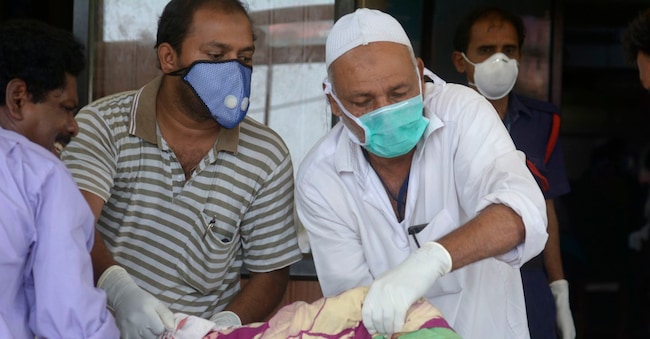
Foto d’archivio - Gli assistenti indossano maschere come misura precauzionale contro il virus Nipah mentre aiutano un paziente all'ospedale Government Medical College di Kozhikode, nello stato meridionale indiano del Kerala, nel precedente focolaio del 2018  (Foto AP)

2' min read

Translated by AI
Versione italiana

2' min read

Translated by AI
Versione italiana

No alarms but plenty of caution with recommendations such as avoiding contact with domestic or wild animals and their fluids or waste, not to consume food that could be contaminated by bats and not to drink raw date palm juice.

The risk of contracting the virus for travellers to India is currently judged 'low' and its importation to Europe 'unlikely'.

Loading...

The European Centre for Disease Prevention and Control (ECDC) has issued guidelines and a limited alert on the possible spread of the deadly Nipah virus on the continent. The risk of infection for those from Europe 'travelling or residing in the area' of West Bengal, India, is considered 'very low', assures the Stockholm-based European Centre.

The arrival of the virus in Europe for the European Centre remains an 'unlikely' hypothesis, although not to be excluded.

Ecdc Recommendations

As mentioned, the European Centre for Disease Prevention and Control in its latest guidelines recommends that travellers to the Indian state avoid contact with domestic or wild animals and their fluids or waste, do not consume food that could be contaminated by bats, and do not drink raw date palm juice.

The call is also to 'wash, peel and cook fruit and vegetables before consumption to reduce the risk of exposure'.

The Nipah virus is transmitted to humans by animals, in particular by fruit bats - known as flying foxes - and can cause fever and brain inflammation.

It has 'epidemic and pandemic' potential and is also considered to have a high mortality rate of between 40% and 75%.

Affected patients initially show flu-like symptoms such as fever, nausea, sore throat, myalgia and headache; later they develop more severe manifestations such as an atypical pneumonia with respiratory distress and coughing or, more frequently, an acute and rapidly progressive encephalitis with a high mortality rate.

European arrival 'unlikely', but cannot be ruled out

The ECDC's reassurances come after the confirmation of two cases of illness caused by the virus, so far confined to the West Bengal region. Both cases involve health workers from the same hospital who came into contact with each other last December. For the Indian government, the situation remains manageable: so far at least 196 contacts of the confirmed cases have been identified and tested, and all of them remain asymptomatic and have tested negative for Nipah virus infection.

In the meantime, however, the front of Southeast Asian countries that have announced that they have strengthened controls at airports to detect any signs of infection among passengers arriving from India is growing. Among them,Thailand, Nepal, Cambodia, Vietnam and Pakistan.

The most likely route for the arrival of the Nipah virus in Europe would be through infected travellers, but for the European Centre this remains an 'unlikely' hypothesis, although not to be ruled out.

Just as 'low' is also considered to be the risk of transmission following a potential importation, since fruit bats carrying the virus are not present in Europe.

The virus was first identified more than 25 years ago in Malaysia, then also recognised in India for the first time in 2001. The virus was first recognised in India in 2001

Copyright reserved ©
Loading...

Brand connect

Loading...

Newsletter

Notizie e approfondimenti sugli avvenimenti politici, economici e finanziari.

Iscriviti