
Offers for the over 60s and taxes at 12.5%: postal savings remain an evergreen
30 October marks the 150th anniversary of the birth of postal savings: the event is being celebrated at the Nuvola dell'Eur in Rome, in the presence of the President of the Republic, Sergio Mattarella, the top management of Cdp and Poste Italiane

Key points
Over the past year, the performance of postal savings has been stable, despite the fact that lower interest rates have pushed yields down. Assets under management, including postal passbooks and savings bonds, are well in excess of EUR 300 billion and are widely distributed among Italian households: there are 27 million customers. The number of savings bonds held by savers at the end of December 2024 was 39 million; the total value of these financial instruments in circulation was 230 billion. There were 31 million customers of postal passbooks, with a total value of EUR 94 billion.
The celebrations at the Cloud with Mattarella
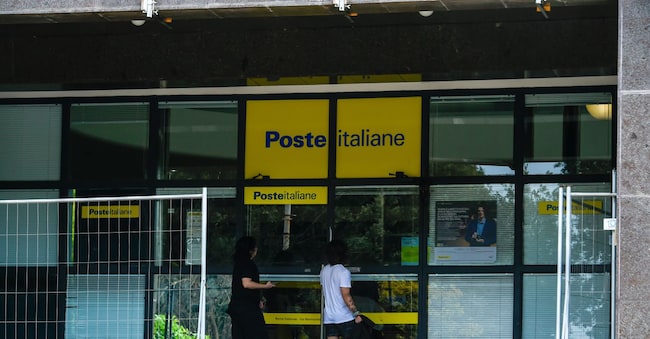
These products continue to be appreciated by Italians even though they are actually quite old. 30 October marks the 150th anniversary of the birth of postal savings: the event is celebrated at the Nuvola dell'Eur in Rome, in the presence of the President of the Republic, Sergio Mattarella, and the top management of Cdp and Poste Italiane. Poste places at its physical counters, but not only. Postal bonds and passbooks can also be purchased online or from smartphones. A postal passbook is a deposit account that allows money to be freely deposited and withdrawn, while postal savings bonds are investment instruments that provide capital tied up for a predetermined period of time, with a return linked to the duration of the deposit.
The appeal: low taxes and state-guaranteed capital
A recent Doxa survey, based on a sample of 1,500 people, showed a 63 per cent preference for the postal passbook over competing products, such as deposit accounts. In the case of interest-bearing bonds, 75 per cent preferred the instruments managed by Cdp and placed by Poste over other bonds. The reason given was the capital guaranteed by the State, the absence of charges and the taxation of returns. Postal bonds are subject to an interest taxation of 12.5 per cent. There is also a stamp tax of 0.2 per cent on the total value of the capital only if it exceeds 5 thousand euro; otherwise, no tax is due. For amounts of EUR 5,000 or less, no stamp duty is due.
From July, cheaper passbooks for the over 60s
Last summer, Poste launched initiatives to favour customers over 60 who purchase postal passbooks. These include higher interest rates than those available on ordinary passbooks. Partial or total exemptions on taxes, applicable on certain transactions or on annual management fees. One of the aspects with the greatest impact concerns the new legislation on ISEE (Indicatore della Situazione Economica Equivalente) calculations, which as of 2025 has provided for an automatic exclusion of up to EUR 50,000 per household in respect of government securities, postal savings bonds and passbooks, as set out in Inps regulations and circulars. This innovation implies that, for the purposes of the single substitute declaration for applying for social benefits or bonuses, this part of savings will not be counted if it does not exceed the threshold, facilitating access to many benefits especially for those who base their wealth mainly on these safe instruments.
The agreement with Cdp signed last year
The placement of postal savings through Poste Italiane's offices and distribution channels is governed by a three-year agreement: the last one was signed in 2024.The agreement envisaged the adaptation of the offer to the new needs of customers, particularly younger ones; an increase in investments aimed at the continuous improvement of services and processes for the management of postal savings from an omnichannel perspective, placing digital channels alongside the traditional physical network. Under the approved terms, the annual remuneration for Poste Italiane's service of collecting and managing bonds and passbook savings accounts is expected to be between a minimum of EUR 1.6 billion and a maximum of EUR 1.9 billion against agreed net funding targets. The remuneration envisages, on the one hand, net funding targets for vouchers and passbooks and, on the other, a mixed methodology, partly linked to up-front fees (differentiated by year of issue and type of voucher) and partly to annual management fees (differentiated by year of issue of the voucher), which better guarantees the sustainability of the service.


