
Olivetti Prize: applications now open for projects tackling barriers to culture
The Ministry’s initiative, which forms part of the broader plan inspired by the entrepreneur and philanthropist, will come to an end on 15 September

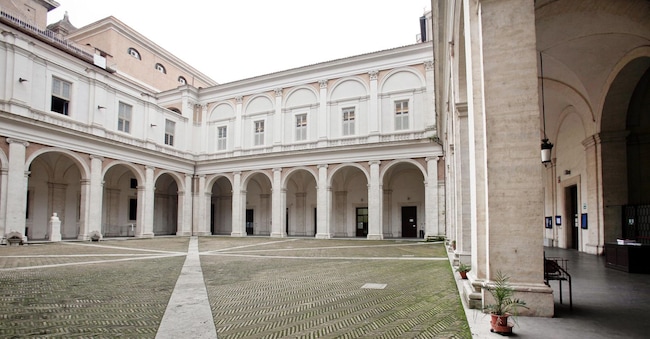
It is intended as an opportunity to bring culture back to places where it has been absent for far too long. The aim of the Olivetti Prize for Cultural Accessibility is realised through the call for applications launched by the Ministry of Culture as part of the Olivetti Plan, with the deadline for applications set for 15 September, a measure that seeks to translate into concrete projects the idea that culture should not be the privilege of the few but a right of citizenship.
The call for applications was adopted by an executive decree of the Central Institute for the Economic Development and Promotion of Cultural Heritage on 17 June, in accordance with a ministerial decree issued in April and the provisions of the 2026 Budget Act. Its stated aim is to combat what the text defines as ‘cultural drought’, namely the structural lack of opportunities for access to, participation in and enjoyment of culture, whilst at the same time promoting the regeneration of suburbs, inland areas and regions affected by social and economic marginalisation. This framework of values explicitly draws on the thinking of Olivetti, for whom culture was a factor in human dignity and social cohesion, and on the principles of the Faro Convention.
The four sections
This gives rise to the key areas of focus required of candidate projects: combating the ‘cultural drought’, strengthening community participation, using new technologies to ensure inclusive access, fostering innovation in the creative sectors, ensuring the long-term sustainability of results, and promoting the dissemination of replicable best practices. The award is divided into four categories, each with its own scope of focus.
The first concerns museums, cultural heritage and the local area, and brings together projects that aim to redefine the role of museums, archaeological parks, cultural sites, conservation institutions, archives and libraries – not merely as repositories but as civic and educational hubs rooted in the local area, capable of fostering urban regeneration, a sense of belonging and active citizenship. The second is dedicated to cultural activities – namely festivals, film and theatre festivals, live performance events, literary festivals and ongoing programmes to promote reading: here, the guiding principle is the systematic removal of the physical, sensory, cognitive, economic and social barriers that prevent participation.
We then move on to the section reserved exclusively for public or private enterprises and organisations, in which corporate welfare projects with a strong cultural focus are selected; these are designed to enhance the cultural and interpersonal wellbeing of employees, with benefits that also extend to the local area in which the enterprise operates. This concludes the section within the MiC dedicated to offices, central and regional institutions, and cultural venues affiliated with the Ministry for the trialling of cutting-edge management models relating to accessibility (given the internal nature of the entities involved, no financial resources are allocated).


