
Sicilian charm on a September day
On the island of Mozia: archaeology, vineyards and lunches

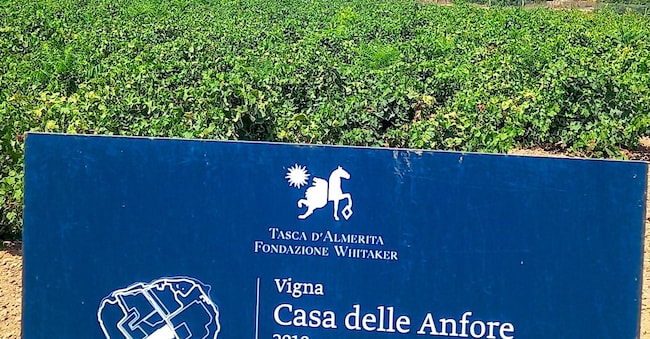
The slender-hulled boat sets sail from the jetty at Contrada Spagnola, just before Marsala, and slowly cuts through the lagoon, skimming past the Phoenician road that emerges from the shallow water, leaving behind the windmills of the salt pans, whilst the silhouettes of the Egadi Islands can be made out on the horizon. Landing at Mozia in mid-September, just before sunset, means treating yourself to the joy of finding yourself alone before the Giovinetto, the Greek statue dating from the 5th century BC, discovered only in 1979, whose powerful, almost ephebe-like physique never fails to stir those who behold it. But it also means becoming part of its history: that ancient past in which Phoenician and Punic ships regarded it as a physical landmark along their trade routes in the Mediterranean, particularly the Phoenicians who founded the city in the 8th century BC, erecting walls, temples and, indeed, the submerged road that linked it to the coast. The tyrants of Syracuse would go on to destroy it, whilst sand and the passage of time would conceal its treasures for a long time. That was until Joseph, known as Pip Whitaker, a Marsala wine producer who had come to the island to go bird-hunting, stumbled upon the first amphorae. The arrival of phylloxera prevented him from planting his first vineyards but gave him the opportunity to indulge his passion for archaeology. For exactly twenty years, the Tasca family has been cultivating the vineyards, which have been restored to their original splendour, thanks in part to the presence of underground water tables; indeed, there are 42,150 vines and 280 olive trees. At Caffè Delia, next to the museum, visitors are welcomed with agave juice extracted from the plants. You can then stroll along the paths linking the vineyards to the ancient ruins, including the fortifications, the necropolis where both cremation and inhumation tombs in stone sarcophagi can be found, the Tofet – the open-air sanctuary where the remains of human and animal sacrifices were placed inside vessels. The sacred area of the Kothon, on the other hand, consists of three sacred buildings enclosed by a wall. The House of Mosaics, with its colonnaded portico, is also a moving sight. Meeting Filippo Sammartano, who tends to the vineyards, gardens and rose garden at Delia as if they were his own children, means gaining an informed and engaging insight into the secrets of the vines, and the places and moments when the ‘Giovinetto’ wine was first discovered: lunches are also prepared in the picnic area. This cultural, scenic and gastronomic experience can even be organised as part of ‘Sicilian Odyssey’ – the programme designed for guests of Villa Igiea and Palermo who, in the wake of the cinematic success of the film directed by Christopher Nolan, wish to discover places linked to Homeric myth.

