

Pakistan steps in to bolster Sudan’s security: a 1.5 billion military deal
The memorandum between Islamabad and Port Sudan strengthens cooperation between the home affairs ministries. In the background, there are rumours of military supplies (including armoured vehicles) and the role of regional powers

Key points
Security cooperation is becoming the new cornerstone of relations between Pakistan and Sudan. The memorandum of understanding signed on 7 November in Islamabad, according to reports in the Sudanese media, extends cooperation to include police training, the fight against cybercrime and institutional coordination. This agreement strengthens relations with the authorities in Port Sudan, whilst the scale, funding and implementation status of Pakistani military supplies destined for the Sudanese army remain to be clarified.
The scope of the agreement
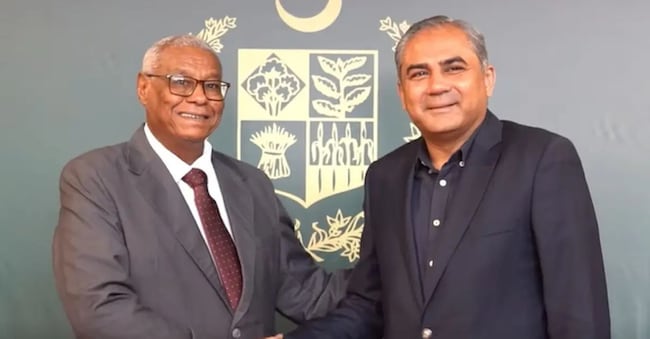
The agreement was finalised during talks between the Pakistani Minister of the Interior, Mohsin Naqvi, and his Sudanese counterpart, General Babiker Samra Mustafa Ali. The report also mentions the participation of the Minister of State for Home Affairs, Talal Chaudhry. Areas of cooperation include civil registration systems, the exchange of delegations and mutual visa exemptions for holders of diplomatic and official passports.
The memorandum therefore concerns police and civil administration activities and should be distinguished from operations in the defence sector. On a political level, however, it forms part of a broader rapprochement between Islamabad and the Sudanese authorities linked to the army commander, Abdel Fattah al-Burhan. The Sudanese minister’s visit to Pakistan also included a series of meetings at the highest institutional and military levels. Babiker Samra Mustafa Ali met with the Chief of Defence Staff and Commander of the Pakistani Army, Asim Munir, to discuss strengthening bilateral cooperation. He also held talks with the Prime Minister Shehbaz Sharif, to whom he expressed his appreciation for the support offered by Islamabad to Sudan.
The 1.5 billion military dossier
The most significant chapter in economic terms remains that of armaments. The document refers to reports attributed to Reuters, dating from January 2026, according to which Pakistan was reportedly close to finalising a $1.5 billion deal with the Sudanese army. A report attributed to the Washington Institute for Near East Policy lists the possible equipment as Karakoram-8 aircraft, over 200 drones, air defence systems and, potentially, JF-17 multi-role fighter jets. The latter are jointly manufactured by the Pakistan Aeronautical Complex and the Chinese company Chengdu Aircraft Corporation.
Neither Islamabad nor Port Sudan have as yet officially confirmed the details of the operation. There are also suggestions of possible involvement by Saudi Arabia, either as an intermediary or a financier.

